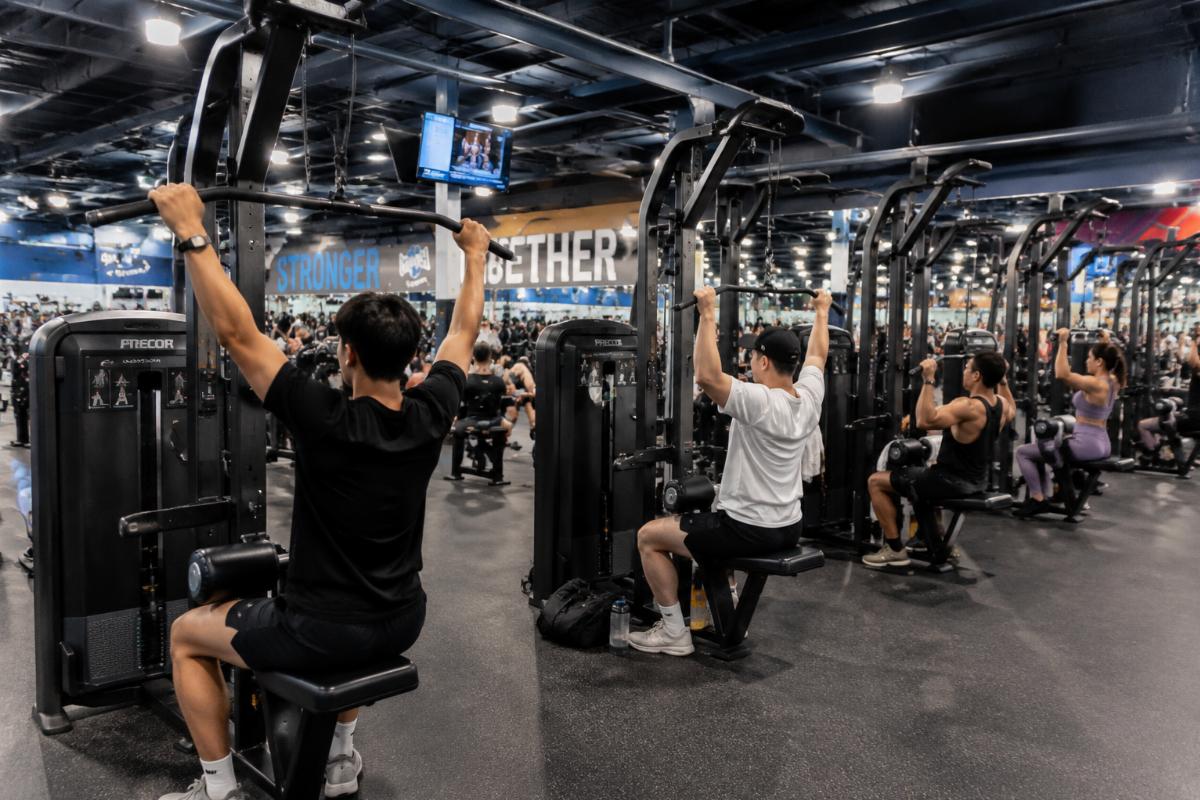
Commercial Chest Press Machine Wholesale Supplier from China
The real cost of a chest press machine is never the factory invoice—it is what happens after it leaves the port.
Sourcing commercial chest press machines for Japan requires navigating strict JIS safety standards, ocean-freight-ready packaging, and precise OEM customization—not just comparing unit prices. A low unit price means nothing if the machines arrive with bent weight stacks, peeling upholstery, or missing compliance documentation.
I spent years handling export documents at Qingdao Port, watching containers roll onto vessels bound for every corner of the world. Later, when I moved into sales covering Latin America, I learned the hard way that what happens between the factory floor and the gym floor matters far more than anyone admits in a quotation email. A gym owner in São Paulo once opened a full container of seated chest press machines only to find the wooden crates had collapsed during transit, the powder coating scraped bare on half the units, and a weight-stack guide rod bent beyond use. The machines themselves were fine—the packaging and loading decisions were not. That single shipment taught me more about sourcing than a decade of spec sheets ever could. [NEED_CITE: root causes of fitness equipment damage during ocean freight per industry logistics reports]
If you are a Japanese gym owner, a fitness distributor, or a hotel developer importing strength equipment from China, here is what you actually need to know before you place an order.
What Are the Key Compliance Standards for Chest Press Machines in Japan?
Japanese Industrial Standards (JIS) govern every commercial strength machine entering the country, and chest press machines are no exception. Unlike markets where EN or ASTM standards can be treated as optional guidance, Japan treats JIS compliance as a hard gate—non-compliant equipment can be held at customs, rejected by insurance inspectors, or flagged during municipal gym safety audits. [NEED_CITE: JIS safety requirements for commercial strength training equipment regarding load capacity and structural stability]
The critical areas JIS scrutinizes on a commercial chest press machine include:
| Compliance Area | JIS Requirement Level | Typical Gap in Low-Cost Imports |
|---|---|---|
| Frame load capacity | Certified to rated user weight plus safety margin | Self-reported only |
| Edge and pinch-point treatment | Controlled, verified deburring | Uncontrolled |
| Upholstery fire retardancy | Controlled, tested to JIS T standards | Not provided |
| Weld integrity | Full batch-level inspection | Sample-level or none |
| Stability under lateral load | Verified | Vulnerable |
A distributor in Osaka once imported a batch of selectorized chest press machines from a supplier who could only provide self-declared compliance sheets. The machines passed visual inspection at the factory, but when the Japanese safety inspector tested lateral stability with an eccentric load, two units tipped past the acceptable angle. The entire batch had to be reworked locally—at a cost that erased the original price advantage entirely. [NEED_CITE: JIS standards for lateral stability testing of selectorized strength machines]
When evaluating a commercial chest press machine wholesale supplier from China, always request third-party test reports that reference specific JIS clauses, not just a generic "meets Japanese standards" statement. Ask whether the supplier has shipped to Japan before and whether they can provide references from Japanese buyers who have cleared customs without compliance issues.
How to Ensure Your Chest Press Machines Survive Ocean Freight to Japan?
The majority of chest press machine damage occurs not during manufacturing, but during ocean transit and port handling. The route from Chinese manufacturing hubs to Japanese ports like Yokohama, Kobe, or Nagoya involves multiple container transfers, crane lifts, and vessel movements in open-sea conditions. Salt air, humidity spikes, and粗暴 handling at transshipment points all take their toll. [NEED_CITE: common damage patterns in strength equipment during China-to-Japan ocean freight]
From my own experience watching containers get stuffed and sealed, here are the packaging elements that separate a delivery that arrives intact from one that triggers a dispute:
- Reinforced wooden crating: The frame must be bolted to a base frame, not just wrapped. Weight-stack machines are top-heavy and will shift inside a standard cardboard box under vessel roll.
- Moisture barrier treatment: Silica gel desiccants inside the crate plus VCI (volatile corrosion inhibitor) wrapping on steel surfaces prevent rust bloom during humid Pacific crossings.
- Weight-stack immobilization: The selectorized pin must be locked, and the stack itself strapped to the frame. A loose weight stack bouncing through a six-meter drop inside a container will bend guide rods beyond repair.
- Seat and pad protection: Upholstery should be wrapped in PE foam and then covered with a rigid cardboard shield, not just shrink film.
A hotel developer in Fukuoka ordered a full gym package including multiple chest press machines for a new resort property. The supplier used standard export cartons without internal bracing. By the time the container reached the site, nearly every seat pad had compression marks from the weight stacks pressing against them during transit, and two machines had cracked plastic shrouds. The supplier argued it was "normal shipping wear." It was not—it was preventable. [NEED_CITE: best practices for packaging selectorized strength equipment for ocean freight]
When you speak with a commercial chest press machine wholesale supplier from China, ask specifically about their packaging protocol for Japan-bound shipments. Request photos of previous packed containers. A supplier who has done this before will show you crates with visible cross-bracing, desiccant packs, and strapped weight stacks. A supplier who has not will offer vague assurances about "standard export packing."
What Should You Look for in a Chinese Chest Press Machine Supplier?
Price is the easiest number to compare and the least meaningful signal of long-term value. A commercial chest press machine wholesale supplier from China who quotes significantly below market is either cutting corners on materials, skipping quality checks, or planning to absorb losses through future orders that never materialize. The real evaluation criteria are quieter and harder to verify—but they determine whether your import experience is smooth or painful.
Consider these factors when assessing a supplier:
| Evaluation Factor | What to Verify | Red Flag |
|---|---|---|
| JIS compliance track record | Past shipments cleared Japanese customs | Cannot name a Japanese reference |
| OEM engineering depth | Can modify frame geometry, not just logos | Only offers sticker customization |
| Post-sale parts availability | Maintains spare parts inventory for shipped models | Parts are "made to order" with long lead times |
| Production transparency | Allows third-party pre-shipment inspection | Refuses inspection or limits access |
| Packaging customization | Adapts crating to specific machine weight and shape | One-size-fits-all packing for all orders |
A fitness chain owner in Sapporo was evaluating two commercial chest press machine wholesale supplier from China options. One quoted noticeably lower but could not provide any Japanese client references and dismissed JIS concerns as "just paperwork." The other quoted higher but walked through the compliance documentation process, showed photos of reinforced crating used for previous Japan shipments, and offered to arrange a third-party inspection before loading. The Sapporo buyer chose the second supplier. Two years later, that first supplier’s machines were showing weld cracks at the pivot joints; the second supplier’s machines were still running without structural issues. [NEED_CITE: common failure modes in low-cost imported strength equipment related to weld quality and material grade]
The lesson is straightforward: a supplier who treats compliance and packaging as afterthoughts will eventually cost you far more than their initial price advantage suggests.
How to Customize a Chest Press Machine for the Japanese Market?
OEM customization for Japan goes far beyond slapping a logo on the shroud. The Japanese market expects localization at every level: Japanese-language user manuals, metric-only adjustment markings, voltage-appropriate electronic consoles (if equipped), and even color palette preferences that differ from Western or Middle Eastern markets. A commercial chest press machine wholesale supplier from China who treats OEM as a sticker swap will leave you scrambling to fix details after the container arrives.
Key OEM customization areas for the Japanese market include:
- Documentation: Full Japanese-language assembly instructions, user guides, and maintenance schedules. Machine warning labels must be in Japanese and comply with local safety marking requirements.
- Adjustment mechanisms: Seat and backrest adjustment pins should use metric markings only. Imperial/metric dual markings confuse end users and create liability exposure.
- Upholstery color and texture: Japanese commercial gyms tend to prefer darker, more subdued color palettes with high-durability vinyl that resists visible wear from frequent use. Ask for material samples tested for abrasion resistance.
- Electronic integration: If the chest press includes an electronic console or connectivity module, it must operate on Japanese voltage standards and carry the appropriate PSE marking. [NEED_CITE: PSE marking requirements for electronic components in fitness equipment sold in Japan]
- Brand integration: Logo placement, color matching to existing gym branding, and custom shroud designs require engineering-level coordination, not just graphic design files.
A boutique studio owner in Kyoto wanted a custom chest press machine with a specific frame color to match her studio’s interior design. The first supplier she contacted said they could match any color but delivered a unit where the powder coating shade was visibly different from the approved sample. The second supplier arranged a physical color sample approval step before production and delivered an exact match. The difference was not in capability—it was in process discipline. [NEED_CITE: powder coating color matching challenges in fitness equipment OEM production]
When discussing OEM requirements with a commercial chest press machine wholesale supplier from China, insist on a written customization checklist that covers documentation, markings, electronics, upholstery, and branding. Ask for a pre-production sample or at minimum a pre-production photo approval stage before the full batch enters the finishing line.
Conclusion
Importing commercial chest press machines into Japan is a compliance, logistics, and customization challenge—not a price comparison exercise. JIS standards determine whether your machines clear customs. Ocean freight packaging determines whether they arrive usable. OEM localization determines whether your end users can operate them safely and confidently. Evaluate your commercial chest press machine wholesale supplier from China against all three dimensions, and the unit price becomes a secondary consideration rather than the only one.