Commercial Fitness Equipment Manufacturer for Norway Import Duty Compliance
Most buyers assume fitness equipment falls under one single HS code. It doesn’t.
Norway customs classifies fitness gear by component function and material, not by the product category name on your commercial invoice. A full container of strength machines shipped to Oslo can be split into "fitness equipment" and "steel articles" at the border, triggering a tariff gap that runs into the mid-five-figure range and weeks of port demurrage. The fix is pre-classification, full CE documentation, and origin certificates — done before the container is stuffed.
I’ve watched this play out more times than I care to count. A gym project in Oslo ordered a full container of plate-loaded machines and cable crossovers. We declared everything under the standard fitness equipment heading. Norwegian customs pulled the shipment, reclassified the selectorized weight stacks and frame joints as "steel articles," and slapped a noticeably higher duty rate on those line items. The buyer paid the difference, plus port storage fees that ran well into four figures, and the equipment sat on the dock for weeks while the paperwork got sorted. That container was supposed to open on a Monday morning for a grand opening. It didn’t.
The root cause is structural: Norway follows the Harmonized System but applies its own national tariff lines under the Norwegian Customs Tariff, administered through Toll.no [NEED_CITE: Norwegian Customs Tariff structure for sports and gym equipment classification]. Fitness equipment as a concept doesn’t exist as a single heading — the customs officer looks at what each component is made of and what it does, then assigns the code accordingly.

Here’s what every buyer shipping commercial fitness equipment to Norway needs to understand before the goods leave the factory floor.
What HS Codes Apply to Fitness Equipment in Norway?
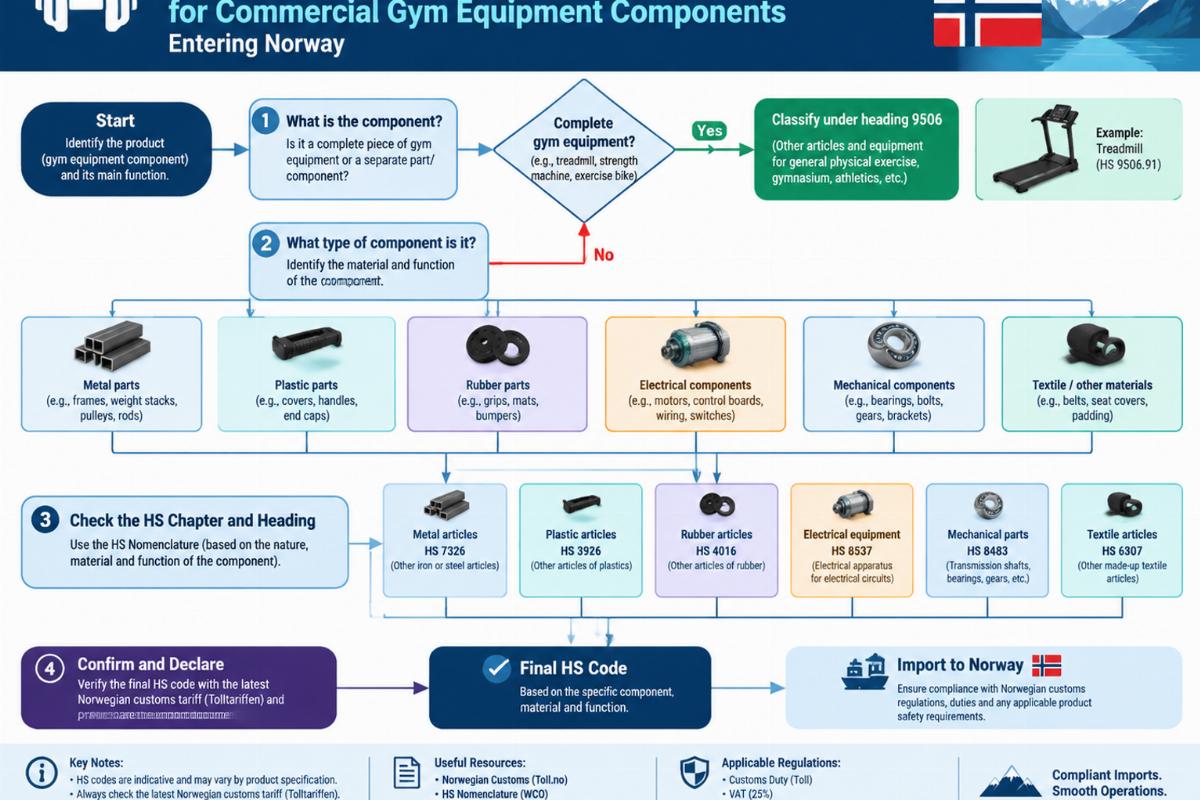
There is no single HS code for "fitness equipment." Norway customs assigns codes based on component material and function, which means a single machine can trigger multiple classifications.
The Harmonized System places most exercise machines under heading 9506 — articles and equipment for general physical exercise. That’s where commercial treadmills, ellipticals, spin bikes, and most selectorized strength machines land when declared as complete units [NEED_CITE: HS heading 9506 coverage for gym and physical exercise equipment]. But here’s where it gets complicated: when you ship a power rack with attached cable crossover, or a Smith machine with integrated plate storage, Norwegian customs may separate the structural steel frame from the functional exercise components.
The frame and structural members — especially those made from heavy-gauge steel tubing — can be reclassified under heading 7308 (steel structures) or 7326 (other articles of iron or steel). Free weights — dumbbells, barbells, weight plates, kettlebells — almost always fall under steel articles rather than fitness equipment, regardless of their end use [NEED_CITE: HS classification boundary between fitness equipment and steel articles for free weights].
This matters because the duty rate difference between heading 9506 and steel article headings is substantial. I’ve seen tariff gaps that turned a profitable container into a break-even shipment after the reclassification dust settled.
| Component Type | Typical HS Heading | Classification Risk |
|---|---|---|
| Complete cardio machines (treadmills, ellipticals) | 9506 | Low when shipped assembled |
| Selectorized strength machines (complete units) | 9506 | Moderate if disassembled |
| Power racks / Smith machines (shipped knocked-down) | 7308 or 7326 possible | High — frame treated as steel structure |
| Free weights (plates, dumbbells, kettlebells) | 7326 or similar | Very high — almost never classified as fitness equipment |
| Functional training accessories (battle ropes, plyo boxes) | Varies by material | Moderate — depends on primary material |
A distributor in the Nordics once received a container of plate-loaded machines shipped in knocked-down format to save on volume. Customs classified the heavy steel frames separately from the weight horns and seat assemblies. The duty recalculation added a noticeable surcharge to the landed cost, and the clearance delay pushed the gym’s opening back by weeks.
How Are Tariff Rates Calculated for Gym Equipment?
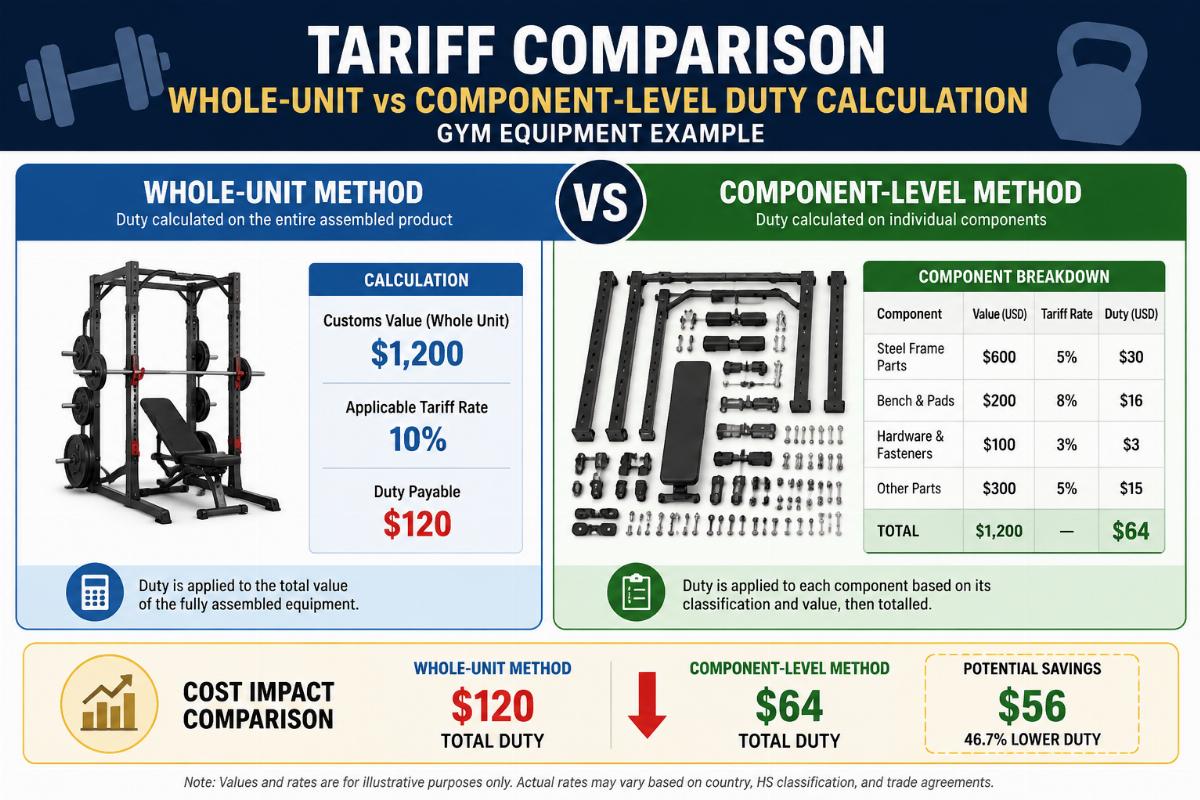
Norway calculates duty on a per-component basis when equipment is shipped disassembled, and on a per-unit basis when shipped as complete machines. The difference in total landed cost is significant.
The Norwegian Customs Tariff is published and searchable through Toll.no, the official portal of the Norwegian Tax Administration [NEED_CITE: Norwegian Tax Administration tariff lookup portal for import duty rates]. Rates are expressed as ad valorem percentages for most fitness-related goods, though some steel articles carry specific duty rates per kilogram.
When a commercial treadmill arrives fully assembled and boxed as one unit, it clears under a single 9506 code at the standard fitness equipment rate. The same treadmill, shipped with the motor, deck, console, and frame packed separately to optimize container loading, may be assessed at different rates for each component. The motor could fall under electrical machinery headings. The steel frame under steel articles. The console under electronic equipment. Each carries its own duty rate, and the combined total often exceeds the single-unit rate.
I’ve compared clearance documents from the same product line — identical machines, same origin country — where the only variable was assembly state at the time of shipping. The tariff gap between whole-unit declaration and component-level declaration ran into double-digit percentage points on the dutiable value.
The calculation method itself is straightforward: customs value (typically CIF Oslo) multiplied by the applicable tariff rate, plus any environmental taxes or fees that may apply. What’s not straightforward is predicting which components will be assessed individually unless you understand how the declaring broker packages the paperwork.
A gym chain buyer in Scandinavia learned this the hard way when a shipment of rowing machines arrived in separate boxes — frame, rail, resistance unit, monitor — to fit more units per container. The customs broker declared each box under its component description. The total duty came in noticeably higher than if the machines had been partially assembled and declared as complete units. The container volume savings were wiped out by the tariff difference.
What Documents Are Required for Customs Clearance?
CE marking is not optional for Norway, and it is not just a safety sticker — Norwegian customs treats the absence of a valid CE Declaration of Conformity as grounds for holding the entire shipment.
Norway is not an EU member, but it is part of the European Economic Area through the EEA Agreement. This means EU product safety directives — including the Machinery Directive and the Low Voltage Directive — apply in full [NEED_CITE: EEA Agreement extension of EU product safety directives to Norway for gym equipment]. Every piece of commercial fitness equipment entering Norway must carry CE marking, supported by a complete technical file.
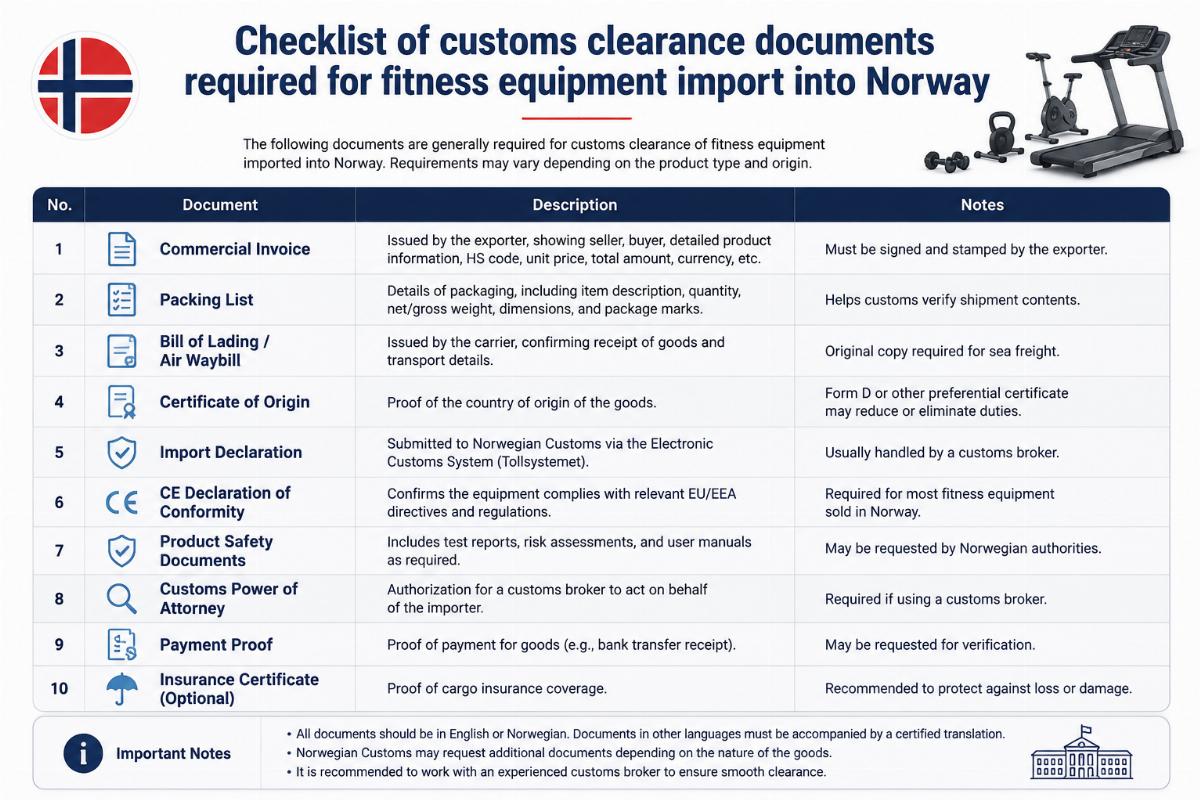
The document package Norwegian customs expects includes:
- CE Declaration of Conformity (DoC): Must reference the specific Machinery Directive and any applicable supplementary directives. The DoC must be signed by the manufacturer or authorized representative, and must list the harmonized standards applied during production [NEED_CITE: CE Declaration of Conformity requirements under EU Machinery Directive for fitness equipment].
- Technical Construction File: Includes design drawings, risk assessments, test reports, and a list of applied standards. Customs does not always request this upfront, but if they do and you cannot produce it within the clearance window, the shipment stays on the dock.
- Certificate of Origin: Required to determine whether preferential tariff rates apply. For goods manufactured in China, a standard Certificate of Origin issued by the relevant chamber of commerce is the baseline. Without it, customs applies the general (non-preferential) duty rate, which is typically higher.
- Commercial Invoice and Packing List: Must match the physical shipment exactly. Discrepancies between declared quantities and actual contents trigger physical inspection, which adds days to clearance and incurs inspection fees.
- Bill of Lading and Insurance Certificate: Standard shipping documents, but they must align with the invoice values for customs valuation purposes.
I once had a shipment of commercial spin bikes held at Oslo port because the DoC referenced an outdated version of the EN standard. The equipment itself was fully compliant — the manufacturing facility had updated their testing to the current standard — but the paperwork hadn’t been revised. The bikes sat in the port warehouse while we got the corrected DoC issued and couriered to the broker. The storage fees alone were painful.
How to Avoid Costly Reclassification at Norwegian Ports?
The three levers that prevent reclassification surprises are pre-classification with Norwegian customs, consistent whole-unit packaging, and document review before the container is sealed.
Pre-classification — known as a binding tariff information request — allows you to submit product specifications, photographs, and technical drawings to Norwegian customs in advance and receive a written determination on the applicable HS code [NEED_CITE: Binding tariff information procedure through Norwegian Customs for import classification]. This process takes time, so it must be initiated well before production is completed. But the certainty it provides is worth the lead time, especially for high-value gym fit-out projects where a tariff surprise can destroy the project margin.
When pre-classification is not feasible — and for many container-load orders it isn’t, given production timelines — the next best approach is to work with a Norwegian-licensed customs broker who has specific experience with fitness equipment. These brokers understand how Toll officers interpret the boundary between heading 9506 and steel article headings, and they can structure the declaration to minimize reclassification risk.
Packaging strategy matters more than most buyers realize. Shipping machines fully assembled — or at least partially assembled so that the primary functional identity is obvious — reduces the likelihood that customs will break the shipment into component-level declarations. I’ve seen containers where the only difference between a smooth clearance and a reclassification headache was whether the weight stack was installed in the frame or packed separately.
Document review before shipment is the final safeguard. Every document in the clearance package — invoice, packing list, DoC, origin certificate — must tell the same story. If the invoice describes "commercial cable crossover machine" but the packing list itemizes "steel frame assembly, weight horn assembly, cable pulley set, seat pad," you’re inviting customs to look at each item individually.
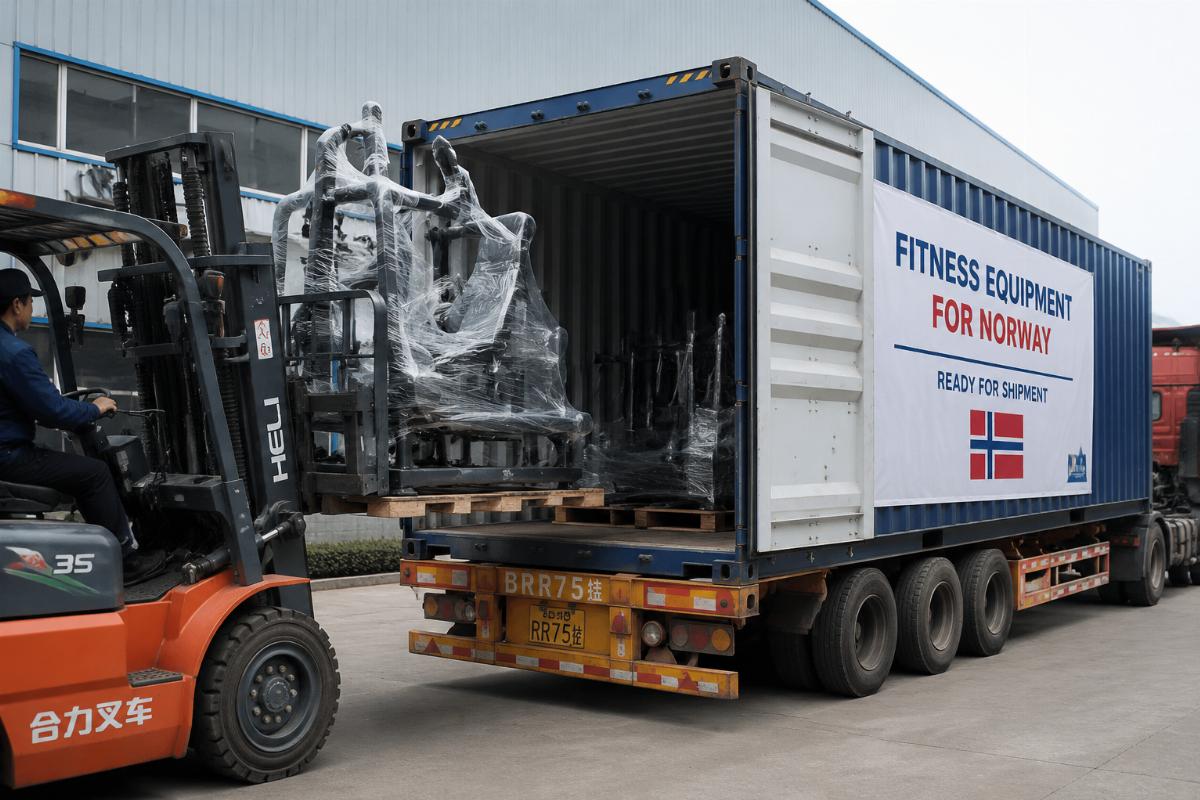
For our Nordic project shipments, we run a full document audit before the container doors close. The CE file is checked against the current directive versions. The origin certificate is verified against the invoice values. The packing list is aligned with the invoice descriptions — no component-level breakdowns that could invite reclassification. It’s the kind of unglamorous back-end work that never makes it into a product brochure, but it’s the difference between a container that clears in days and one that clears in weeks.
Conclusion
Norway’s import duty system rewards preparation and punishes assumptions. The HS code for fitness equipment is not a single line item — it’s a classification landscape shaped by material, function, and assembly state. CE documentation is a customs requirement, not just a compliance formality. And the difference between a smooth clearance and a costly reclassification often comes down to paperwork discipline before the container is sealed. Get the classification right, get the documents right, and the tariff bill stays predictable.