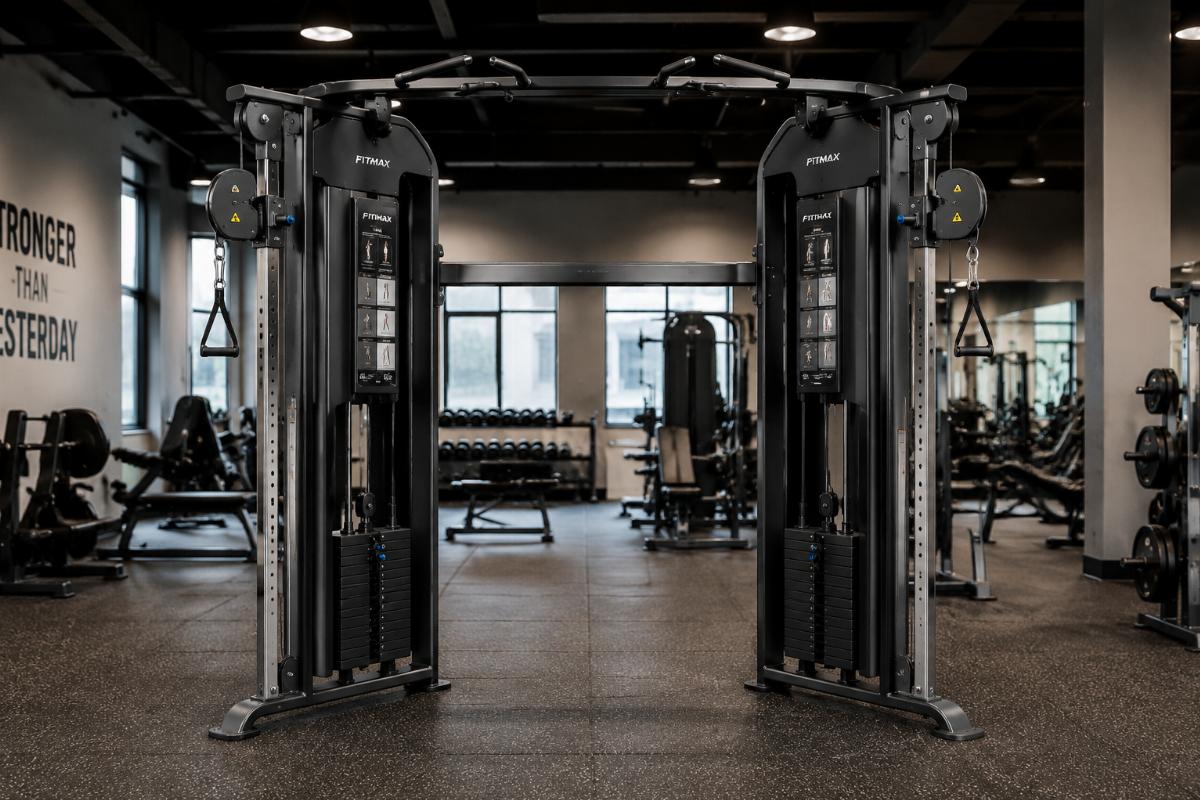
Commercial Gym Equipment for India Market: Wholesale Supplier & Buyer Guide
Lowest FOB price rarely means lowest total cost — the real expense begins the moment the container doors open in Mumbai or Chennai.
For Indian commercial gym buyers, selecting commercial gym equipment requires more than comparing spec sheets. You must validate tube wall thickness against load-bearing needs, confirm salt-spray coating endurance for humid coastal cities, and verify motor derating capacity for regions where ambient temperatures regularly exceed 40°C and voltage fluctuates wildly. Skipping these checks leads to rust within months, motherboard burnouts, and mold-infested upholstery — costs that dwarf any upfront savings.
Back when I was still working the factory floor in Shandong, inspecting weld seams and coating lines daily, I thought buyers only cared about price and appearance. Then I handled a full-container strength equipment order for a gym chain in Mumbai. The buyer had a premium brand’s quotation in hand and wanted comparable quality at factory-direct rates. We matched the specs on paper. But when the goods arrived, the buyer flagged color inconsistency on the seat upholstery and burrs on the selectorized weight stacks. The entire container needed rework. Worse, during transit through Jebel Ali, I had noticed moisture marks on the wooden pallets but didn’t escalate it. By the time the container reached India during monsoon season, the padding had developed mold across multiple units. That order cost us a mid-six-figure sum in claims and replacements. Since then, I never quote a buyer without first understanding their port’s customs habits, local humidity levels, and grid stability. Here is what I have learned about sourcing commercial gym equipment for the Indian market.
If you are evaluating suppliers or planning your first container order, the sections below break down exactly what to check — and what most buyer guides conveniently leave out.
What Specs Actually Matter for India’s Climate & Power Grid?
Tube wall thickness, coating salt-spray endurance, and motor thermal derating determine whether your equipment survives Indian conditions — not the glossy brochure photos.
Most buyer guides lead with horsepower ratings and console features. In India’s operating environment, those specs matter far less than structural and environmental resilience. Coastal cities like Mumbai and Chennai sustain relative humidity levels that accelerate corrosion dramatically, while inland metros like Delhi and Jaipur experience extreme heat that stresses motor windings and electronics.
| Parameter | Light Commercial Grade | True Commercial Grade | India-Specific Requirement |
|---|---|---|---|
| Frame tube wall thickness | Thin-walled, noticeably flexes under load | Heavy-duty, minimal deflection | Minimum heavy-gauge oval tube for all load-bearing structures [NEED_CITE: structural integrity standards for commercial fitness equipment per ISO 20957] |
| Coating salt-spray endurance | Basic protection, vulnerable in humid environments | Extended endurance, resistant to coastal salt air | Must withstand prolonged neutral salt-spray exposure to prevent rust in Mumbai/Chennai conditions [NEED_CITE: neutral salt-spray testing methodology per ISO 9227] |
| Motor thermal design | Standard cooling, rated for moderate ambient | Derated for high-ambient continuous operation | Must handle sustained operation at elevated ambient temperatures without thermal shutdown [NEED_CITE: motor derating guidelines for tropical ambient conditions per IEC 60034] |
| Weld inspection | Visual only | Batch-level ultrasonic or magnetic particle inspection | Verifiable weld integrity records critical for high-usage commercial environments |
A distributor in Bangalore once imported a batch of commercial treadmills from a supplier who quoted aggressively. The motors were rated adequately on paper for standard conditions. But Indian summers push gym floor temperatures well above standard rating assumptions, and the voltage supply in many commercial zones fluctuates enough to stress drive boards. Within months, the majority of those treadmills experienced motherboard failures. The replacement cost — including shipping spare parts and technician visits — exceeded the original purchase savings entirely.
When evaluating commercial gym equipment, always request the manufacturer’s salt-spray test reports, not just their product catalog photos. Ask specifically about motor winding insulation class and whether the drive electronics include voltage surge protection. These are not optional upgrades for India; they are baseline requirements.
Cardio vs Strength vs Free Weights: How to Build a Balanced Package?
For Indian commercial gyms, allocating more floor space and budget to strength and free-weight zones delivers higher member retention and better equipment utilization than over-investing in cardio.
Many first-time gym owners in India follow the template they see in Western fitness magazines: rows of treadmills and ellipticals dominating the floor plan. But Indian commercial gym membership patterns tell a different story. Members in the premium and mid-tier segments increasingly value strength training and functional fitness — equipment that delivers visible results and justifies monthly fees. Cardio machines, while necessary, suffer from higher maintenance costs in India’s heat and humidity, and their utilization rates in many facilities fall below expectations.
A practical allocation framework for a typical commercial gym floor:
- Strength machines (plate-loaded and selectorized): Allocate substantial floor area. These units see heavy daily use, have lower electronic failure rates than cardio, and appeal to the growing strength-training demographic. Prioritize machines with heavy-gauge frames and verified pivot bearings.
- Free weights and benches: High utilization, relatively low maintenance. Dumbbell sets, barbells, and adjustable benches are workhorses. Ensure rubber coating on dumbbells and plates meets low-odor standards — a frequent complaint in air-conditioned Indian gym environments [NEED_CITE: material off-gassing concerns in enclosed fitness facilities].
- Functional training zone: Growing demand across tier-one and tier-two cities. Cable crossover machines, functional trainers, and dedicated rig areas attract membership segments willing to pay premium rates.
- Cardio equipment: Necessary but should not dominate. Commercial treadmills, ellipticals, and exercise bikes are essential for member acquisition, but specify units with proven heat resistance and accessible service panels.
When sourcing a complete gym package from a commercial gym equipment supplier, request a floor-plan consultation. Reputable manufacturers with turnkey experience will propose equipment layouts optimized for traffic flow, electrical point placement, and maintenance access — not just push their highest-margin SKUs.
How to Verify a Chinese Supplier Before Placing a Container Order?
Inspect the production floor’s welding records, coating line controls, and finished-goods aging area — not the showroom.
Indian buyers ordering full containers of commercial gym equipment from China face an information gap. You cannot physically visit every factory shortlisted on Alibaba or at trade fairs. But you can request specific documentation and conduct remote verification that separates genuine manufacturers from trading companies rebadging generic goods.
Step-by-step verification process:
- Request weld inspection records. Ask for batch-level documentation showing whether the factory performs ultrasonic or magnetic particle testing on critical frame joints. Factories that weld to commercial-grade standards keep these records and will share them. Those who hesitate or offer only visual inspection photos are flagging themselves.
- Verify coating line controls. Powder coating quality depends on pretreatment chemistry, application uniformity, and curing temperature consistency. Request the factory’s coating process specification sheet and salt-spray test certificates from independent labs. Self-reported numbers without lab backing mean little.
- Confirm finished-goods aging and testing. Commercial treadmills and electronic strength machines should undergo run-in testing before packing. Ask whether the factory maintains a dedicated aging area with logged test hours per unit. Factories that skip this step ship units with early-life electronic failures — failures that become your problem once the container clears Indian customs.
- Check certification validity. CE certification is common in this industry, but not all certificates are issued by accredited bodies. Verify the certificate number against the issuing laboratory’s database [NEED_CITE: CE certification verification procedures for fitness equipment imported into regulated markets].
- Evaluate spare parts commitment. Ask specifically about spare parts availability timelines and whether the factory maintains stocked inventory for components likely to need replacement in Indian conditions — drive boards, motor brushes, cable sets, and upholstery. A supplier who cannot commit to spare parts dispatch within a reasonable timeframe is not a long-term partner.
A gym chain owner in Pune once shared that his previous supplier — a trading company posing as a manufacturer — could not provide weld inspection records of any kind. When structural cracks appeared on several plate-loaded machines within a year, the trading company had already disappeared. Sourcing from a verified manufacturer with documented quality controls is not a luxury; it is risk management.
What Are the Hidden Costs of Importing Gym Equipment to India?
Sea freight mold, voltage-induced electronics failure, and customs documentation delays are the three hidden cost categories that destroy import economics — and all three are preventable at the contract stage.
The invoice price of commercial gym equipment is only the beginning. Indian importers who have been burned by unexpected costs consistently point to the same three categories:
Moisture and mold during ocean transit. Containers shipped from Chinese ports to Indian west-coast ports typically spend weeks at sea, often transiting through humid tropical zones. If the manufacturer does not use properly kiln-dried packaging materials and include adequate desiccants, moisture condensation inside the container will damage upholstery, corrode unpainted metal surfaces, and promote mold growth. The Mumbai order I mentioned earlier was a textbook case. The solution is contractual: specify maximum packaging moisture content, require desiccant quantities per container, and mandate container lining with moisture-barrier film for monsoon-season shipments [NEED_CITE: moisture damage prevention standards for ocean freight of metal and upholstered goods].
Voltage instability damaging electronics. India’s commercial power supply, while improving, still experiences fluctuations that can destroy treadmill drive boards, console circuit boards, and electronic resistance controllers on strength machines. The cost of adding industrial voltage stabilizers for an entire gym is significant, but far less than replacing dozens of fried circuit boards. When specifying cardio and electronic strength equipment, require that the manufacturer’s electronics include built-in surge protection and wide-voltage tolerance. This is a specification point, not an afterthought.
Customs documentation errors causing port delays. Indian customs procedures require precise documentation — commercial invoices, packing lists, bills of lading, and certificates of origin must all align perfectly. Minor discrepancies trigger inspection holds that generate demurrage charges accumulating daily. Work with your supplier to ensure their export documentation team understands Indian customs requirements. A commercial gym equipment supplier experienced with Indian imports will have standardized document templates that minimize this risk.
Factory-Direct vs Branded: When Does the Price Gap Justify the Risk?
A substantial price advantage over premium global brands is achievable — but only when the factory-direct supplier provides verifiable quality documentation and responsive after-sales infrastructure.
Premium international fitness brands command price premiums that many Indian gym operators cannot justify, especially when outfitting multiple locations or scaling rapidly. Factory-direct sourcing from established Chinese manufacturers offers genuine cost advantages — often substantially below branded equivalents — while delivering comparable commercial-grade construction.
But the price gap only translates into real savings if the factory-direct supplier can match the brand’s quality consistency and after-sales support. Here is what separates a reliable factory-direct partner from a risky one:
- Documented OEM/ODM capability. The manufacturer should demonstrate experience producing equipment under private-label programs for other markets. This proves they understand specification compliance, branding requirements, and quality consistency across production runs.
- Flexible order quantities. Whether you need a single commercial treadmill for a boutique studio or a full gym fit-out spanning cardio, strength, and free weights, the supplier should accommodate without imposing unrealistic minimums.
- Spare parts supply chain. Premium brands maintain regional spare parts depots. A credible factory-direct supplier should offer a comparable commitment — stocked spare parts, reasonable dispatch timelines, and technical support accessible to Indian service technicians.
- Container-load consolidation. Outfitting a gym requires diverse equipment categories. A supplier capable of consolidating cardio, strength machines, free weights, and flooring into efficiently packed containers reduces your per-unit shipping cost significantly.
The key question is not whether factory-direct is cheaper — it is. The question is whether the specific supplier you choose can deliver that cost advantage without sacrificing the quality and support that keep your gym operational.
Conclusion
Selecting commercial gym equipment for the Indian market demands climate-aware specifications, verified supplier quality controls, and contractual protection against hidden import costs. Tube wall thickness, salt-spray coating endurance, and motor thermal derating determine long-term equipment survival in Indian conditions far more than brochure specifications suggest. Verify your supplier’s welding inspection records, coating line controls, and aging test protocols before committing to a container order. And structure your purchase contract to address moisture protection, voltage tolerance, and documentation accuracy — the three hidden cost categories that routinely destroy import economics. The price advantage of factory-direct sourcing is real, but it only materializes as genuine savings when paired with verifiable quality and responsive after-sales support.