

Commercial Treadmill Supplier for Turkey: China Factory Direct
Peak horsepower on a spec sheet means nothing if the motor burns out before the warranty expires.
When sourcing from a commercial treadmill supplier for Turkey, the single most critical step is matching the treadmill’s continuous duty motor rating, running deck material grade, and inverter thermal class to your actual daily operating hours—not just the sticker price or the peak HP figure. A mismatch between light-commercial and full-commercial specs can double your total cost of ownership within the first year, even if the initial purchase price looks identical on paper.
I still remember a shipment we sent to a gym chain operating across several districts in Istanbul. The buyer wanted to keep costs tight and chose a light-commercial treadmill model from our catalog. Within a short period, the motors started failing one after another. When I flew out to inspect the machines on-site, the running decks were worn through in the center, the drive belts had stretched beyond tolerance, and the inverter boards were triggering thermal shutdowns during afternoon peak hours. The gym had to pull multiple units off the floor simultaneously, losing revenue while waiting for replacement parts shipped from Shandong. That visit reshaped how I guide every Turkish buyer through spec selection, and it is exactly the kind of mistake a reliable commercial treadmill supplier for Turkey should help you avoid before the purchase order is signed. [NEED_CITE: failure mode distribution in continuous-use cardio equipment per IEC 60335 field data]

Let me walk you through the real selection logic we use at the factory level, so you can evaluate any commercial treadmill supplier for Turkey with confidence.
How to Match Treadmill Specs to Your Daily Usage Hours?
The first filter is not brand or price—it is the number of hours the treadmill will run every single day, because usage intensity dictates which duty-cycle class you actually need.
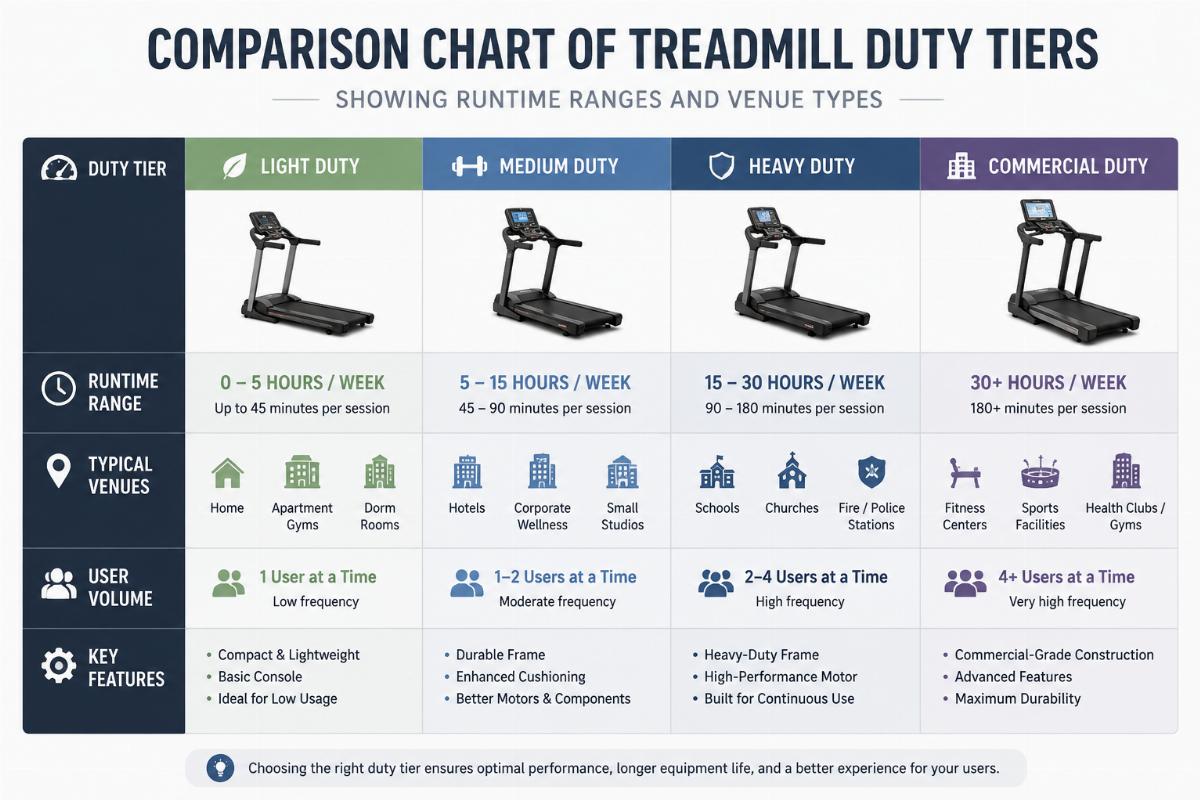
We classify treadmill duty into three tiers based on daily runtime:
| Duty Tier | Daily Runtime | Typical Venue | Motor Class Required | Deck Grade | Inverter Thermal Rating |
|---|---|---|---|---|---|
| Light-Commercial | Up to moderate hours | Boutique studios, hotel gyms, low-traffic apartments | Standard continuous duty | Standard phenolic resin | Standard enclosed |
| Full-Commercial | Extended daily hours | High-traffic commercial gyms, mid-size fitness chains | Heavy-duty continuous duty | High-density phenolic with reinforced core | Enhanced ventilation design |
| Heavy-Duty Commercial | Near-continuous operation | 24-hour gym chains, military facilities, resort complexes with peak-season surges | Industrial-grade continuous duty | Dual-layer composite with extended flip cycle | Forced-air cooled with ambient compensation |
[NEED_CITE: equipment duty-cycle classification guidelines per international fitness equipment standards]
A buyer from a resort town near the Aegean coast once told me his treadmills ran moderately during the off-season but nearly non-stop during the summer tourist months. He had originally spec’d light-commercial units. The machines survived the winter but started showing deck delamination and inverter faults once ambient temperatures climbed and usage hours surged. Switching to a full-commercial tier with a higher thermal-class inverter resolved the seasonal failure pattern entirely.
The takeaway is simple: if your facility runs beyond moderate daily hours, light-commercial treadmills will fail prematurely regardless of how attractive the price looks. A competent commercial treadmill supplier for Turkey will ask you about daily runtime before quoting a single model.
What Motor and Inverter Specs Actually Matter for Turkish Gyms?
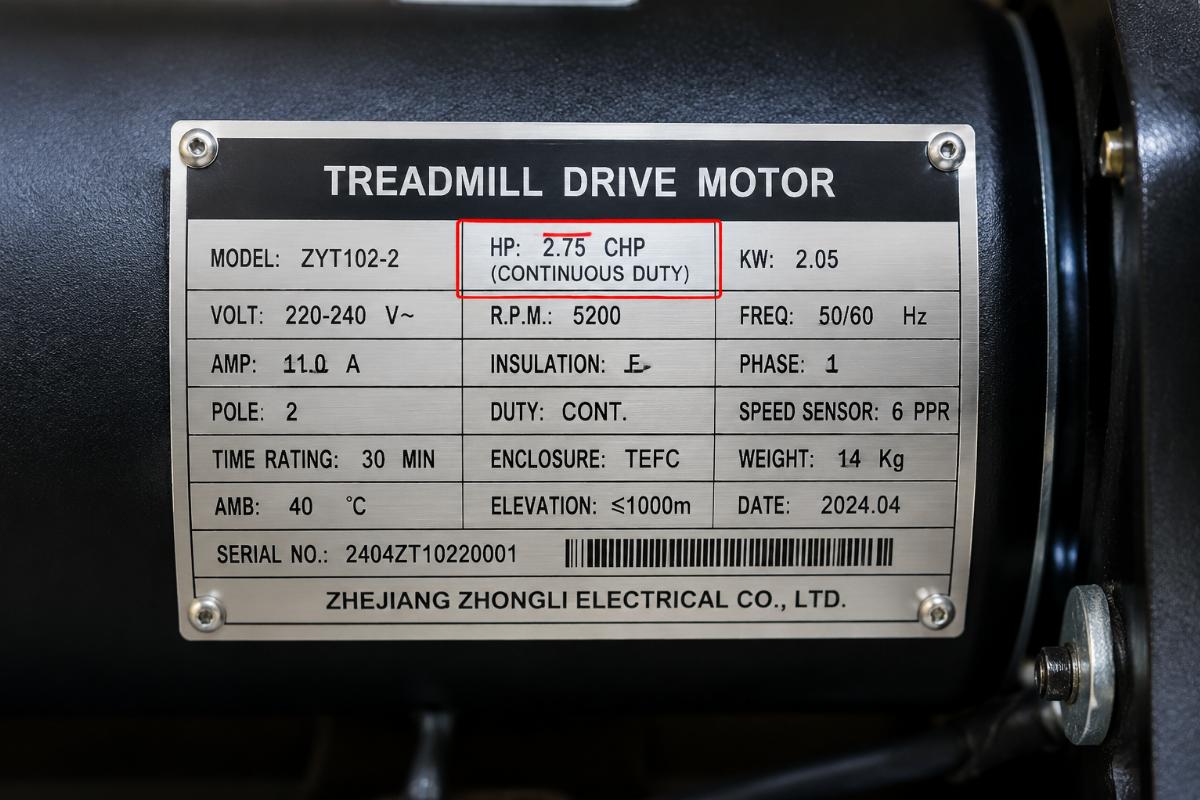
Continuous running horsepower is the spec that determines motor lifespan, not the peak horsepower figure printed in bold on the brochure.
Peak horsepower is a laboratory measurement taken for a few seconds under no-load conditions. Continuous running horsepower reflects what the motor can sustain hour after hour without overheating. In real-world gym environments, especially during Turkish summers when ambient temperatures in non-climate-controlled facilities can climb significantly, the gap between peak and continuous ratings becomes the difference between a motor that lasts and one that burns out.
Here is what matters at the component level:
- Motor continuous duty rating: Must be matched to the maximum user weight plus a safety margin. Undersized motors run hotter, degrade insulation faster, and fail earlier.
- Inverter thermal class: The inverter must be rated for the ambient temperature range of the installation site. Standard enclosed inverters work in air-conditioned environments; facilities with limited cooling need inverters with enhanced ventilation or forced-air designs. [NEED_CITE: inverter thermal derating curves per IEC 61800 industrial drive standards]
- Drive belt material and tension spec: Cheap belts stretch under continuous heat cycling, causing slippage and additional motor strain.
A gym owner in Ankara told me he had been comparing treadmills purely on peak horsepower. One competitor’s machine showed a higher peak number on paper, but its continuous rating was noticeably lower. After switching to a model with a properly rated continuous-duty motor and a thermally upgraded inverter, his service call frequency dropped substantially.
When you evaluate a commercial treadmill supplier for Turkey, ask specifically for the continuous running horsepower rating and the inverter’s thermal class documentation—not just the peak figure.
How to Verify a China Factory’s Claims Before Placing Orders?
Request third-party test reports and production documentation, not just marketing brochures, before committing to any bulk order.
Many factories will tell you their treadmills are "commercial grade" without providing verifiable evidence. Here is the documentation you should request from any commercial treadmill supplier for Turkey:
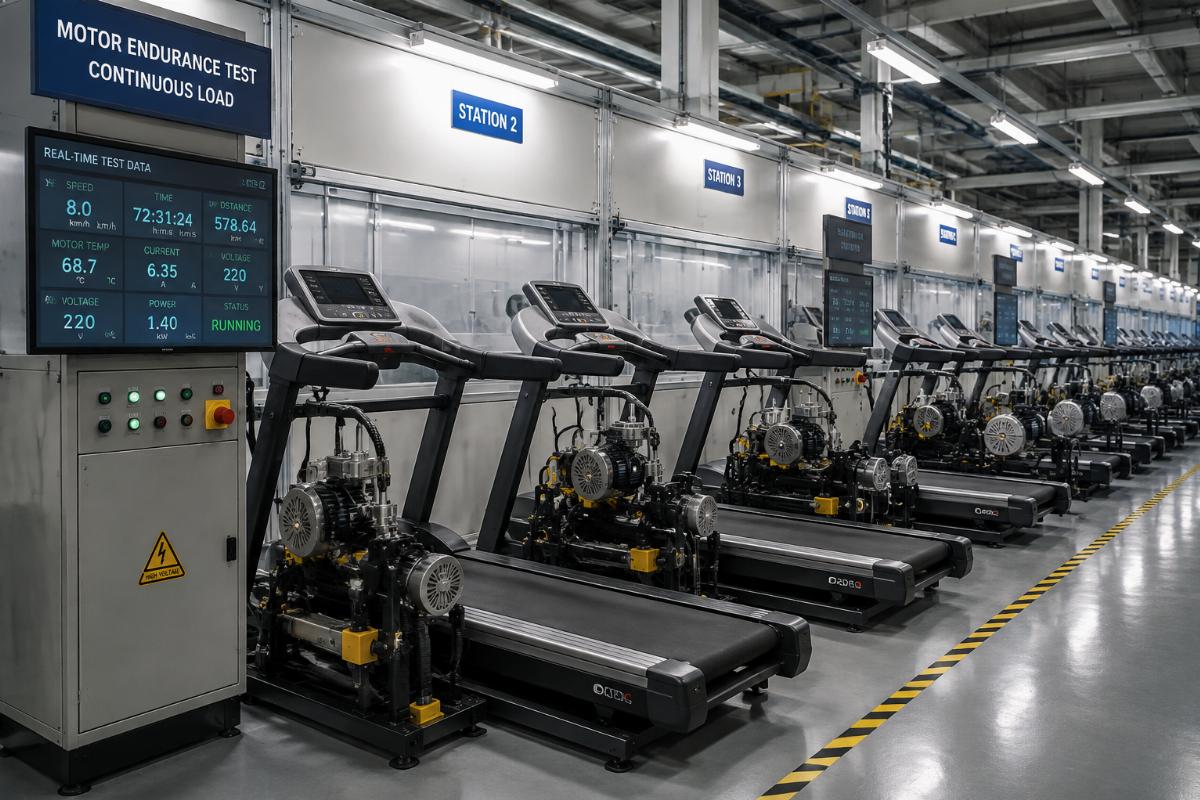
- Motor endurance test report: Shows the motor was run at rated load for an extended continuous cycle without thermal failure. [NEED_CITE: motor endurance testing methodology per IEC 60034 rotation standards]
- Running deck wear test record: Documents the deck material’s abrasion resistance and the recommended flip or replacement interval.
- Inverter thermal certification: Confirms the inverter’s operating temperature range and thermal protection settings.
- Batch consistency assurance: Confirms that the sample you approved matches the production batch in motor spec, deck material, and inverter components.
During a factory visit we arranged for a Turkish distributor, we walked through our motor testing bay where each motor model undergoes continuous-load cycling before shipment. We also showed the deck material batch records and inverter thermal test logs. The distributor later told me that this level of transparency was what convinced him to move from sample approval to a full container order.
If a supplier cannot produce these documents or dismisses your request, treat it as a red flag. A credible commercial treadmill supplier for Turkey will welcome technical scrutiny because it protects both parties from post-delivery disputes.
What Is the Real Cost Difference Between Light-Commercial and Full-Commercial?
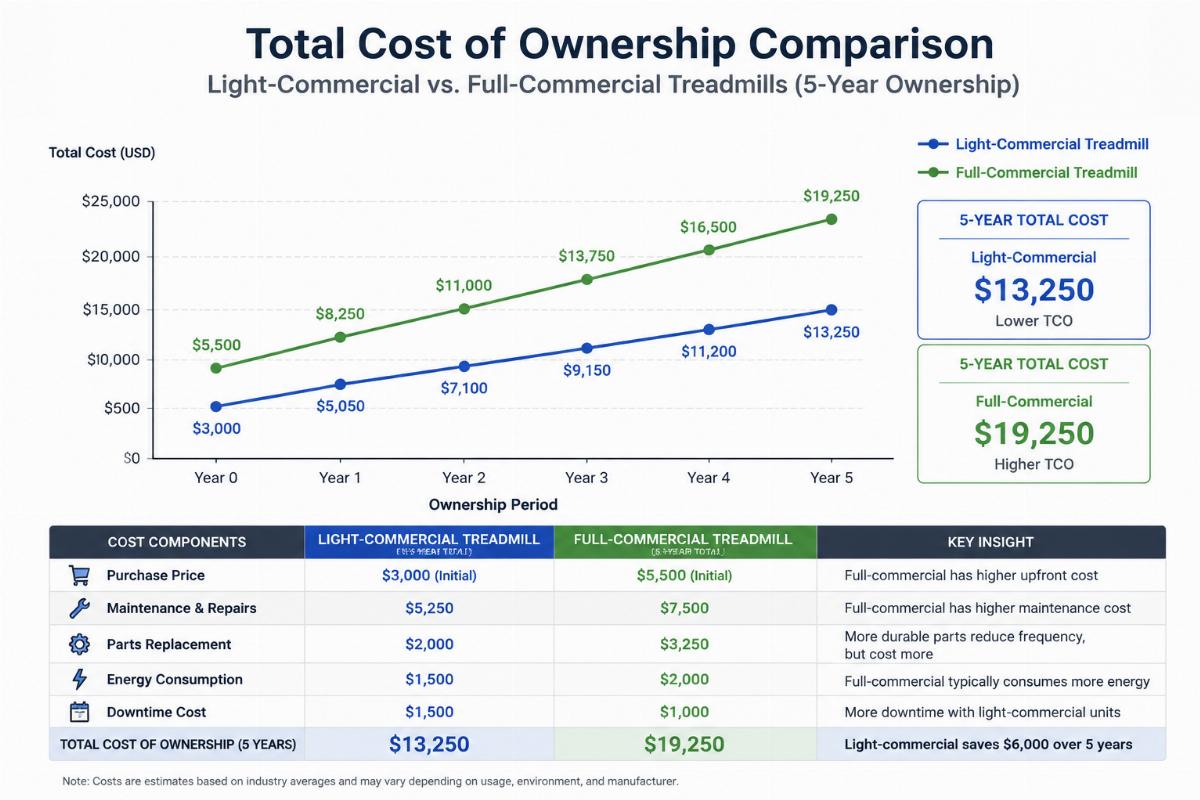
The initial price gap between light-commercial and full-commercial treadmills is modest, but the total cost of ownership can diverge dramatically within the first year of heavy use.
When buyers compare quotes, they often focus on the per-unit purchase price. A light-commercial treadmill may appear noticeably cheaper upfront. However, the hidden costs of premature failure tell a different story:
| Cost Factor | Light-Commercial in Heavy Use | Full-Commercial in Heavy Use |
|---|---|---|
| Motor replacement frequency | Noticeably higher | Substantially extended intervals |
| Running deck replacement | Frequent | Extended flip and replacement cycle |
| Inverter service calls | Recurrent thermal faults | Minimal under matched conditions |
| Revenue loss from downtime | Significant | Noticeably reduced |
| Spare parts logistics cost | Repeated shipments | Consolidated and planned |
[NEED_CITE: total cost of ownership modeling for commercial fitness equipment per industry association guidelines]
A fitness chain operator in the Mediterranean region calculated that after factoring in motor replacements, deck swaps, inverter repairs, and the revenue lost from pulling machines off the floor, the light-commercial treadmills he initially purchased ended up costing substantially more over a comparable period than full-commercial units would have. The initial savings were entirely erased by maintenance and downtime.
This is why a responsible commercial treadmill supplier for Turkey will always recommend full-commercial specs for any facility running extended daily hours, even if it means a higher initial quote. The long-term economics simply do not support cutting corners on duty-class matching.
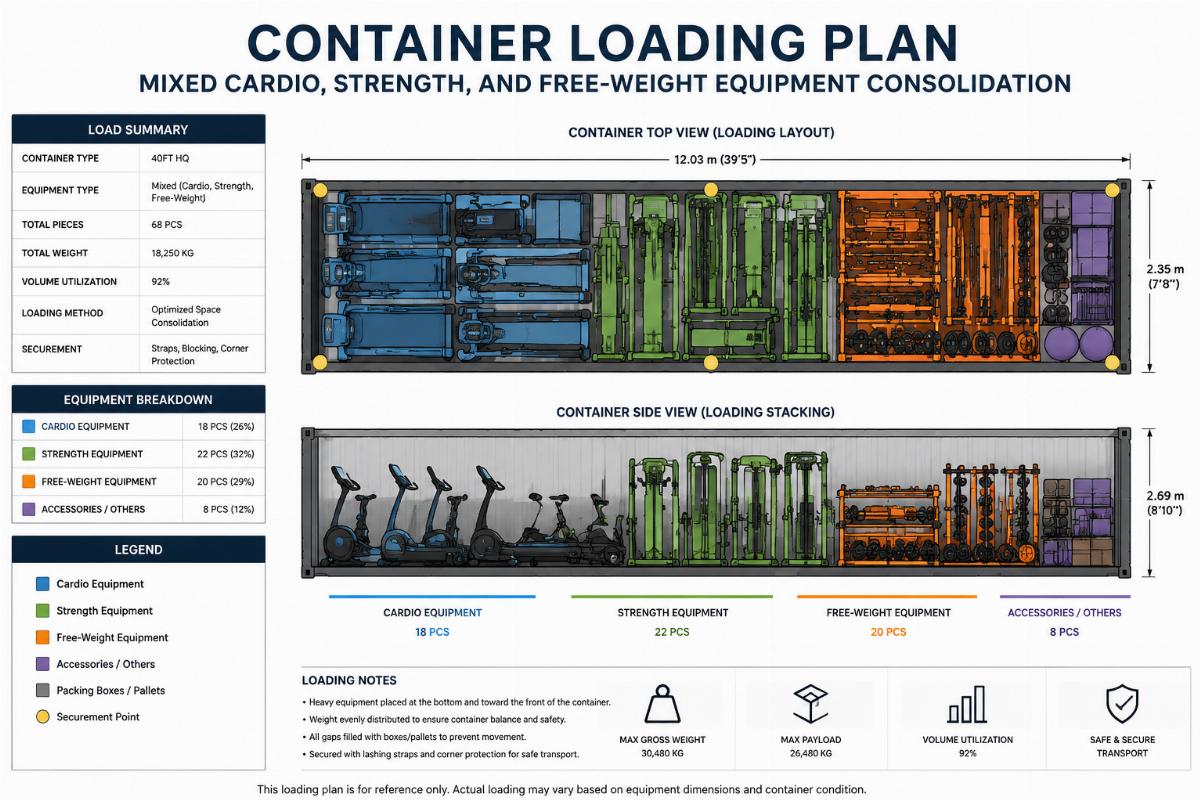
How Does Container-Load Consolidation Work for Turkey Buyers?
Ordering a full container allows you to mix treadmills with strength equipment, free weights, and flooring, driving per-unit logistics costs down to the lowest possible level.
Many Turkish buyers start with a sample order to verify quality before committing to larger volumes. Once the sample is approved, the most cost-effective path is a full container load. The advantage of working with a manufacturer that produces a broad equipment range is that you can consolidate multiple product categories into a single shipment:
- Cardio equipment including commercial treadmills, ellipticals, and exercise bikes
- Strength machines such as Smith machines, power racks, and cable crossovers
- Free weights including dumbbells, barbells, and weight plates
- Functional training gear and gym flooring
This consolidation approach means you fill the container efficiently, avoid paying for empty space, and receive a complete gym setup in one shipment rather than coordinating multiple less-than-container loads from different suppliers.
A distributor in the Anatolian region initially placed a sample order of treadmills and a small batch of strength equipment. After verifying build quality and component consistency, he moved to a full container combining cardio, strength, and free-weight products. The per-unit shipping cost dropped significantly compared to his earlier partial-container approach, and he was able to offer his own gym clients a complete equipment package with consistent branding.
A capable commercial treadmill supplier for Turkey should also offer OEM branding services, allowing you to apply your own logo and color scheme across the entire container load, creating a unified product line for your market.
Conclusion
Spec matching beats spec shopping every time. Selecting the right treadmill for the Turkish market comes down to aligning motor continuous duty, deck material grade, and inverter thermal class with your actual daily runtime and environmental conditions—not chasing the lowest per-unit price or the highest peak horsepower figure. Work with a commercial treadmill supplier for Turkey that provides verifiable test documentation, supports container-load consolidation, and stands behind the equipment with spare parts availability, and your total cost of ownership will reflect the decision for years to come.
