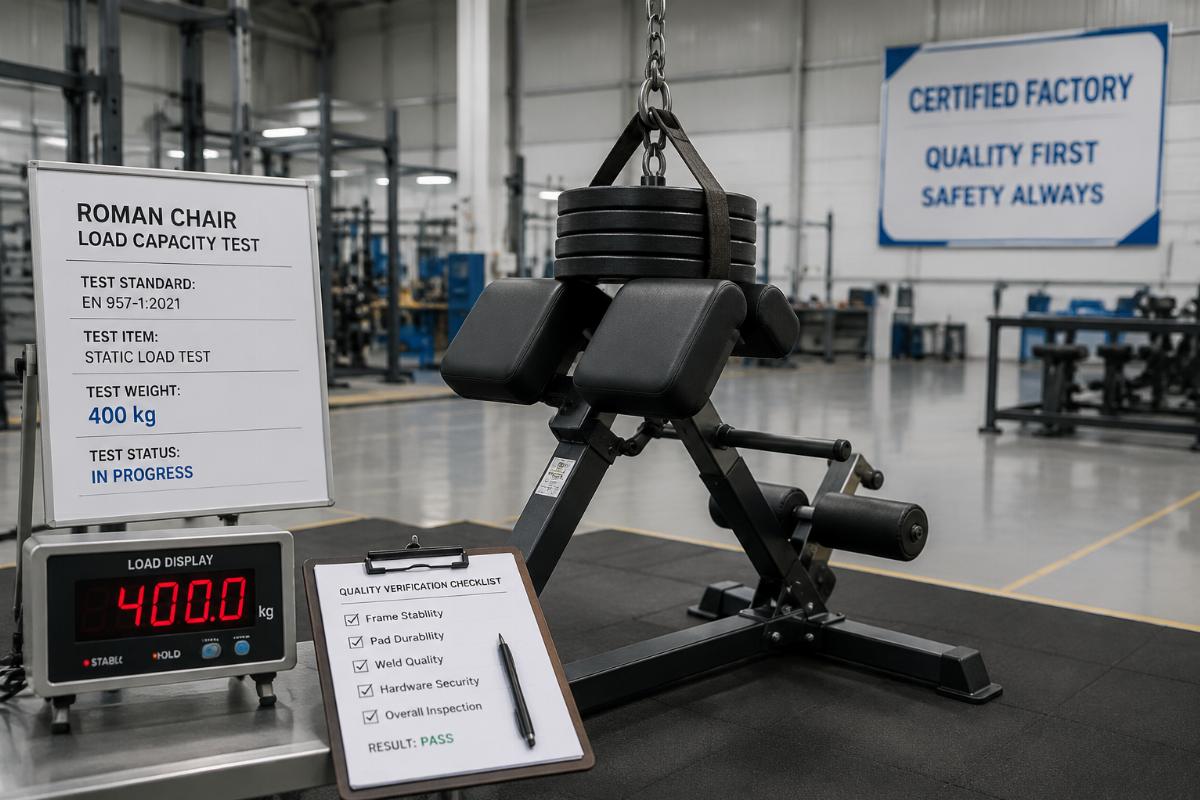
Cost-Effective Functional Trainer Wholesale for Nigeria Boutique Studios
The cheapest functional trainer on Alibaba will cost you more than the most expensive one once it reaches Apapa Port.
Sourcing functional trainers for Nigerian boutique studios requires balancing equipment specifications with import compliance, where SONCAP certification, CTN documentation, and port congestion fees often exceed the FOB price differential between suppliers.
I still remember a shipment that sat at the terminal for over a month because the SONCAP certificate format didn’t match what Nigerian Customs expected, and the CTN number printed on the packing list had a single digit mismatch with the electronic filing. The demurrage invoice arrived before the equipment did, and it wiped out the margin the buyer had negotiated so carefully. That was years ago, but I still check every single document before the container leaves Qingdao. When you’re doing functional trainer sourcing Nigeria, the paperwork matters as much as the product specs. [NEED_CITE: Nigerian import documentation requirements for fitness equipment per SON regulations]
Getting the hardware right is only half the equation. Let’s walk through what actually determines whether your investment turns a profit or becomes a storage problem.
What Makes Functional Trainer Sourcing for Nigeria Different?
Nigeria’s import framework for fitness equipment involves mandatory pre-shipment verification and destination inspection that most Asian and European markets don’t require.
Unlike sourcing for Ghana or Kenya where procedures are relatively streamlined, Nigeria operates a dual-layer compliance system. The Standards Organisation of Nigeria requires a SONCAP certificate for most imported goods including gym equipment, and separately, the Nigerian Shippers’ Council mandates a Cargo Tracking Note before the vessel departs the origin port. [NEED_CITE: SONCAP certification scope for commercial fitness equipment imports]
Most buyers discover these requirements after they’ve already paid the deposit. The problem isn’t that these certifications are impossible to obtain—it’s that they require coordination between the Chinese factory, the inspection agency, and the Nigerian clearing agent, and any misalignment creates delays that compound daily at the port.
A boutique studio owner in Lagos once ordered a pair of dual-cable functional trainers from a supplier who assured them "CE certification is enough for Africa." CE covers European markets. For Nigeria, you need SONCAP plus CTN, and both must reference identical product descriptions, HS codes, and consignee details. When the documents diverge even slightly, customs holds the container for physical inspection, which adds weeks to the timeline and generates storage fees that accrue by the day.
The functional trainer sourcing Nigeria process also differs in payment structure. Most Chinese manufacturers require full payment before release, but Nigerian buyers often prefer partial payment against documents. Bridging this gap requires a supplier who understands both sides—someone who can issue compliant documentation while maintaining production quality control.
How to Calculate True Landed Cost for Functional Trainers?
The FOB price represents roughly half of what you’ll actually spend to get a functional trainer operational in your Lagos or Abuja studio.
Many studio owners compare suppliers based on unit price alone, then get shocked by the final invoice. A proper landed cost model for functional trainer sourcing Nigeria must include these components:
| Cost Component | Typical Coverage |
|---|---|
| FOB Equipment Price | Base manufacturing cost |
| Inland Freight China | Factory to port transport |
| Ocean Freight | Varies by container type |
| Marine Insurance | Standard cargo coverage |
| SONCAP Certification | Per-shipment verification fee |
| CTN Documentation | Cargo tracking note issuance |
| Import Duty | HS code-dependent tariff |
| VAT | Nigerian value-added tax |
| Clearing Agent Fees | Licensed customs broker charges |
| Port Handling & Storage | Terminal charges and potential demurrage |
[NEED_CITE: Nigerian import duty rates for gym and fitness equipment under ECOWAS Common External Tariff]
The hidden cost that catches most first-time importers is demurrage. If your container sits at the terminal beyond the free days—which happens frequently at Apapa and Tin Can Island ports due to congestion and documentation holds—the daily storage charges accumulate rapidly. I’ve seen cases where the demurrage bill exceeded the value of the equipment itself.
A West African distributor learned this the hard way when their first functional trainer shipment faced a three-week delay because the SONCAP certificate listed the consignee name slightly differently from the Bill of Lading. The correction required reissuing documents from China, which meant the container sat untouched while fees mounted.
Building a buffer into your cost model isn’t pessimism—it’s basic risk management. Savvy buyers allocate a contingency percentage specifically for port delays, because at Nigerian ports, delays aren’t exceptional; they’re expected.
Which Functional Trainer Specs Matter Most for Boutique Studios?
Boutique studios don’t need the heaviest stack or the most attachments—they need space efficiency, smooth cable travel, and frame durability that survives high-frequency use.
When I walk through a compact studio in Victoria Island or a CrossFit box in Maitama, I notice what’s missing as much as what’s present. Floor space is premium. A functional trainer that eats up a corner without delivering proportional training value is a poor investment regardless of how affordable it was.
Here’s what actually matters for the Nigerian boutique studio context:
| Specification | Boutique Studio Priority | Why It Matters |
|---|---|---|
| Frame Steel Thickness | High | Determines longevity under heavy daily use |
| Pulley Ratio Options | Medium | Affects exercise versatility for small-space training |
| Weight Stack Range | Medium | Must match typical client strength levels |
| Footprint Dimensions | Critical | Studio real estate is expensive |
| Cable Quality | High | Replacing cables in Nigeria is difficult and costly |
| Attachment Compatibility | Medium | Standard vs proprietary affects long-term flexibility |
[NEED_CITE: Commercial fitness equipment durability standards for high-usage environments]
The frame construction deserves particular attention. A studio in Port Harcourt purchased two budget functional trainers that looked identical to premium models in photos. Within months, the welds on the weight stack guide rods showed stress fractures. The tropical humidity accelerates corrosion on poorly finished steel, and the coastal salt air in Lagos compounds this problem. Specifying powder-coated frames with adequate steel thickness isn’t optional—it’s essential for equipment survival.
Pulley systems also warrant careful evaluation. A dual-adjustable pulley system with multiple ratio options gives trainers more programming flexibility without requiring additional equipment. For a boutique studio that charges premium rates for personalized training, versatility justifies the footprint.
Weight stack selection should match your actual clientele. A stack that’s too heavy intimidates beginners and limits your market. A stack that’s too light frustrates advanced athletes. Most Nigerian boutique studios serving mixed populations find that mid-range stacks with micro-load options serve the broadest client base.
How to Avoid SONCAP and Customs Pitfalls?
Pre-shipment documentation accuracy is the single most effective defense against port delays and demurrage charges.
The Nigerian customs process for fitness equipment isn’t mysterious, but it’s unforgiving of errors. Here’s what separates smooth clearance from extended storage fees:
Before production begins:
Confirm with your clearing agent the exact HS code they’ll use for functional trainers. Different agents sometimes classify equipment differently, and the SONCAP certificate must match the classification your agent will declare. [NEED_CITE: Nigerian Customs Service HS code classification for cable-based fitness equipment]
During production:
Request that your supplier provides draft SONCAP documentation for your clearing agent’s review before final submission. This catches discrepancies while there’s still time to correct them without delaying shipment.
Before vessel departure:
The CTN must be applied for before the ship leaves the port of loading. Late applications incur penalties, and some shipping lines won’t release the Bill of Lading until CTN is confirmed.
Upon arrival:
Your clearing agent needs original documents plus copies of all pre-shipment certifications. Any missing document means the container stays at the terminal while you scramble.
A distributor in Abuja avoided these pitfalls entirely by working with a supplier who maintained a dedicated export documentation team familiar with Nigerian requirements. The supplier’s team coordinated directly with the buyer’s clearing agent, ensuring every document matched before the container was sealed. The result was clearance within standard free days—no demurrage, no storage fees, no headaches.
The lesson is straightforward: treat documentation as a production step, not an afterthought. When your supplier has experience with functional trainer sourcing Nigeria specifically, they understand which details matter and which agencies require what format. That experience is worth more than a slightly lower unit price from a supplier who’s never shipped to West Africa.
Why Container Consolidation Beats Single-Unit Shipping?
Shipping a single functional trainer by LCL costs proportionally more than filling a container with mixed equipment—and consolidation unlocks better negotiation leverage with manufacturers.
The economics of functional trainer sourcing Nigeria shift dramatically when you move from single-unit purchases to container consolidation. Here’s why:
Less-than-container-load shipping means your equipment shares space with other importers’ goods. You pay for volume, not just weight, and functional trainers are bulky. The per-unit freight cost for a single machine shipped LCL can exceed the freight cost per unit when that machine shares a full container with racks, benches, free weights, and accessories.
More importantly, full containers give you purchasing flexibility. A boutique studio outfitting a new location needs more than just functional trainers—they need flooring, storage solutions, perhaps a rowing machine or assault bikes for conditioning. Consolidating everything into one container means one shipment, one clearance process, one set of SONCAP and CTN fees.
[NEED_CITE: Ocean freight cost comparison LCL versus FCL for fitness equipment to West Africa]
A studio owner in Enugu initially planned to order just two functional trainers via air freight because they needed equipment urgently. The air freight quote was staggering—nearly matching the equipment cost. By delaying the opening by a few weeks and consolidating a full container with racks, dumbbells, benches, and flooring, the per-unit freight cost dropped substantially while also solving the complete studio setup need.
Container consolidation also changes your supplier relationship. When you’re ordering a full container’s worth of equipment, manufacturers offer better pricing, more customization options, and greater willingness to accommodate specific documentation requirements. You transition from a small retail buyer to a wholesale partner, which opens doors to OEM branding, extended warranties, and priority production scheduling.
The timing calculation matters too. Nigerian ports experience seasonal congestion, particularly around holiday periods and after rainy season disruptions to inland transport. Planning a full container shipment allows you to time your order to avoid peak congestion periods, whereas urgent single-unit shipments force you to ship whenever you can get space.
Conclusion
Successful functional trainer sourcing Nigeria hinges on treating compliance documentation, landed cost calculation, and shipment consolidation as core procurement skills rather than afterthoughts.
The equipment itself is the straightforward part. What separates profitable imports from costly lessons is understanding Nigerian certification requirements, building realistic cost models that account for port realities, specifying equipment that matches your studio’s actual usage patterns, and leveraging container consolidation to improve both economics and supplier relationships. The suppliers who understand these dynamics—and who maintain experience with Nigerian import procedures—become partners rather than vendors, and that partnership is what makes the difference between a studio that opens on time and one that bleeds capital while waiting for containers to clear.