
Elliptical
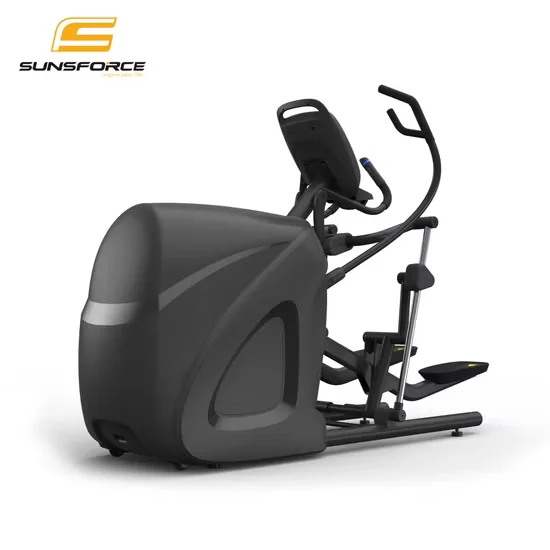
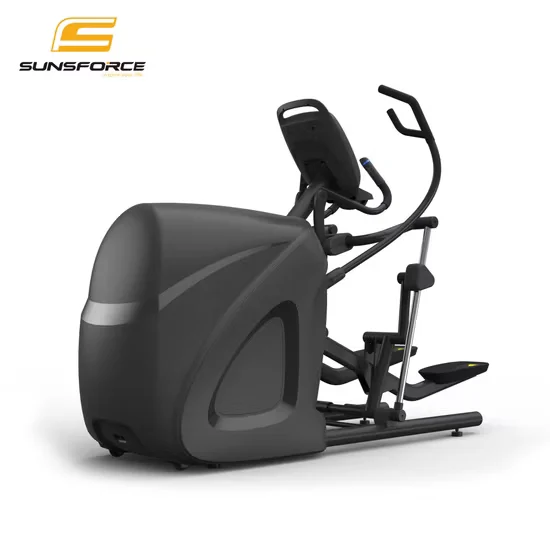
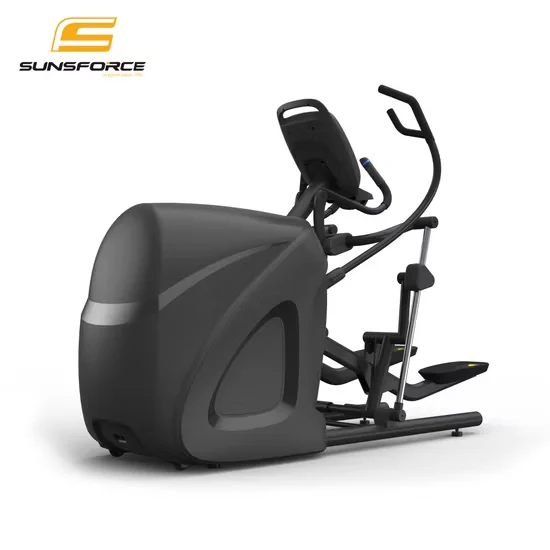
CTC60-T Commercial Elliptical Trainer Exercise Equipment
View Details

Certified
CE / SGS
Warranty
2 Years
OEM/ODM
Available
CTC60-T Elliptical Trainer, 10.1" Touch Screen, 1-25 Resistance Levels, 180kg Max User Weight — 240kg net weight confirms commercial-grade steel frame construction for institutional duty cycles. 1-10 stride grade and 1-15 step depth grade support programmed workout protocols across user profiles. CE/EN957 certified with full export documentation package included. Ships from vertically integrated factory enabling mixed-container loading with Pilates and strength equipment in a single procurement.
Key Features
Mixed-Container Optimization — CTC60-T dimensions align with Pilates reformers and plate-loaded machines for consolidated FCL loading from a single commercial elliptical trainer manufacturer.
| Parameter | Value |
|---|---|
| Designation | CTC60-T |
| Product Type | Elliptical Trainer |
| Console Type | 10.1" Touch Screen |
| Resistance Level | 1-25 |
| Stride Grade | 1-10 |
| Step Depth Grade | 1-15 |
| Pedal Center Distance | 230mm |
| Net Weight | 240kg |
| Max User Weight | 180kg |
| Product Dimensions | 2120×790×1680mm |
| Certification | ISO, RoHS, CE, EN 957 |
| Standards | ISO 9001, ISO 14001, CE, EN 957, RoHS, SGS |
| Facility Type | Typical Use |
|---|---|
| Commercial Gym Chain | Standardized cardio fleet across multiple locations with consistent console interface |
| Hotel Fitness Center | 24-hour access duty cycle with 180kg max user weight accommodating diverse guest profiles |
| University Sports Facility | High-traffic institutional use with documented CE and EN 957 compliance for tender requirements |
| Equipment Distributor | Full-category cardio expansion with mixed-container loading alongside strength and Pilates lines |
A commercial elliptical trainer manufacturer offering mixed-category loading eliminates the freight amortization trap.
When a distributor orders only cardio equipment, the container rarely fills to payload capacity before hitting volume limits. Every unused cubic meter still carries ocean freight, insurance, and port handling charges distributed across fewer units. Sourcing from a vertically integrated facility producing Pilates, strength, and cardio under one roof allows reformers, plate-loaded machines, and ellipticals to share a single FCL, reducing per-unit freight cost substantially [NEED_CITE: freight cost allocation in fitness equipment importation].
CTC60-T occupies the mid-to-high commercial segment with its 10.1" touch screen console and 25 resistance levels, supporting distributor margin structures that require visible differentiation from entry-level units. The 2120×790×1680mm footprint pairs logically with treadmills, rowers, and air bikes from the same commercial elliptical trainer manufacturer, enabling project buyers to specify a unified console ecosystem across cardio categories. Mixed-container loading with Wunda chairs, ladder barrels, and smith machines maximizes container utilization for turnkey facility fitouts.
Voltage configuration must match the destination market before production begins — 220V units shipped to North American facilities without transformer adaptation will destroy control boards on first power-up. CE declaration of conformity and EN 957 test reports travel with every shipment, preventing customs detention at EU member state ports [NEED_CITE: CE documentation requirements for fitness equipment imports]. The export documentation package includes commercial invoice, packing list, certificate of origin, and pre-shipment inspection report with container loading photographs. Production scheduling typically requires multi-week lead times from deposit confirmation to container loading, with voltage and plug standards verified at final QC stage.
The 240kg net weight reflects commercial-grade steel frame construction designed for institutional duty cycles exceeding residential use patterns. Robotic welding across 42 stations ensures consistent penetration depth and eliminates the variability inherent in manual weld operations, particularly critical at stress concentration points where frame tubes intersect. Automated powder coating with proper pre-treatment prevents corrosion underneath the finish — a failure mode that surfaces after months of humidity exposure in tropical climates or coastal gym environments. Six-stage QC includes in-line inspection at laser cutting, CNC bending, welding, powder coating, upholstery, and final assembly, with documented checkpoints before pre-shipment audit [NEED_CITE: six-stage quality control protocols in fitness equipment manufacturing].
Light-commercial ellipticals marketed as commercial grade fail prematurely in high-traffic venues, triggering warranty claims that exceed the original unit cost when factoring technician dispatch, replacement parts, and member dissatisfaction. Missing or invalid CE documentation causes containers to sit at destination ports accumulating demurrage charges while importers scramble to obtain compliant paperwork — or face complete return shipment. Trading companies presenting themselves as factories cannot guarantee spare parts continuity after initial delivery, leaving operators with unusable equipment when control boards or consoles require replacement. Structural redesign requests stall when suppliers lack engineering capability beyond logo printing, forcing buyers to restart vendor qualification with another manufacturer [NEED_CITE: spare parts availability risks from trading company suppliers].
Full-category manufacturing under one roof means CTC60-T ships alongside treadmills, spin bikes, and strength equipment in a single container, eliminating the coordination overhead of managing separate suppliers with different lead times, payment terms, and quality standards. Complete OEM/ODM capability covers private label branding, custom console interfaces, color matching to facility design schemes, and structural modifications beyond surface-level customization. Six-stage QC with documented in-line inspection provides verifiable quality checkpoints rather than relying on supplier self-certification. The export documentation package prepared for EU, North American, MENA, Southeast Asian, and Latin American customs reduces clearance friction at destination ports. Factory audit and showroom visits available by appointment allow buyers to verify production capability before committing to container-quantity orders.
Submit model specifications, order quantity, and destination port to receive quotation with FOB/CIF/DDP options, production lead time, and mixed-container loading recommendations. Request CE declaration and EN 957 test reports to confirm target market compliance before order placement. Provide OEM requirements including private label branding, custom color schemes, or console modifications to assess engineering feasibility and sampling timeline. Schedule factory audit or virtual production line tour to verify manufacturing capability and six-stage QC implementation.
Q: What is the MOQ structure for trial orders versus container-quantity pricing?
A: Trial orders are accepted with flexible MOQ to support new importers testing market response, while container-quantity orders receive tiered pricing based on volume commitment. Mixed-container loading with other cardio, strength, or Pilates equipment helps reach FCL thresholds without overcommitting to a single category. Specific pricing tiers depend on configuration, customization level, and destination market requirements.
Q: Can CTC60-T be loaded in the same container with treadmills and strength equipment?
A: Yes, the 2120×790×1680mm dimensions are designed for mixed-container loading alongside treadmills, rowers, spin bikes, plate-loaded machines, and Pilates equipment from the same manufacturing facility. Container loading plans optimize cube utilization across categories, reducing per-unit freight cost compared to single-category shipments. Partial disassembly options further improve loading density when combining multiple product types.
Q: What OEM and ODM capabilities are available for private label branding?
A: Full OEM/ODM services include private label application, custom console branding, color matching to facility design schemes, and branded packaging. Structural modifications beyond surface-level customization are supported by in-house engineering capability, enabling frame geometry adjustments, console interface changes, and resistance system modifications. Sampling timeline depends on modification complexity and requires engineering feasibility assessment.
Q: Are CE and EN 957 documentation valid for all EU member state customs clearance?
A: CE declaration of conformity and EN 957 test reports are prepared for EU market access and accompany every shipment. Documentation package includes commercial invoice, packing list, certificate of origin, and pre-shipment inspection report to support customs clearance across EU member states. Buyers should confirm specific country requirements before order placement, as some markets have additional national standards.
Q: How is voltage configuration handled for different destination markets?
A: Voltage configuration must be specified before production begins to match destination market requirements — 220V, 110V, or other standards with appropriate plug types. Each unit undergoes voltage verification at final QC stage to prevent control board damage from incorrect power supply. Buyers should confirm local electrical standards and any transformer requirements before submitting order specifications.
Tell us your project details -- we'll deliver a tailored factory quotation, lead time and customization options within 24 hours.
Bella / William
+86 198 5412 8032
+86 132 2531 1800
Fields marked * are required.
Elliptical
Elliptical
![Sunsforce CTC60-T Commercial Fitness Elliptical Machine Factory Direct [WARN] draft identifier mismatch](https://bickstrong.com/wp-content/uploads/2026/08/sunsforce-ctc60-t-commercial-fitness-elliptical-machine-factory-direct-warn-draft-identifier-mismatch-5a34ed.webp)
Elliptical
Elliptical