

Buy Strength Machine with Free Shipping | Wholesale Supplier
The "free shipping" tag on strength equipment is the most expensive label in your procurement budget.
Buying strength machines with free shipping only saves money when the rail travel, weight stack ratio, and pulley multiplier match your members’ expected movement patterns—otherwise, rework and retrofit costs at destination port will dwarf the freight you thought you avoided.
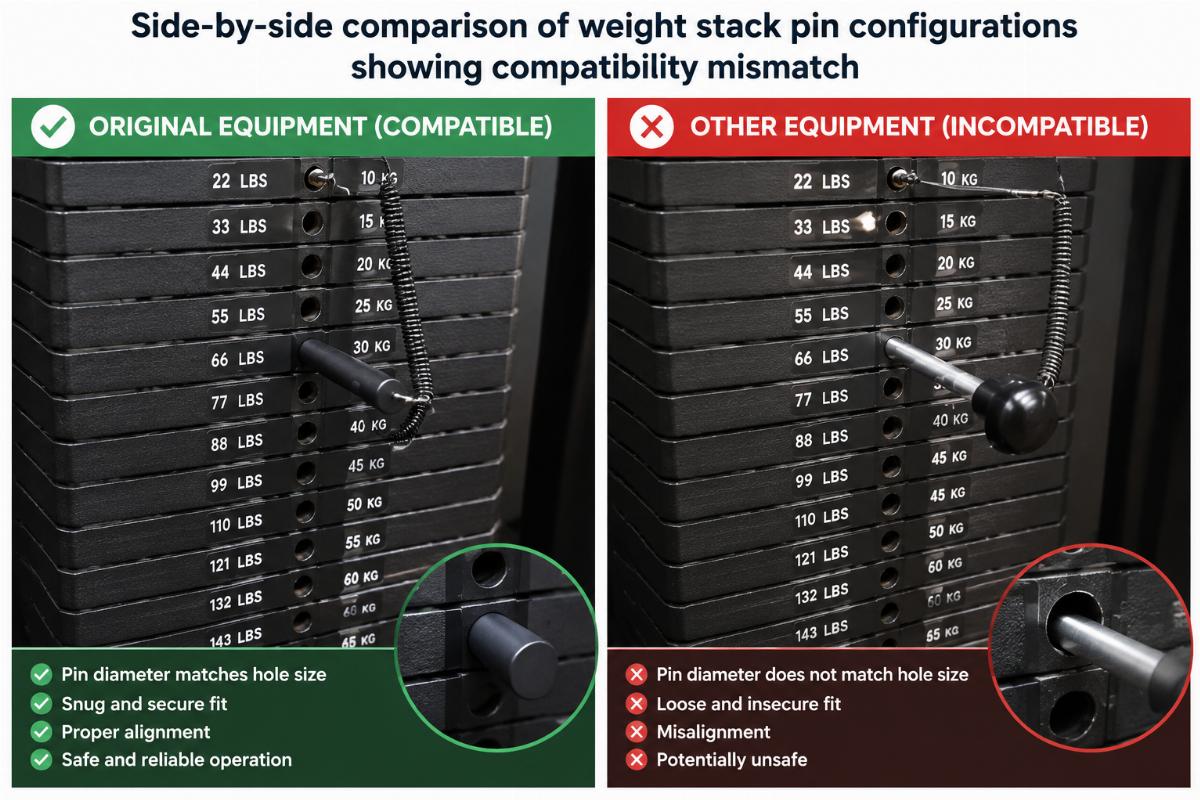
When I was helping a Southeast Asian gym chain source equipment a few years back, the owner handed me a spec sheet from a premium American brand and asked me to match every plate-loaded and selectorized machine. We ticked every box on paper. The container arrived, the machines were bolted down, and within a week the trainers were complaining that the Smith machine bar path felt "wrong." The rail travel was short by a fraction that looked negligible on a CAD drawing but completely changed the squat groove at the bottom of the movement. Worse, the weight stack selector pins did not mate with the standard Olympic inserts their maintenance team kept in stock. The entire batch had to be pulled, modified, and re-shipped. The rework cycle stretched across multiple weeks, and the return freight ended up costing a significant fraction of the original invoice [NEED_CITE: total cost of ownership models in commercial gym procurement]. That project reshaped how I evaluate every request to buy strength machine with free shipping—because the real cost is never the freight.

The lesson is simple but rarely discussed in supplier brochures: free shipping is a logistics promise, not a quality guarantee. Once you understand that, the conversation shifts from "who ships cheapest" to "whose parameters actually work in my gym."
Why Does "Free Shipping" Strength Equipment Often Cost More After Arrival?
Freight is a one-time line item; parameter mismatch is a recurring operational tax.
Most buyers focus on the landed cost—unit price plus ocean freight plus duties. When a supplier offers to buy strength machine with free shipping, that freight line disappears, and the spreadsheet looks clean. What the spreadsheet does not show is the hidden cost chain that triggers the moment a member sits on a cable crossover and feels the resistance curve is off.
Consider a typical scenario: a hotel developer in the Middle East outfits a rooftop fitness center. The procurement team selects selectorized machines based on a glossy brochure and a competitive quote that includes door-to-door delivery. The machines arrive on schedule. But the pulley multiplier on the lat station is calibrated for a different ratio than what the brand reference they were mimicking used. Members—many of them expats trained on premium equipment—immediately notice the stack feels "too light at the start, too heavy at the finish." The hotel operator faces a choice: live with complaints or retrofit the pulley system. Retrofitting means sourcing new pulleys, re-cabling, and re-testing load curves, which ends up consuming a meaningful slice of the original equipment budget [NEED_CITE: fitness equipment retrofit cost benchmarks in hospitality projects].
The pattern repeats across regions. A distributor in West Africa places a trial order of plate-loaded machines. The weight plates use a sleeve diameter that does not match the locally available Olympic standard. The first five units work because the factory included adapter bushings. The second batch—scaled up after the trial—ships without those bushings because the spec sheet did not explicitly call them out. The distributor now has a container full of machines that cannot accept the plates their customers already own. The trial-to-bulk cycle stretches across months while the issue is resolved.
| Cost Layer | Visible at Order | Surfaces After Delivery |
|---|---|---|
| Unit price | Yes | — |
| Ocean freight | Yes (or waived) | — |
| Import duties | Yes | — |
| Parameter rework | — | Frequently |
| Local parts incompatibility | — | Frequently |
| Member complaint handling | — | Inevitably |
The takeaway is not that you should avoid buy strength machine with free shipping offers. It is that you must validate the technical parameters before the container is sealed, because once the machines are on the water, your leverage drops to near zero.
What Are the Three Parameters That Determine Whether a Strength Machine Actually Works?
Rail travel, weight stack ratio, and pulley multiplier—differences invisible on paper become obvious under a barbell.
When you set out to buy strength machine with free shipping, the supplier will send you a spec sheet with dimensions, max load, and weight stack capacity. Those numbers matter, but they do not tell you whether the machine feels right. Three deeper parameters do.
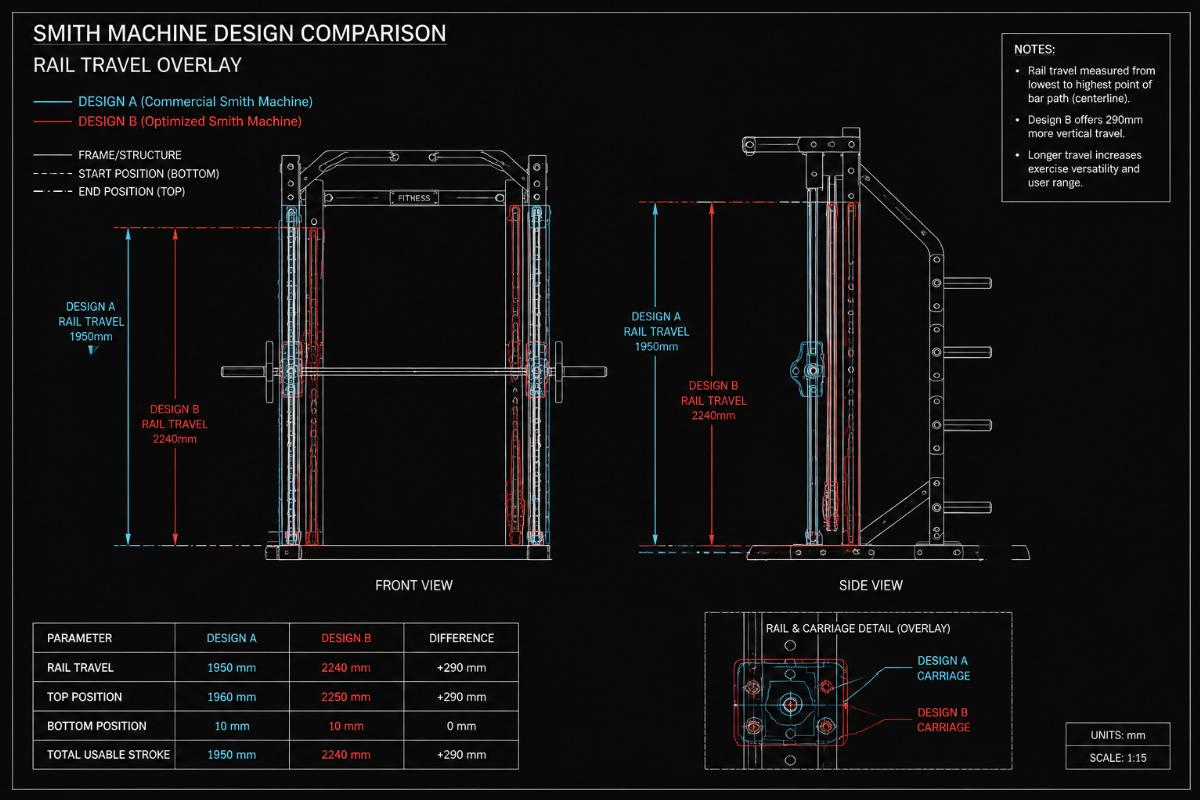
Rail travel on Smith machines and linear-guided equipment. The distance the barbell travels along the guide rails determines the effective range of motion. A difference of a couple of centimeters—seemingly trivial—alters the bottom position of a squat or the lockout of a bench press. Trainers notice immediately. Members blame the machine. The fix, if there is one, involves extending the rail or repositioning the stoppers, both of which require workshop access and engineering sign-off [NEED_CITE: biomechanical range-of-motion standards in resistance training equipment].
Weight stack ratio on selectorized machines. This is the relationship between the labeled plate weight and the actual resistance delivered at the handle. A "150 lb" stack should deliver roughly 150 lb of resistance at the starting position, accounting for the mechanical advantage of the cam. If the cam profile is miscalibrated, the first third of the stack feels light and the last third feels impossibly heavy. Members compensate by loading adjacent machines beyond their intended use, accelerating wear across the gym floor.
Pulley multiplier on cable-based equipment. Cable crossovers, functional trainers, and lat pulldowns rely on pulley configurations that determine how much stack weight translates into handle resistance. A 2:1 multiplier means 100 lb on the stack produces 50 lb at the handle but doubles the travel distance. Get this wrong and the exercise either feels too easy (defeating the purpose) or too short (frustrating tall users). The multiplier is rarely listed on standard spec sheets, yet it is one of the first things experienced gym owners ask about [NEED_CITE: cable machine mechanical advantage specifications in commercial fitness equipment].
| Parameter | What It Affects | How to Verify Before Ordering |
|---|---|---|
| Rail travel | Range of motion, bar path | Request CAD overlay against reference brand |
| Weight stack ratio | Resistance feel across the stack | Ask for cam profile documentation |
| Pulley multiplier | Effective load and cable travel | Confirm ratio in writing, request test report |
The common thread: none of these parameters appear in a typical marketing brochure. You have to ask for them specifically, and you have to ask before you commit to buy strength machine with free shipping from any given source.
How Can You Verify That a Supplier’s Spec Sheet Reflects Reality?
Request the documents that are expensive to fake: CAD files, physical samples, and third-party test reports.
Trust is earned through verifiable artifacts, not adjectives. When a supplier invites you to buy strength machine with free shipping, the responsible next step is to ask for three things that separate serious manufacturers from catalog aggregators.
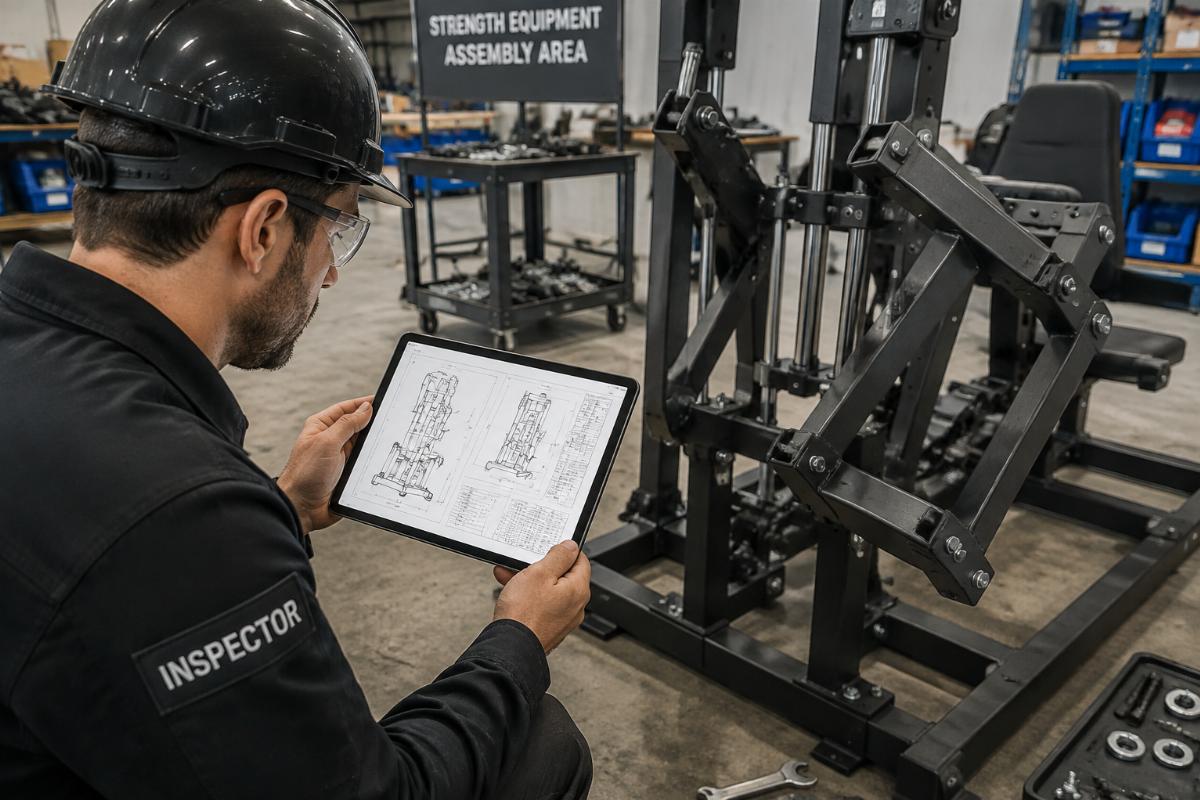
First, request the CAD files for the specific model you are ordering. Not a generic brochure rendering—the actual engineering drawings for the production version. Overlay these against the reference machine you are trying to match. Check the rail mounting points, the pivot locations on plate-loaded arms, and the cam geometry on selectorized stacks. A supplier who hesitates to share CAD files is usually a supplier who does not control the engineering.
Second, ask for a physical sample of the weight stack insert pins and the plate sleeves. Ship them to your local maintenance team and have them test fit with the equipment you already own. This single step would have prevented the West Africa incompatibility issue described earlier. The cost of express-shipping a small sample box is trivial compared to the cost of a container full of machines that do not accept local plates [NEED_CITE: commercial gym equipment compatibility standards across regions].
Third, request a pulley multiplier test report for cable-based machines. This document should show the actual resistance measured at the handle versus the selected stack weight, at multiple points through the range of motion. If the supplier cannot produce this, they have likely never tested their own machines to this level of detail.
A European distributor learned this the hard way. They ordered a full container of cable crossovers from a new source, attracted by a buy strength machine with free shipping offer that undercut their incumbent supplier substantially. The machines looked correct in photos. The spec sheet matched the reference brand on paper. But the pulley assemblies used a different bearing specification that introduced noticeable friction at low loads. By the time the issue was diagnosed—through member complaints, not pre-shipment inspection—the machines had been installed across multiple boutique studio locations. The pulley replacement program consumed a significant portion of the margin the original discount had promised.
The verification protocol is straightforward:
- CAD overlay for any guided or cam-driven machine
- Physical sample of interface components (pins, sleeves, handles)
- Pulley test report for any cable-based equipment
- Floor plan review to confirm footprint and clearance per unit
Do all four before the purchase order, and the buy strength machine with free shipping offer becomes genuinely economical. Skip any of them, and you are gambling with your members’ experience.
Factory-Direct vs. Branded Distribution: Which Route Actually Saves Money?
Factory-direct pricing undercuts premium brands substantially, but only if you can specify what you need and verify what you get.
The final decision point when you buy strength machine with free shipping is whether to go through an authorized distributor of a premium brand or source directly from a manufacturing facility. The conventional wisdom favors the brand: you get consistency, warranty infrastructure, and the comfort of a recognizable nameplate. What the conventional wisdom does not mention is that the same manufacturing ecosystem that produces premium-branded equipment also produces factory-direct alternatives at a fraction of the cost—typically well below half the branded price for equivalent specifications [NEED_CITE: commercial fitness equipment pricing comparison between OEM and branded channels].
The trade-off is real, though. Factory-direct sourcing requires the buyer to take on specification responsibility. A branded distributor will hand you a catalog and a part number. A factory-direct supplier will hand you a capability list and ask what you want. This means you must know your rail travel requirements, your preferred pulley ratios, your local plate compatibility standards, and your target member demographic’s anthropometric profile. If you cannot articulate these, factory-direct becomes a risk. If you can, it becomes a massive advantage—because the factory can adjust these parameters to your market in ways a branded catalog never will.
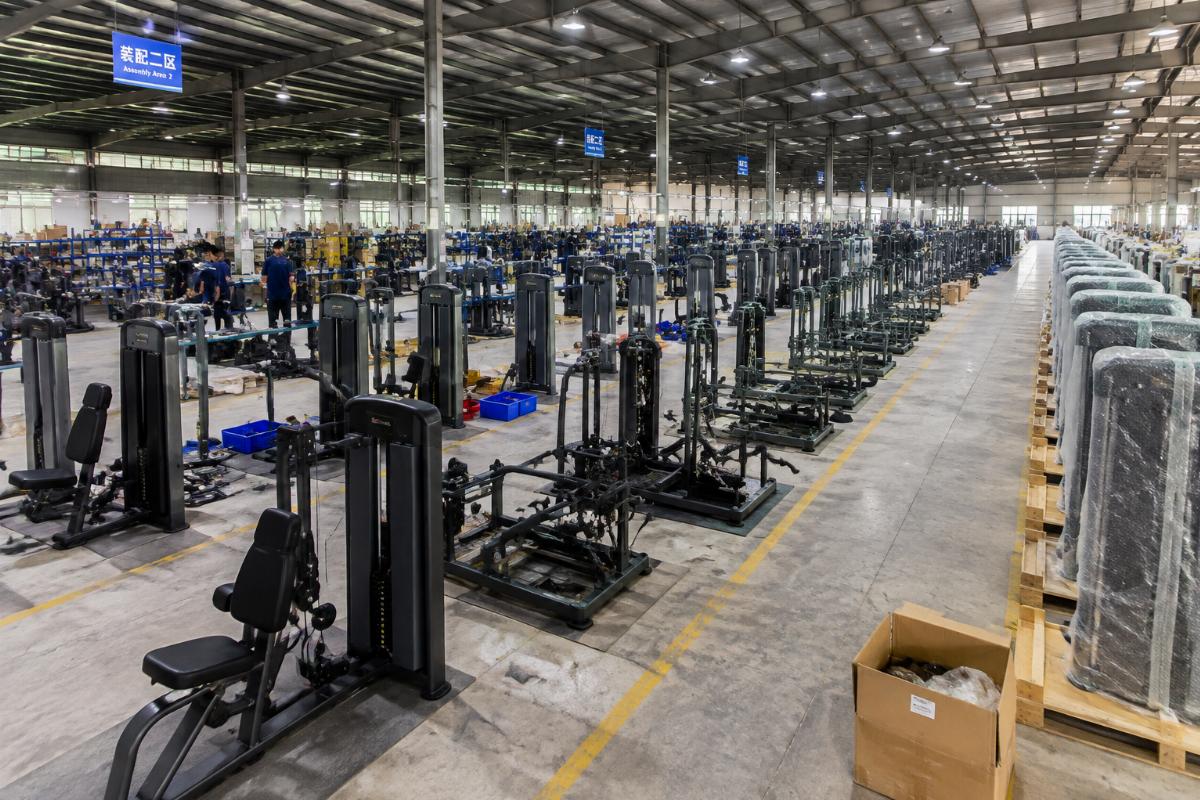
Bick operates exactly in this space. Based in Shandong Province, the facility produces a full range of commercial strength equipment—Smith machines, power racks, cable crossovers, plate-loaded and selectorized machines across all major muscle groups—alongside cardio equipment, free weights, and functional training gear. The operation carries CE certification, offers full OEM and ODM branding, and accepts orders ranging from single units up to complete gym fit-outs. The pricing structure sits substantially below the premium tier, and the factory supports container-load consolidation for distributors outfitting multiple locations.
What matters for a buyer evaluating whether to buy strength machine with free shipping from a factory-direct source like Bick is the turnkey capability: the factory can review your floor plan, overlay your reference brand’s parameters, adjust rail travel or pulley ratios to match, and ship the entire package—including flooring and accessories—in consolidated containers. This eliminates the fragmentation that occurs when you source cardio from one vendor, strength from another, and free weights from a third, each with different shipping terms and compatibility assumptions.
The smart procurement path is not to choose between "cheap factory" and "expensive brand." It is to demand factory-direct pricing with brand-level parameter discipline. Verify the CAD, test the samples, confirm the pulley ratios, and then let the factory build to your spec—not theirs.
Conclusion
Free shipping is a freight term, not a procurement strategy.
The real cost of strength equipment is determined long before the container leaves the port—by rail travel accuracy, weight stack calibration, pulley multiplier verification, and local parts compatibility. Validate these parameters through CAD overlays, physical samples, and test reports before you commit, and a factory-direct buy strength machine with free shipping offer becomes the most economical path to a fully equipped facility. Skip the validation, and the freight you saved will be the least of your expenses.
