Chest Press Machine Pricing Guide for Finland Commercial Buyers
Most buyers assume the gap between premium brand quotes and factory-direct offers comes from quality differences. It doesn’t. The real gap is brand markup, layered distribution margins, and the cost of maintaining showrooms in Helsinki or Espoo.
For Finnish commercial buyers, chest press machine pricing typically falls into three tiers: premium international brands (Life Fitness, Technogym, Hammer Strength) at the top, mid-tier European or Turkish imports in the middle, and factory-direct options from certified Asian manufacturers at the base. Factory-direct chest press machine pricing can run substantially lower than premium brand equivalents while meeting the same CE mechanical directive requirements and commercial-grade steel specifications. The key is verifying documentation transparency, not just comparing unit prices.
I still remember a quote request from a Finnish gym chain a few years back. They sent over a Life Fitness quotation for a seated chest press and asked if we could match it. I gave them our standard factory price, expecting a straightforward comparison. Instead, they came back with a list of questions about CE test reports, fatigue cycle documentation, spare parts lead times, and whether our powder coating process met Nordic humidity resistance expectations. I had to scramble to pull together mechanical stress test files and material traceability records before they’d even consider a sample order. That’s the Nordic market for you—price matters, but verifiable compliance and after-sales infrastructure matter more. [NEED_CITE: EU Machinery Directive 2006/42/EC compliance requirements for strength training equipment]
Let’s break down what actually drives chest press machine pricing for Finland buyers and how to evaluate factory-direct options against premium brand alternatives.
What Determines Chest Press Machine Pricing for Finland Buyers?
The final landed cost of a chest press machine in Finland is shaped by four factors: frame material grade, certification and testing overhead, brand distribution structure, and shipping logistics configuration.
Steel is the single largest material cost component. Commercial-grade chest press machines use rectangular steel tubing with specific wall thickness ratings—typically in the range of heavy-duty gauge specifications for selectorized or plate-loaded models. The difference between a machine built with standard mild steel and one using higher-grade cold-rolled steel affects both structural rigidity under repeated loading and long-term resistance to deformation. [NEED_CITE: material grade specifications for commercial strength equipment frames per EN ISO standards]
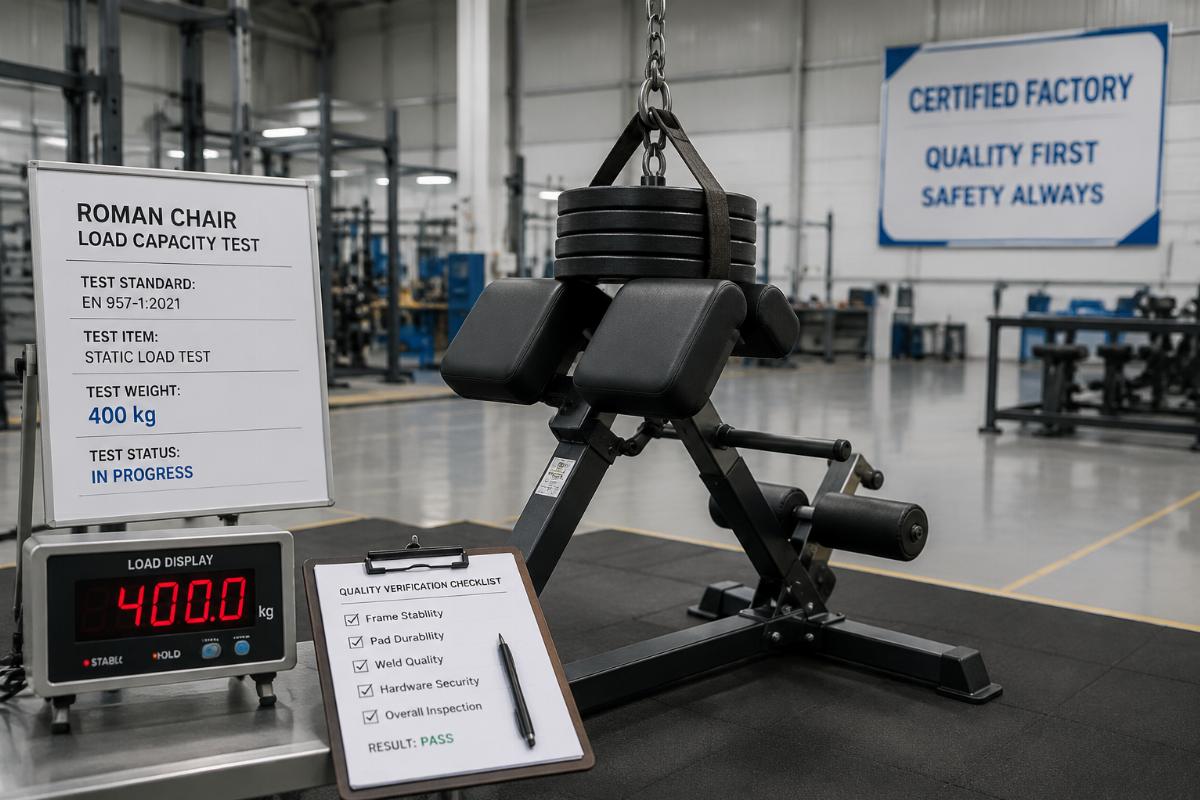
Certification costs are often underestimated. CE marking for the European market isn’t just a sticker—it requires a technical file that includes risk assessments, mechanical stress test reports, fatigue cycle documentation, and declarations of conformity. For Nordic buyers specifically, customs authorities and end-user procurement committees frequently request to see the actual test data behind the CE mark, not just the certificate itself. This documentation overhead adds to production cost but is non-negotiable for market entry. [NEED_CITE: CE technical file requirements for fitness equipment under EU Machinery Directive]
Brand distribution structure explains the largest portion of price variance. Premium brands maintain regional offices, local showrooms, certified dealer networks, and marketing budgets across Europe. These costs are embedded in every unit sold. Factory-direct chest press machine pricing eliminates these layers, though it shifts the responsibility for compliance verification and logistics coordination onto the buyer.
Shipping configuration matters significantly for Finland. A full container load dramatically reduces per-unit freight cost compared to less-than-container shipments. The port of destination—typically Helsinki or Kotka—determines inland transport costs, and Finnish import VAT plus any applicable anti-dumping duties on steel products must be factored into the final calculation. [NEED_CITE: Finnish customs duty rates and import VAT structure for fitness equipment]
How Do Factory-Direct Prices Compare to Premium Brands Like Life Fitness?
At equivalent commercial specifications, factory-direct chest press machine pricing from certified manufacturers typically represents a substantial discount compared to premium international brands—often in the range of nearly half the branded unit cost, before shipping and duties.
This isn’t because factory-direct machines cut corners on materials. The steel grades, bearing systems, cable routing, and upholstery foam densities can be specified to match premium brand benchmarks. The cost difference comes from the absence of brand licensing fees, regional distributor markups, and the overhead of maintaining physical retail presence in Nordic markets.
A Nordic fitness equipment distributor I worked with once conducted a side-by-side teardown of a premium brand chest press and a factory-direct equivalent. The frame welding quality was comparable. The seat adjustment mechanism used similar pin-and-ladder designs. The main difference was the branded unit’s proprietary cable routing path and the factory-direct unit’s more conventional pulley configuration—both functional, neither inherently superior. The price gap, however, was significant enough that the distributor chose to develop a private-label program rather than continue as a brand reseller.
That said, factory-direct procurement requires the buyer to take on responsibilities that premium brands handle internally: verifying CE documentation completeness, confirming that fatigue testing covers the specific model configuration ordered, and establishing spare parts supply agreements before the first container arrives. [NEED_CITE: comparative cost structure analysis of branded vs factory-direct fitness equipment distribution]
| Specification Factor | Premium Brand | Factory-Direct Certified | Unbranded Low-Cost |
|---|---|---|---|
| CE Technical File | Full batch-level | Verifiable per order | Not provided |
| Steel Frame Grade | Commercial heavy-duty | Commercial heavy-duty | Light-duty |
| Fatigue Test Documentation | Full batch-level | Sample-level | None |
| Spare Parts Availability | Regional warehouse | International shipment commitment | Uncontrolled |
| Powder Coat Corrosion Resistance | Robust | Robust | Vulnerable |
Which Specifications Matter Most for Finnish Commercial Gyms?
For high-traffic Finnish commercial facilities, the critical chest press specifications are multi-angle seat adjustment range, cable and pulley smoothness under load, frame weight capacity rating, and corrosion-resistant surface treatment.
Finnish gym environments experience significant seasonal humidity variation, particularly in coastal cities. This makes surface treatment quality a higher priority than it might be in drier climates. Electrostatic powder coating with proper pre-treatment—phosphating or zinc-rich priming—provides substantially better corrosion resistance than basic spray paint. Buyers should request coating thickness specifications and salt-spray test endurance data rather than accepting generic "powder coated" claims. [NEED_CITE: powder coating durability standards for fitness equipment in humid climates]
Seat adjustment mechanisms see the most mechanical wear on any chest press. Pin-and-ladder systems with hardened steel pins and laser-cut adjustment holes outperform cheaper stamped alternatives over extended service life. The adjustment range should accommodate users across a broad spectrum of body dimensions—Nordic populations trend toward taller statures, so machines designed primarily for Asian or Southern European anthropometric data may fall short.
Cable and pulley systems determine the feel of the movement. Sealed bearing pulleys with aircraft-grade cables rated for repeated flex cycles deliver the smooth resistance curve that commercial users expect. Open pulley designs or cables with inadequate strand count develop friction points and premature wear, leading to maintenance calls and user complaints.
Upholstery foam density and vinyl tear resistance round out the high-wear contact points. High-density foam retains shape under repeated loading, while premium vinyl resists cracking in dry indoor heating conditions common during Finnish winters. [NEED_CITE: ergonomic design standards for strength equipment seat adjustment ranges]
What Compliance and After-Sales Documents Do Finnish Buyers Require?
Finnish commercial buyers typically require a complete compliance package before placing volume orders: CE declaration of conformity, mechanical stress test reports, fatigue cycle test documentation, material certificates for frame steel, and a written spare parts supply commitment with defined response timelines.
The CE declaration alone is insufficient. Nordic procurement processes—especially for chain gym operators and municipal sports facilities—routinely request the underlying test data. This means the buyer needs access to actual force-load calculations, weld integrity reports, and cycle fatigue test results, not just a summary certificate. Manufacturers who can provide full technical file transparency have a distinct advantage in this market. [NEED_CITE: Finnish public procurement documentation requirements for fitness equipment]
Spare parts commitment is equally critical. Finnish buyers operate in a market where equipment downtime directly affects membership retention. A factory-direct supplier must demonstrate the ability to ship replacement cables, pulleys, seat pads, and adjustment pins within a defined timeframe—typically measured in days, not weeks. Some manufacturers maintain European warehousing for fast-moving wear parts; others commit to expedited international shipment from their production facilities. Either model works, but the commitment must be documented in the supply agreement.
A Scandinavian gym chain operator once shared their evaluation framework with me. They scored suppliers on a matrix: documentation completeness, sample quality consistency, spare parts response commitment, and reference customer availability in the Nordic region. Price ranked fifth. The logic was straightforward—equipment that sits idle waiting for parts costs far more than the upfront savings on a cheaper unit.
| Document Type | Required for Order | Verification Level |
|---|---|---|
| CE Declaration of Conformity | Mandatory | Original signed document |
| Mechanical Stress Test Report | Mandatory | Full technical file access |
| Fatigue Cycle Test Data | Mandatory | Model-specific results |
| Material Certificates (Frame Steel) | Requested | Batch-level traceability |
| Spare Parts Lead Time Commitment | Mandatory | Written agreement |
| Reference Customers in Nordic Region | Preferred | Verifiable contacts |
How to Structure a Cost-Effective Container-Load Order from Shandong?
The most cost-effective approach for Finnish buyers is to consolidate multiple machine models into a single full container load, maximizing cubic utilization while triggering volume-based pricing tiers from the manufacturer.
A standard forty-foot high-cube container offers substantial cubic capacity. Chest press machines, with their relatively compact footprint compared to cardio equipment, pack efficiently when nested or partially disassembled. Mixing chest press units with seated rows, leg extensions, and cable crossover frames in a single container spreads the fixed freight cost across a broader product range, reducing the per-unit landed cost significantly.
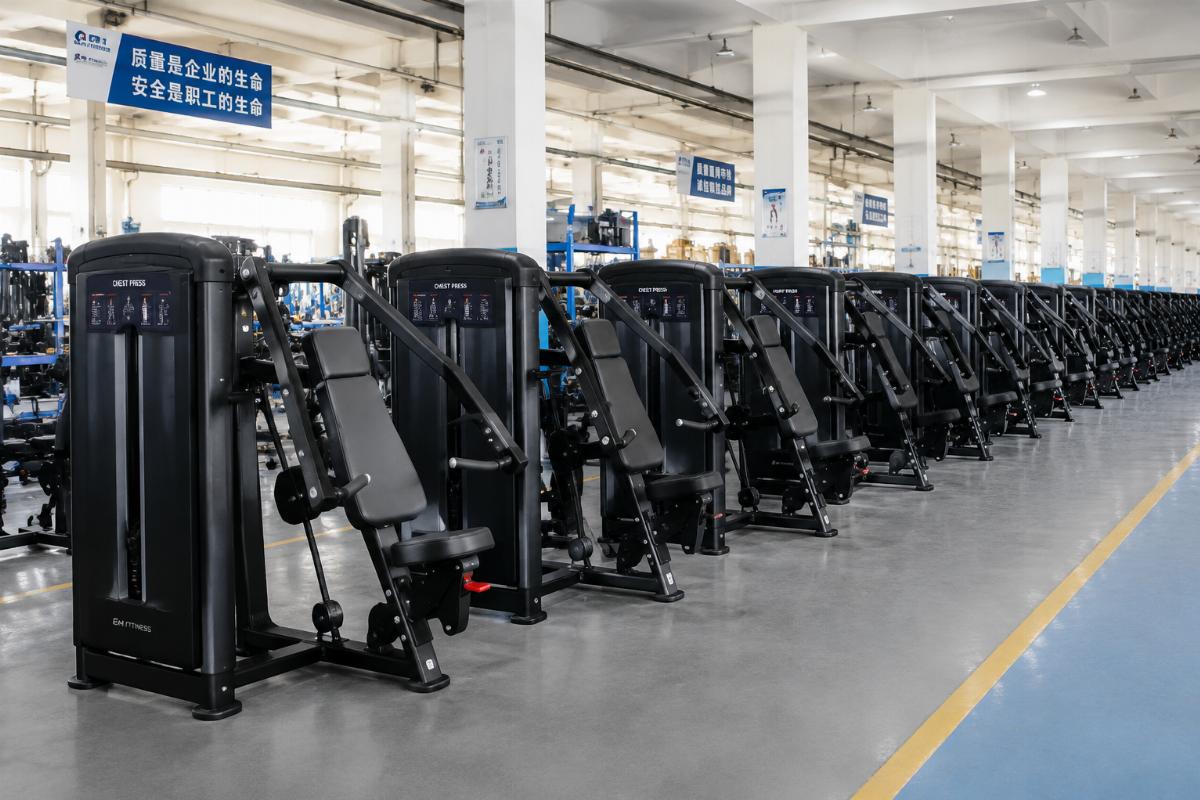
Manufacturers in Shandong Province—the primary production cluster for commercial fitness equipment in China—typically offer tiered pricing based on order volume. A single chest press unit ordered as a sample carries the highest per-unit cost. A full container of mixed strength equipment triggers the most favorable pricing tier. The key is planning the equipment mix early in the procurement process rather than ordering piecemeal.
Communication lead time must be factored into the procurement timeline. Production scheduling, customization requests such as frame color matching or upholstery logo embroidery, and pre-shipment inspection coordination all require clear communication channels. Manufacturers accustomed to working with European buyers typically assign dedicated export coordinators who manage order tracking, documentation preparation, and shipping coordination. [NEED_CITE: container load optimization strategies for fitness equipment export from China to Northern Europe]
A Baltic fitness equipment distributor I’ve worked with structures their orders on a quarterly cycle. They consolidate gym outfitting projects across multiple client sites into a single container order every three months. This approach minimizes per-unit freight cost, simplifies customs clearance through batch processing, and allows them to negotiate favorable payment terms based on recurring order volume. The model works because they maintain a standardized equipment specification across most commercial projects, reducing the complexity of mixed-model container loading.
Conclusion
Chest press machine pricing for Finland buyers reflects documentation transparency, material specification rigor, and logistics planning—not just factory unit cost.
Factory-direct procurement offers substantial cost advantages over premium brands when buyers invest in verifying compliance documentation, specifying commercial-grade materials, and structuring container-load orders efficiently. The Nordic market rewards suppliers who treat compliance and after-sales infrastructure as core product features rather than optional add-ons. Price comparison without documentation comparison is incomplete analysis.