

Commercial Fitness Equipment Manufacturer & Wholesale Supplier | Bick
Lower price tags on fitness machines rarely mean better value—they mean thinner steel, skipped welds, and warranty claims you will pay for twice.
Fitness equipment price in Egypt for 2026 ranges across three clear tiers: entry-level home units, mid-range commercial singles, and full turnkey gym packages. The actual landed cost per unit depends far more on steel gauge, welding method, and certification validity than on the quoted FOB number. Buyers who compare only the invoice price routinely absorb hidden expenses from port delays, premature frame cracks, and failed customs inspections.
I still remember standing on the dock at Sokhna Port, watching a forklift tilt a crate of plate-loaded machines that had been welded with spot joints instead of full continuous seams. The crate had shifted during transit, and two frames showed hairline fractures near the load-bearing gussets. The buyer, a gym chain operator in Cairo, had chosen the lowest fitness equipment price in Egypt quote he received—saving a noticeable amount per unit on paper. By the time replacement frames were manufactured and re-shipped, the total project cost had multiplied several times over the original savings. That kind of miscalculation happens constantly when purchasers treat fitness machines like commodity goods instead of engineered structures [NEED_CITE: structural failure modes in welded gym equipment frames per EN ISO 20957].

Let me walk you through what actually determines the real cost of outfitting a gym in Egypt this year, based on what I have seen on the ground.
What Is the Fitness Equipment Price in Egypt Across Equipment Categories in 2026?
Pricing splits into three tiers—home-grade, commercial single-unit, and turnkey package—and the gap between tiers is driven by frame construction, not brand labels.
When buyers search for fitness equipment price in Egypt, they usually encounter a jumble of listings that mix household treadmills with heavy-duty commercial rigs. The categories need to be separated before any meaningful comparison is possible.
| Category | Frame Construction | Typical Use Case | Price Position | Certification Level |
|---|---|---|---|---|
| Home-grade | Light-gauge tubing, spot welds | Residential, low daily usage | Entry tier | Self-declared or none |
| Mid-range commercial | Medium-gauge tubing, mixed welds | Boutique studios, hotel gyms | Mid tier | Partial third-party |
| Full commercial | Heavy-gauge tubing, full continuous welds | High-traffic commercial gyms | Premium tier | Full third-party verified |
A hotel developer I worked with in the Red Sea resort corridor needed compact cardio and strength units for a boutique fitness room. They initially requested the cheapest fitness equipment price in Egypt options available. After walking through the space-planning requirements—footprint per machine, daily user turnover, maintenance access—we shifted them to mid-range commercial units. The per-unit cost was higher, but the space efficiency gain meant they could fit the same functional capacity in a noticeably smaller room, reducing the fit-out cost for flooring and HVAC. The total project budget actually came in lower than the original plan built around cheaper, bulkier home-grade machines.
For a full commercial gym package, buyers should expect the cardio segment to occupy roughly a third of the total container budget, while strength equipment takes about half, with free weights and functional accessories filling the remainder. This ratio holds across multiple projects I have monitored in the North Africa market.
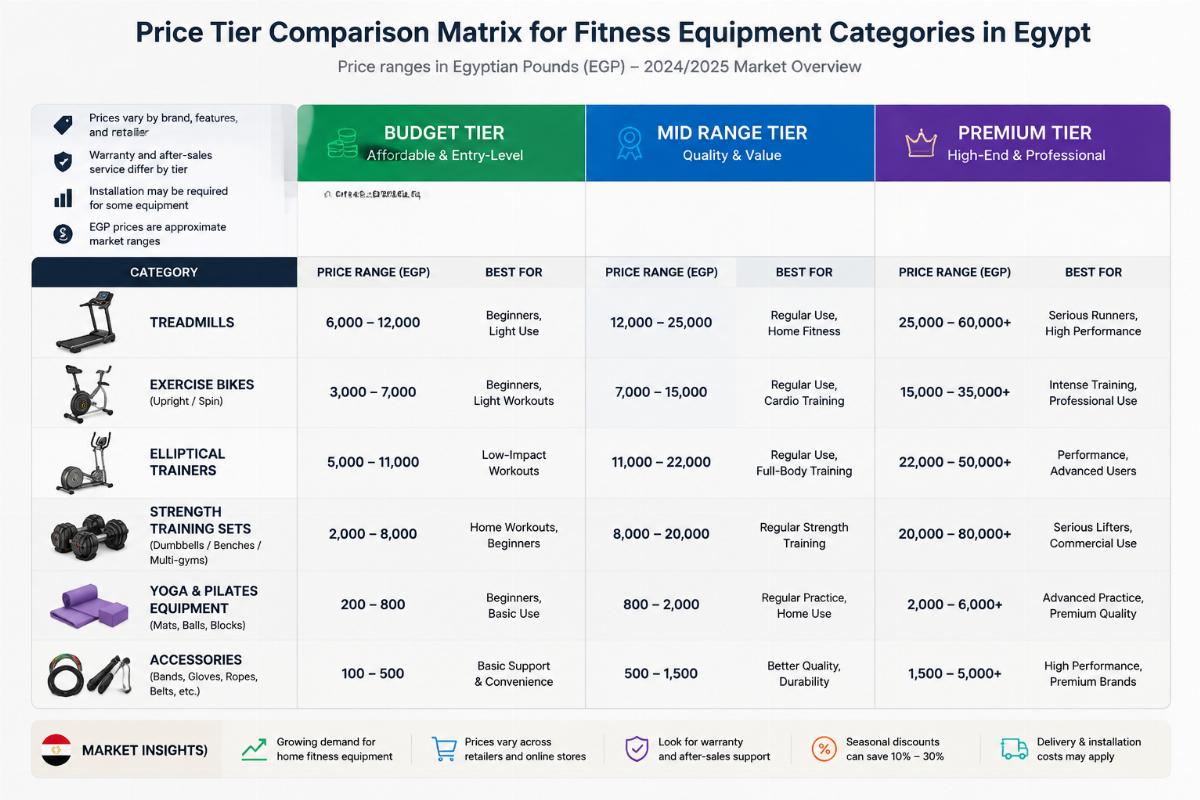
The key takeaway: do not compare a home treadmill quote against a commercial treadmill quote and assume the difference is just margin. The structural engineering underneath is fundamentally different [NEED_CITE: equipment durability standards comparison per EN 957 and ASTM F2216].
Which Core Parameters Actually Drive Fitness Equipment Price in Egypt?
Steel wall thickness, welding工艺 continuity, and certification authenticity are the three variables that separate a machine that lasts from one that becomes a liability.
Let me break down each parameter with the kind of detail that matters when you are signing a purchase order.
Steel Gauge and Load-Bearing Capacity
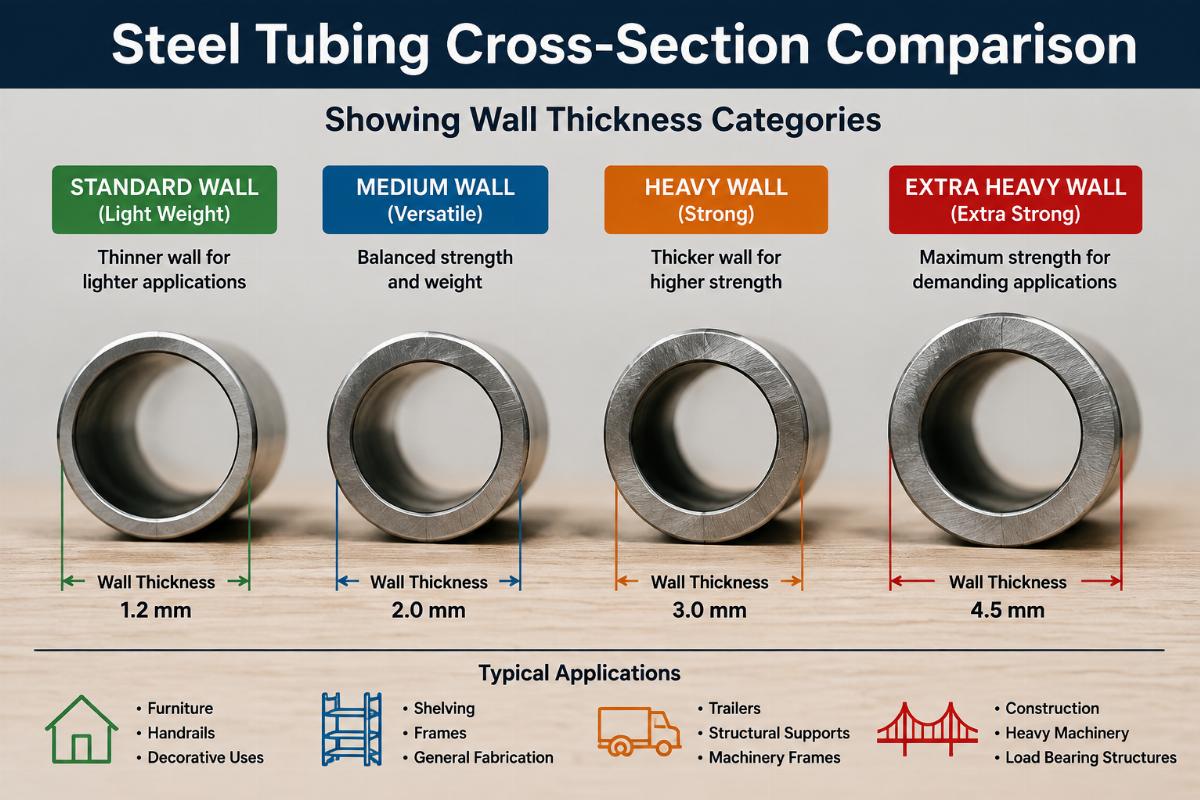
The frame tube wall thickness is the single most impactful cost driver. A difference of even one millimeter in wall thickness translates to a substantial reduction in fatigue life under repetitive loading. Commercial-grade frames use heavy-gauge rectangular steel tubing that resists flex and vibration over extended service life. Entry-level machines use noticeably thinner tubing that may look identical from the outside but will develop stress fractures under sustained commercial use.
| Steel Grade | Wall Thickness Category | Load Capacity | Fatigue Resistance |
|---|---|---|---|
| Entry commercial | Thin-wall category | Moderate | Vulnerable to cyclic stress |
| Standard commercial | Medium-wall category | High | Standard endurance |
| Heavy-duty commercial | Thick-wall category | Maximum | Substantially extended |
I once inspected a batch of Smith machines where the supplier had substituted thinner tubing without disclosure. The external dimensions matched the spec sheet, but a caliper check revealed the wall was in the thin-wall category rather than the thick-wall category specified. Under the load ratings these machines were marketed for, the frames would have been vulnerable to progressive deformation within a short operational window.
Welding Method
Full continuous welding along all structural joints provides substantially higher joint integrity compared to intermittent spot welding. Spot welds create stress concentration points where cracks initiate under cyclic loading. The cost difference between the two methods is relatively modest in production, but the performance gap under real-world gym conditions is dramatic [NEED_CITE: welded joint fatigue behavior in structural steel per AWS D1.1 guidelines].
Certification Authenticity
A CE mark on a product sheet does not automatically mean the machine has passed independent third-party testing. Some manufacturers issue self-declared conformity statements that carry no external verification. Buyers importing fitness equipment price in Egypt shipments need to confirm whether the CE documentation comes from a notified body or is merely an internal declaration. Egyptian customs authorities have tightened inspection requirements, and shipments lacking verifiable certification face delays that generate demurrage charges quickly [NEED_CITE: Egyptian import conformity assessment requirements for fitness equipment under GOEIC regulations].
Full Container Load versus LCL Consolidation: Which Delivers a Lower Fitness Equipment Price in Egypt?
The cheapest per-unit FOB price does not always produce the cheapest landed cost—container utilization efficiency and hidden logistics charges can reverse the apparent advantage.
This is one of the most persistent misconceptions I encounter. Buyers see a lower per-unit price from a supplier offering mixed-container consolidation and assume they are getting a better deal. The math often tells a different story.
A full container load dedicated to a single equipment category allows maximum stacking density and minimal wasted space. When you consolidate different machine types—treadmills, cable crossovers, plate-loaded units, free weight sets—into one container, the irregular shapes create void spaces that reduce the effective unit count per shipment. You are paying for container space that carries nothing.
| Shipping Method | Container Utilization | Per-Unit Freight Share | Damage Risk | Hidden Cost Exposure |
|---|---|---|---|---|
| Full container, single category | Maximum | Noticeably reduced | Low | Minimal |
| Full container, mixed categories | Moderate | Moderate | Moderate | Moderate |
| LCL consolidation | Low | Substantially higher | Noticeably higher | High |
Beyond freight efficiency, LCL shipments face additional handling at consolidation warehouses, increasing the probability of transit damage. I have seen cable crossover frames arrive with bent uprights because they were stacked beneath heavier pallets in a shared container. The replacement cost and project delay far exceeded any per-unit savings from the consolidation approach.
For buyers assembling a complete gym, the optimal approach is to work with a manufacturer that offers container-load consolidation services with engineered loading plans. This means the loading sequence is planned to maximize density while protecting each piece—cardio units on the bottom with protective crating, strength frames nested efficiently, free weights distributed as ballast to stabilize the load. Bick provides this kind of integrated loading service as part of their turnkey gym package delivery, ensuring the fitness equipment price in Egypt that arrives at the port reflects genuine value rather than logistics waste.
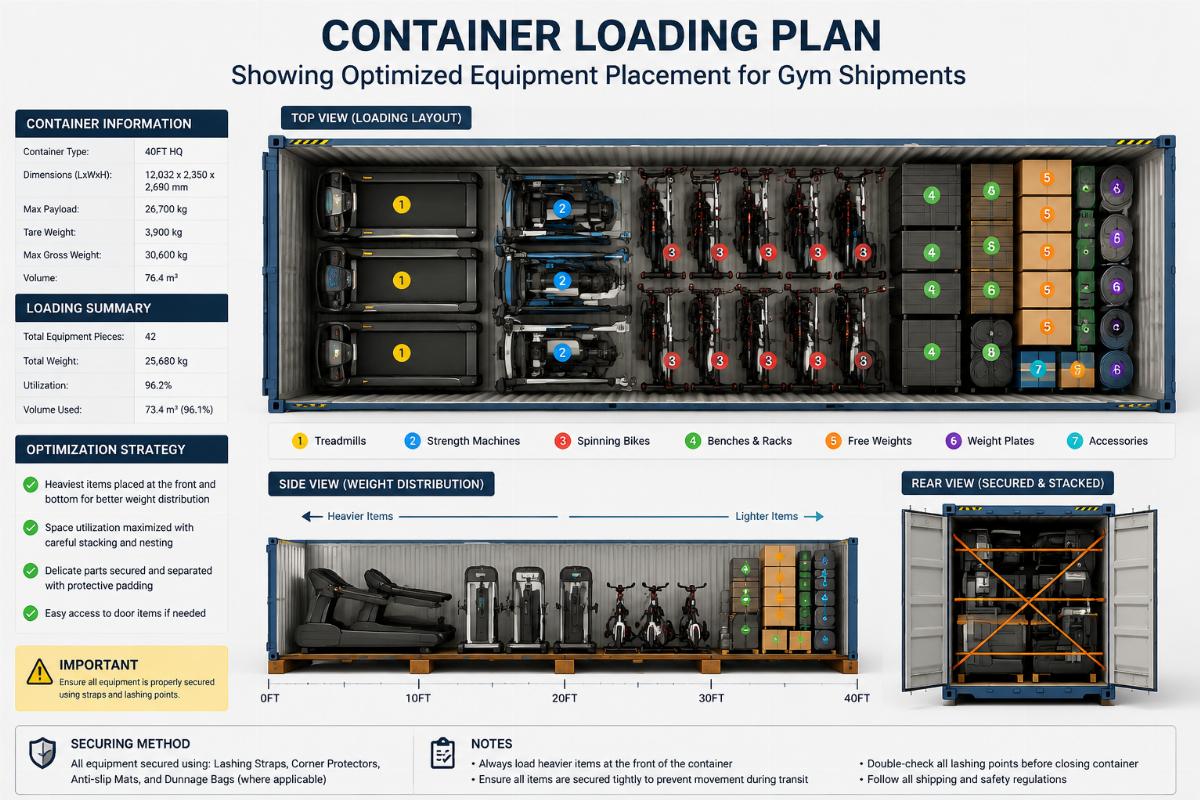
The bottom line: calculate landed cost per functional unit, not per invoice line item [NEED_CITE: total cost of ownership methodology for gym equipment procurement].
How Do You Verify That a Supplier’s Fitness Equipment Price in Egypt Quote Reflects Real Quality?
Request mill certificates for steel tubing, demand weld inspection reports, and confirm certification through the issuing body directly—not through the supplier’s own marketing materials.
Verification is where most buyers cut corners, and it is where the most expensive mistakes originate. Here is the practical checklist I use when evaluating a new supplier for a client project.
Step One: Steel Material Verification
Ask the supplier for the steel mill test certificate corresponding to the batch used in your order. A legitimate manufacturer maintains traceability from raw material to finished product. If the supplier cannot produce this document or offers only a generic specification sheet, treat it as a red flag. The certificate should confirm the steel grade, wall thickness, and mechanical properties match what was quoted.
Step Two: Weld Quality Inspection
Request weld inspection documentation—visual inspection reports at minimum, and for critical load-bearing joints, non-destructive testing records. Full continuous welds should show uniform bead profile without porosity, undercut, or incomplete fusion. A supplier confident in their welding process will provide this documentation without hesitation.
Step Three: Certification Cross-Check
Do not accept a CE certificate at face value. Contact the notified body listed on the certificate directly to confirm it was issued for the specific product model in question. Some suppliers have been known to attach valid certificates from one product line to a completely different machine. Egyptian import regulators accept only verified conformity documentation, so this step protects you from customs rejection [NEED_CITE: CE conformity verification procedures for imported fitness equipment under EU Regulation 2023/1271].
| Verification Item | What to Request | Red Flag Indicator |
|---|---|---|
| Steel material | Mill test certificate per batch | Generic spec sheet only |
| Weld quality | Visual or NDT inspection report | Refusal or vague response |
| CE certification | Direct confirmation from notified body | Self-declared statement only |
| Load testing | Third-party test report | In-house test without external witness |
A distributor in Alexandria placed an OEM order for a full strength equipment line. During pre-shipment inspection, we discovered that the pulley cables on the cable crossover units were rated for a load capacity noticeably below what the machine’s design required. The supplier had substituted a lighter-gauge cable to reduce cost. Because we caught it before shipment, the supplier reworked the units at their expense. Had this been discovered after installation in a commercial gym, the liability exposure would have been severe.
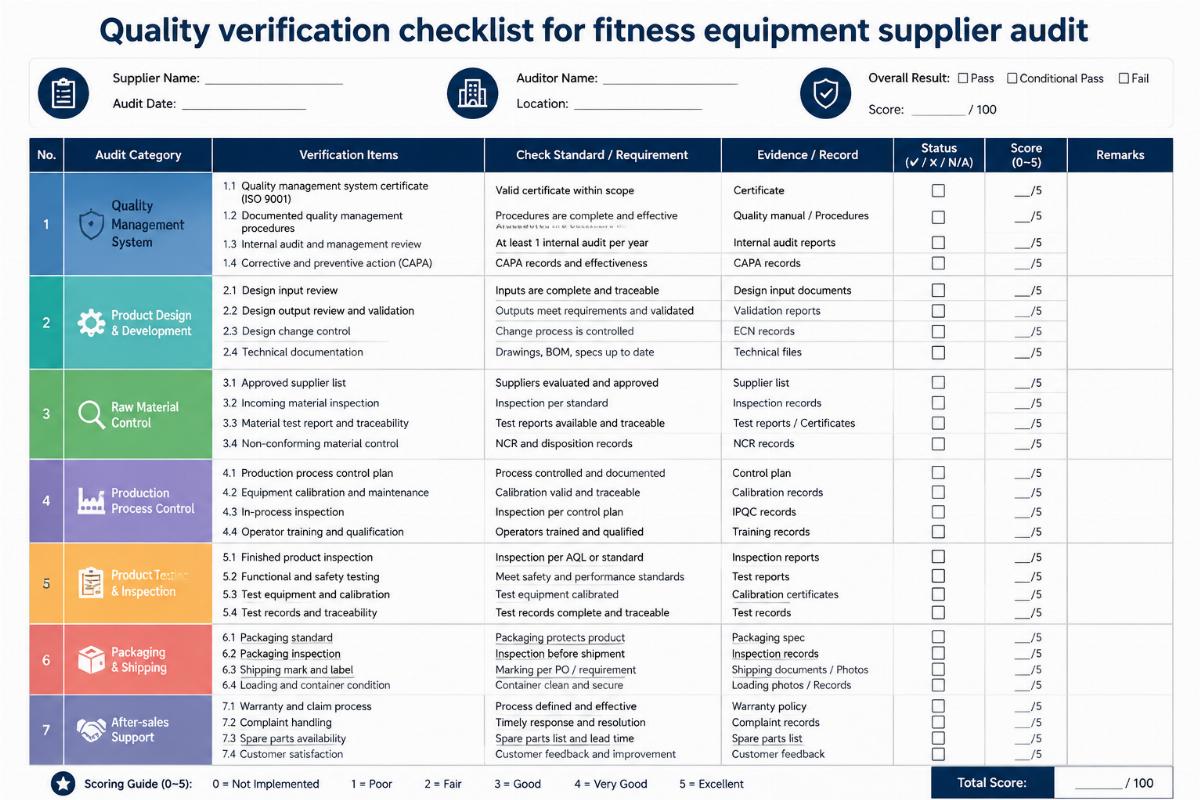
Working with an established manufacturer like Bick, which maintains full OEM and ODM capabilities with transparent documentation practices, substantially reduces the verification burden on the buyer. Their CE certification and quality control processes are structured to withstand third-party audit, which matters when your shipment clears Egyptian customs.
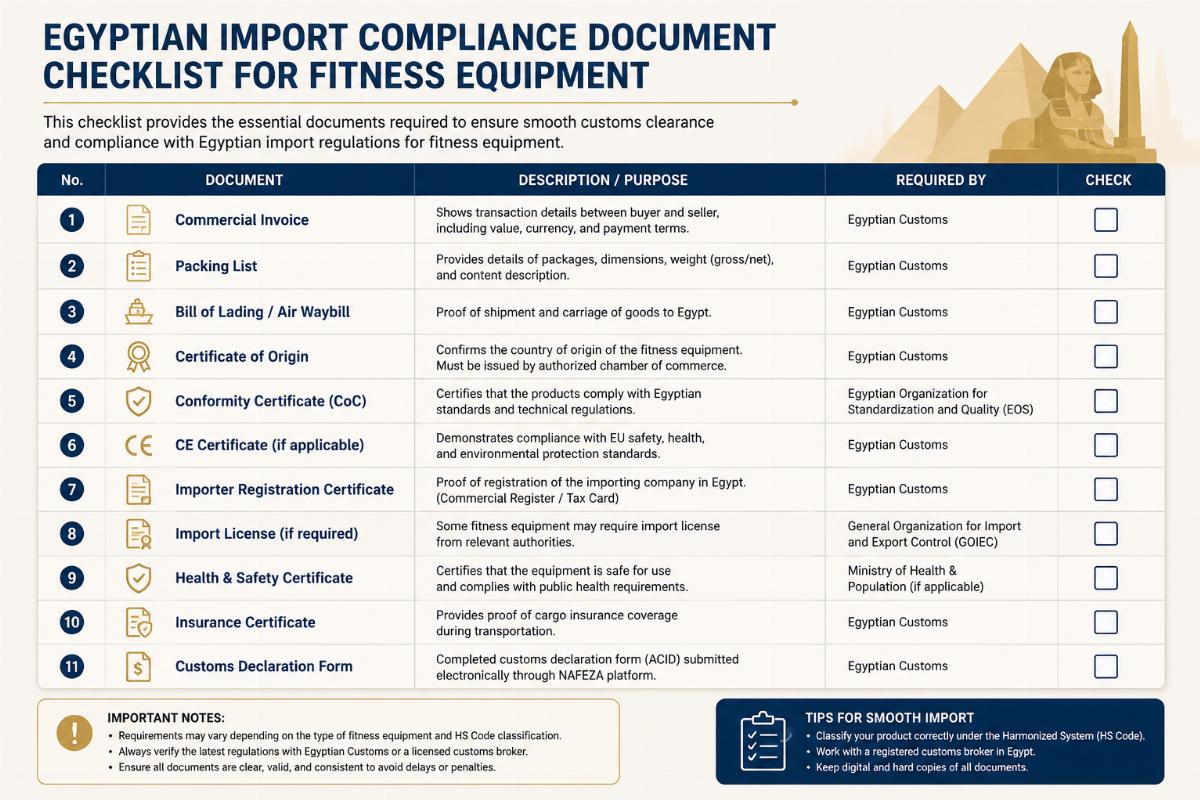
What Are the Egyptian Import Duties and Compliance Requirements for Fitness Equipment?
Customs classification, GOEIC registration, and conformity assessment are the three regulatory gates—and missing any one of them turns a cost-saving import into a port-side nightmare.
Egypt’s import regulatory framework for fitness equipment involves several overlapping requirements that buyers must address before the shipment leaves the origin country.
Customs Classification and Duty Rates
Fitness equipment falls under specific HS codes that determine the applicable import duty rate. Misclassification can result in either overpayment of duties or, worse, shipment holds for reclassification. The duty structure varies between cardio machines, strength equipment, and free weights, so accurate classification of each item in your container is essential [NEED_CITE: Egyptian customs tariff schedule for fitness and gym equipment HS code classification].
GOEIC Registration
The General Organization for Export and Import Control requires that certain product categories be registered before importation. Fitness equipment is subject to these requirements, and the manufacturing facility must be listed in the GOEIC registry. Suppliers unfamiliar with Egyptian regulatory requirements may not have completed this registration, leaving the buyer to resolve the issue at the port—where resolution means demurrage charges accumulating daily.
Conformity Assessment
Egyptian authorities accept CE certification from European notified bodies as evidence of conformity for fitness equipment. However, as discussed earlier, the certification must be genuine and product-specific. Additionally, Arabic-language labeling and user manual requirements apply, and non-compliant shipments may face delays at the documentation review stage.
For buyers sourcing fitness equipment price in Egypt through a manufacturer experienced with the Egyptian market, these requirements are managed as part of the export documentation package. Bick’s export team handles GOEIC compliance, CE documentation verification, and Arabic labeling preparation as standard components of their order fulfillment process, removing regulatory uncertainty from the buyer’s project timeline.
Conclusion
The real fitness equipment price in Egypt is determined at the intersection of material quality, manufacturing integrity, logistics efficiency, and regulatory compliance—not at the FOB quotation stage. Buyers who invest time in verifying steel specifications, welding standards, certification authenticity, and container loading optimization consistently achieve lower total project costs than those who optimize solely on the initial price quote. The difference between a gym that operates reliably for years and one that becomes a maintenance burden starts with the decisions made before the container is sealed.
