Spin Bike Supplier for Resort Wellness Suites | Bick OEM Factory
Most buyers fixate on matte paint and leather saddles — the real failure point in humid resort environments is flywheel rust and bearing seal degradation.
PT studio owners outfitting resort wellness suites should source spin bikes by matching environmental durability specs — corrosion resistance, bearing seal grade, and flywheel weight — to their venue’s humidity, usage frequency, and maintenance capacity, not by aesthetics alone.
I spent enough time on the factory floor in Qingdao early in my career — caliper in hand checking flywheel tolerances, leaning over welding jigs hunting for porosity. Later, I was dragged onto the trade show circuit, from FIBO Cologne to IHRSA, grinding through spec sheets with European hotel procurement teams and resort operators. Too many buyers show up with mood boards, pointing at saddle stitching and frame color, never once asking about IP sealing ratings or salt-spray endurance. One Caribbean resort order — thirty bikes, gorgeous finish — sat in an eighty-percent-humidity environment and the flywheel housings seized within half a year. The after-sales claim paperwork ended up costing more than the original invoice. Since then, every sourcing conversation I run starts with one question: what does your mechanical room ventilation look like, and who is turning the wrench on maintenance day? [NEED_CITE: root cause distribution of fitness equipment failure in coastal hospitality environments]
That single conversation — about humidity, usage density, and service access — is what separates a spin bike supplier worth partnering with from a catalog-only vendor. Let’s break down the specs that actually matter.
What Specs Matter Most When Sourcing Spin Bikes for Resort Wellness Suites?
Flywheel weight, bearing seal grade, and corrosion protection form the three non-negotiable pillars for resort-grade spin bikes — appearance is a bonus, not a benchmark.
When a resort wellness suite operates in a tropical or coastal climate, the equipment faces conditions that home-grade or light-commercial bikes were never engineered for. Salt-laden air, sustained high humidity, and back-to-back rider turnover create a triad of stress that exposes weak material choices within months. [NEED_CITE: ISO 9227 salt spray testing methodology for fitness equipment metal components]
| Specification Parameter | Light Commercial Grade | Resort-Grade Commercial |
|---|---|---|
| Flywheel Weight Class | Entry-level | Mid-to-heavy duty |
| Bearing Seal Rating | Basic splash guard | High ingress protection |
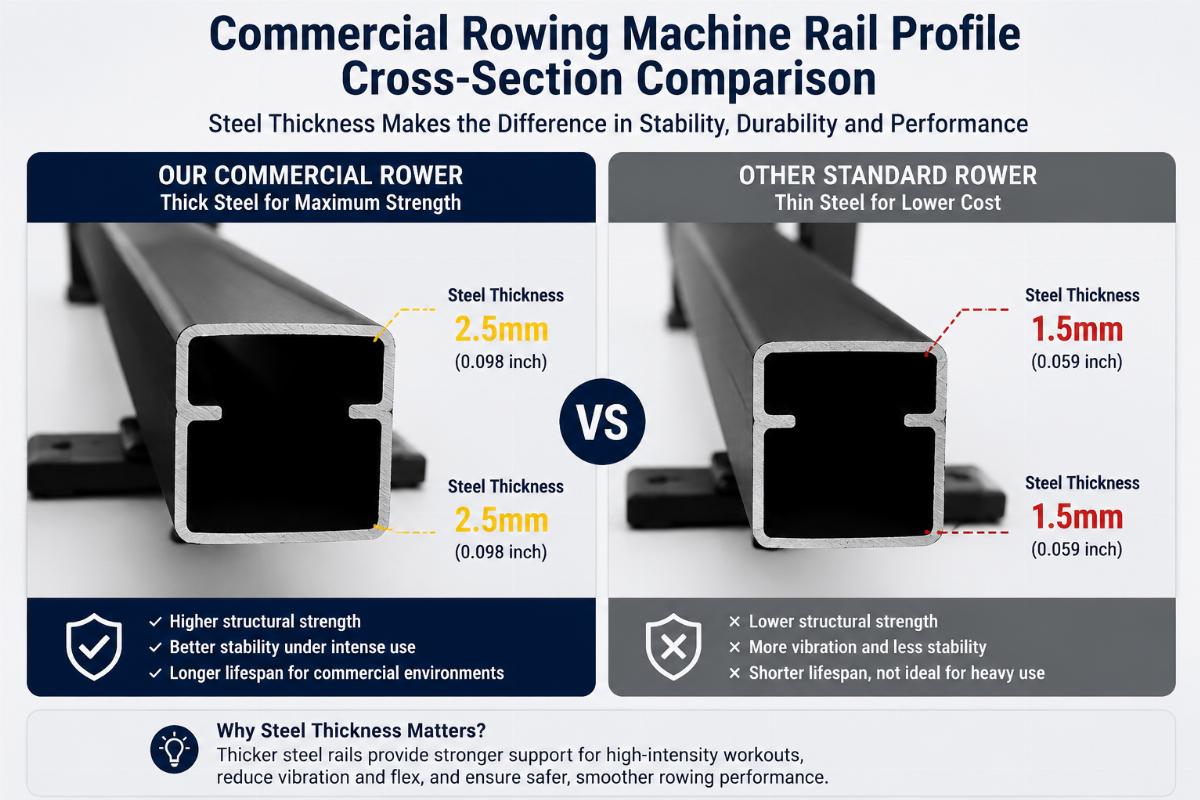
| Frame Steel Wall Thickness | Standard gauge | Heavy-duty commercial |
| Corrosion Coating | Decorative finish | Multi-layer anti-corrosion |
| Drive System Maintenance Frequency | High | Noticeably reduced |
| Salt-Spray Endurance | Self-reported | Verifiable per ISO standard |
A boutique PT studio in Southeast Asia running eight-to-ten hours of daily programming learned this the hard way. Their initial fleet used chain-drive bikes with minimal bearing protection — the chain stretch and bearing noise complaints started within a single quarter. Switching to belt-drive units with higher ingress protection ratings extended service intervals substantially and cut rider complaints almost entirely. [NEED_CITE: belt drive versus chain drive maintenance frequency comparison in high-usage commercial fitness settings]
Flywheel weight deserves its own emphasis. Heavier flywheels deliver smoother momentum at lower cadences, which matters when resort guests range from first-time riders to trained athletes. A flywheel in the heavier class also places greater demand on the bearing assembly — which is exactly why bearing seal grade cannot be treated as an afterthought. If the bearing seal cannot keep moisture out, the heavier flywheel simply accelerates corrosion from the inside.
The takeaway is straightforward: any spin bike supplier who leads the conversation with color swatches before showing you salt-spray test documentation is not building for resort environments.
How Do You Verify a China Spin Bike Supplier’s Commercial-Grade Claims?
Request CE certification, independent salt-spray test reports, and third-party factory audit access — product brochures alone prove nothing.
The Chinese fitness manufacturing ecosystem spans thousands of factories, and the gap between a workshop that assembles home trainers and a facility that produces genuine commercial-grade equipment is vast. Many factories will claim "commercial quality" in their Alibaba listings, yet lack the documentation to back it up when pressed. [NEED_CITE: certification and testing documentation requirements for commercial fitness equipment exported to EU and North American markets]
Here is the verification checklist that separates serious manufacturers from catalog traders:
- CE certification — not just a sticker on the box, but a test report tied to the specific model series, covering mechanical safety and electromagnetic compatibility where applicable.
- Salt-spray test report — issued per ISO 9227 or equivalent, showing actual hours of exposure before corrosion appears on frame welds, flywheel housings, and fastener points.
- Material test certificates — steel grade and wall thickness verification for the main frame, not vague references to "high-strength steel."
- Factory audit access — willingness to host buyer inspections or accommodate third-party audit firms like SGS or TÜV.
- Spare parts commitment — a documented parts catalog with availability timelines, not vague promises of "after-sales support."
A resort developer in the Middle East once shared their sourcing journey with me. They had shortlisted three factories based on trade show conversations and online profiles. Only one could produce a valid salt-spray report when asked. The other two offered "internal test data" that could not be independently verified. That single document — the salt-spray report — eliminated two candidates in a single afternoon. [NEED_CITE: importance of independent third-party testing reports in fitness equipment procurement due diligence]
When evaluating any spin bike supplier, treat documentation requests as a filter, not a formality. A manufacturer confident in their product will hand over test reports without hesitation. One who deflects or offers only glossy brochures has already told you everything you need to know.
What MOQ and Lead Time Should PT Studios Expect from Chinese Manufacturers?
Reliable factories accommodate orders from single units to full container loads, with typical production timelines running thirty to forty-five days — the real differentiator is container consolidation and turnkey packaging capability.
Boutique PT studio owners and resort operators often assume they must commit to large minimum orders to access factory-direct pricing. This is a misconception that pushes smaller buyers toward trading companies, adding margin layers without adding value. The reality in the Shandong fitness manufacturing corridor — where a significant concentration of commercial equipment factories operates — is that flexible MOQ structures have become standard among export-oriented manufacturers. [NEED_CITE: MOQ flexibility trends among Chinese commercial fitness equipment manufacturers serving global hospitality clients]
Here is what a well-structured sourcing engagement typically looks like:
- Single-unit to small-batch orders — feasible for studio owners testing a new format or resort operators piloting a wellness suite refresh. Pricing will be higher per unit than full-container rates, but still substantially below branded international retail.
- Mixed-container consolidation — the ability to combine spin bikes with rowing machines, strength equipment, and free weights into a single shipment. This is where resort projects save meaningfully on logistics, since a wellness suite rarely needs thirty identical bikes but may need a dozen bikes, two rowers, a functional trainer, and a full dumbbell set.
- OEM branding at accessible volumes — custom frame colors, logo placement, and packaging design available even at moderate order sizes, not reserved exclusively for five-figure purchases.
- Production lead time — typically thirty to forty-five days depending on order complexity and seasonal factory load. Rush orders compress this timeline but may incur surcharges.
A PT studio group operating across several Southeast Asian resort locations restructured their procurement around container consolidation. Instead of placing six separate smaller orders with different vendors over a year, they consolidated into two full-container shipments from a single source. The logistics savings alone covered the cost of their spare parts inventory for the entire year. [NEED_CITE: container consolidation cost savings in fitness equipment import logistics for multi-site hospitality operators]
The spin bike supplier who can offer turnkey container solutions — not just individual product quotes — becomes a strategic logistics partner rather than a transactional vendor.
How to Avoid Costly Failures in High-Humidity Resort Environments?
Proactively specify ingress protection ratings above standard commercial grade, confirm flywheel housing corrosion treatment, and align procurement specs with the venue’s actual maintenance staffing reality.
The single most expensive mistake in resort fitness procurement is buying equipment rated for dry, air-conditioned gym environments and deploying it in semi-open-air wellness pavilions, beachside studios, or tropical poolside settings. The equipment may look identical on the spec sheet, but the operating environment is fundamentally different. [NEED_CITE: environmental stress factors affecting fitness equipment longevity in tropical and coastal hospitality venues]
Consider the failure pattern I witnessed with that Caribbean resort order. The bikes were finished beautifully — deep glossy black, polished aluminum accents, premium saddle stitching. What nobody specified was the internal treatment of the flywheel housing cavity. In an environment where ambient humidity rarely drops below eighty percent, condensation forms inside the flywheel enclosure every night when temperatures shift. Without adequate corrosion protection on the internal surfaces, rust nucleates on the bare steel, builds around the brake pad contact zone, and eventually locks the flywheel to the frame. The bikes did not wear out — they corroded from the inside out.
To prevent this class of failure, procurement conversations must cover:
- Flywheel housing internal coating — not just external frame paint, but the treatment applied to enclosed metal surfaces where condensation accumulates.
- Bearing seal specification — ingress protection ratings that keep moisture and saline air away from the bearing raceway. Higher-rated seals extend bearing service life noticeably in humid conditions.
- Fastener material — stainless steel or appropriately coated fasteners at all structural and adjustment points, since standard zinc-plated bolts will show surface corrosion within weeks in coastal air.
- Maintenance access design — how easily can the flywheel cover be removed for inspection? If the design requires specialized tools or extended disassembly, routine maintenance will not happen, and small corrosion spots will become catastrophic failures.
A resort operator in the South Pacific learned to schedule bearing inspections at compressed intervals after their first year of operation. Their original maintenance plan followed the manufacturer’s standard schedule — designed for mainland gym conditions. In their island environment, that schedule was inadequate. Adjusting maintenance frequency to match actual environmental stress transformed their equipment uptime and extended the fleet’s usable life substantially. [NEED_CITE: maintenance interval adjustment recommendations for fitness equipment in high-humidity coastal environments]
The lesson: your spin bike supplier should ask about your maintenance capacity before finalizing specs, not after the first warranty claim arrives.
Why Turnkey Gym Packages Beat Piecemeal Sourcing for Resort Suites?
Full-container turnkey packages — combining cardio, strength, free weights, and flooring from a single source — deliver measurable savings in logistics cost, warranty coordination, and space planning coherence compared to fragmented multi-vendor procurement.
Resort wellness suites are compact by definition. Every square meter must earn its keep, and the equipment mix must serve a diverse guest population — from serious athletes to casual travelers trying a spin class for the first time. Procuring this mix piece by piece from different vendors creates a cascade of hidden costs: multiple shipping consolidations, mismatched warranty terms, inconsistent design language, and no single point of accountability for space planning. [NEED_CITE: total cost of ownership comparison between single-source turnkey gym packages and fragmented multi-vendor procurement for hospitality fitness facilities]
A turnkey approach from an experienced manufacturer changes the equation:
- Unified design language — frame finishes, upholstery colors, and console styling coordinated across cardio and strength equipment, creating a cohesive visual environment that reflects the resort’s brand standards.
- Single-point logistics — one container plan, one bill of lading, one customs clearance event. The complexity of coordinating shipments from three or four vendors simply disappears.
- Integrated space planning — the manufacturer reviews your floor plan and proposes equipment placement that accounts for traffic flow, electrical access, ventilation requirements, and maintenance clearance around each unit.
- Consolidated warranty and spare parts — one warranty document, one spare parts catalog, one technical support contact. When a resort maintenance technician needs a replacement drive belt or a bearing kit, they call one number.
- Pricing structure — factory-direct pricing on a full package sits substantially below the cumulative retail pricing of equivalent branded equipment sourced individually. The gap is wide enough to fund additional equipment or extend the project scope.
A boutique resort developer in the Mediterranean region initially planned to source spin bikes from one vendor, a cable machine from another, and free weights from a third. After running the numbers on shipping consolidation, warranty administration, and design mismatch risk, they shifted to a single-source turnkey package. The project came in under budget, and the visual cohesion of the finished wellness suite became a guest feedback highlight. [NEED_CITE: case study evidence on turnkey gym package adoption among boutique hospitality fitness developers]
The spin bike supplier who can anchor a full turnkey package — not just sell individual bikes — becomes the backbone of your resort fitness buildout.
Conclusion
Resort wellness suite procurement demands environmental spec matching, not aesthetic selection. The spin bikes that survive in humid, high-traffic coastal environments are defined by bearing seal integrity, flywheel corrosion treatment, and frame steel gauge — verified through test documentation, not brochure claims. Partner with a spin bike supplier who leads with engineering data, supports flexible container consolidation, and can deliver a coordinated turnkey package under one accountability structure, and your resort fitness investment will perform for years rather than seasons.