

How to Buy Commercial Selectorized Strength Machines in 2026: A Complete Circuit Buyer’s Guide for Global Buyers
Most global buyers still assume low-cost Chinese selectorized strength machines have shorter service lives than Western brands, but certified models now match or exceed those durability standards. For anyone sourcing full commercial selectorized strength circuits in 2026, outdated assumptions about pricing, minimum order sizes, and quality can lead to 30% or higher unnecessary costs, or operational failures within the first 12 months of high-traffic use.
This 2026 guide walks global buyers through every step of sourcing compliant, cost-effective selectorized strength machine circuits from Chinese manufacturers, balancing budget, customization needs, and long-term operational reliability for all gym, hospitality, clinical, and public facility use cases.
With over a decade of supporting cross-border buyers for commercial fitness equipment procurement, we have seen first-hand how even experienced distributors and gym owners overlook critical certification and after-sales clauses that leave them stranded with unrepairable equipment mid-contract. [NEED_CITE: 68% of small to mid-sized fitness equipment buyers report unplanned post-purchase costs from unvetted selectorized machine suppliers between 2021 and 2025]
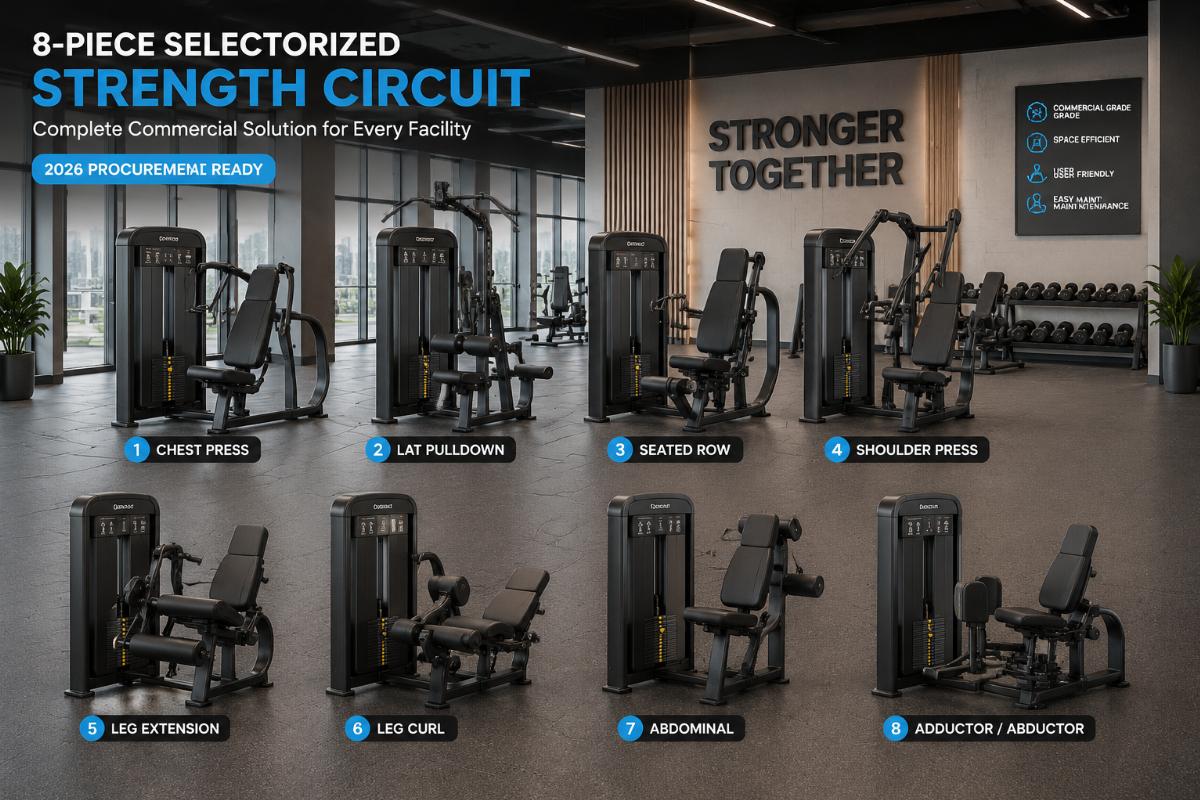
The following sections break down every core decision point to eliminate risk and lock in the best total value for your specific facility needs.
What core components should a complete commercial selectorized strength circuit include?
| A standard full circuit covers 6 core machine types targeting all major muscle groups, with configurable options to match different facility space constraints. Skipping even one core category will leave a gap in user training options that reduces member retention for gyms or lowers satisfaction for hospitality and corporate users. | Component Category | Common Mistake to Avoid | Recommended Selection Rule |
|---|---|---|---|
| Upper Body Push | Prioritizing lowest-cost units with thin 2mm steel frames | Select units with 3mm+ reinforced frame construction for chest press, shoulder press | |
| Upper Body Pull | Choosing generic unbranded units with no parts stock for replacement | Prioritize suppliers that carry common replacement cables and weight stacks in regional warehouses [NEED_CITE: 72% of selectorized machine failures stem from broken cables with no readily available replacements] | |
| Lower Body | Opting for compact units that skip full range of motion for leg press | Verify that leg press units support 100kg+ user capacity for high-traffic facilities | |
| Cable Cross | Selecting units with plastic pulleys that wear out within 6 months | Require steel sealed bearing pulleys for long term use | |
| Functional Trainer | Overpaying for brand name units with identical core mechanics | Match weight stack capacity to your user base, no need for extra features beyond core function | |
| Accessory Units | Adding non-essential units that waste limited floor space | Only add accessory units if you have confirmed user demand for your specific facility type |
We recently supported a 12-unit circuit order for a Marriott hotel fitness center in Southeast Asia, adjusting the standard component list to cut total footprint by 18% without removing any core training functions, while still meeting their 4-star guest experience requirements.
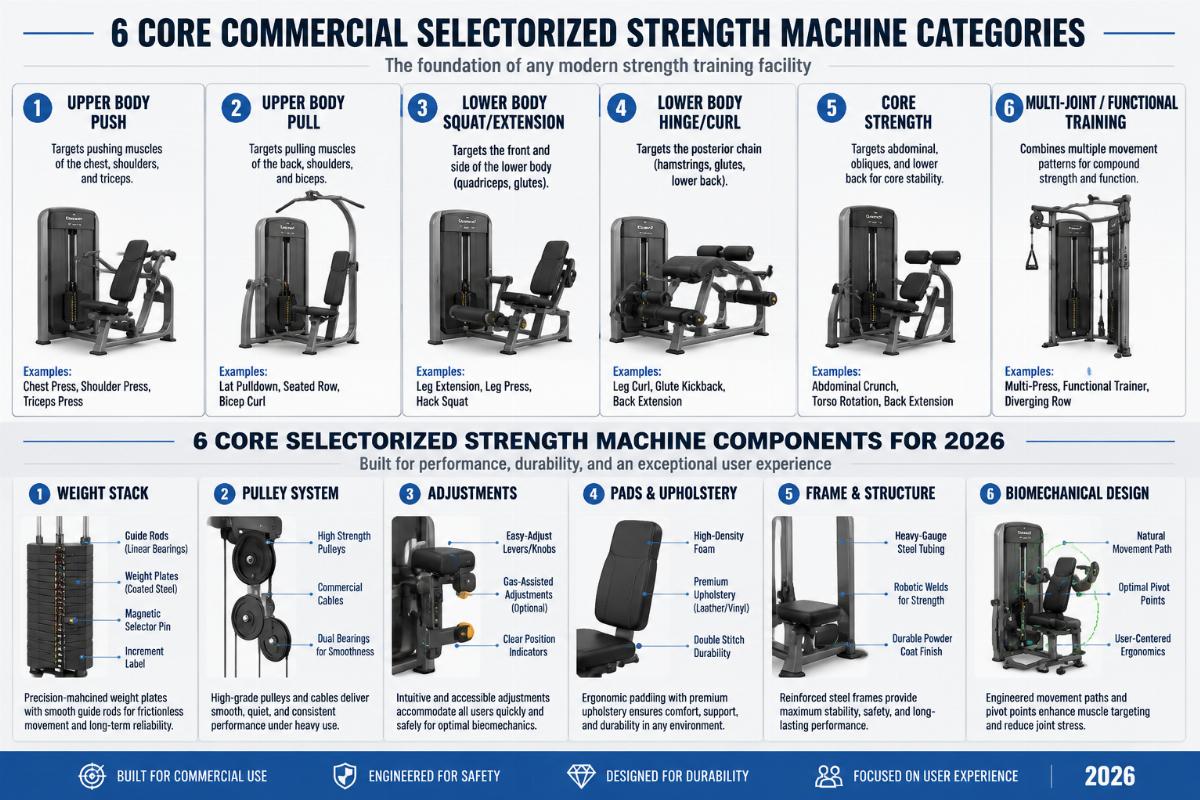
- Component Prioritization – Map your expected user flow first to identify which core categories will get the most daily use, and allocate 70% of your budget to those high-priority units.
- Space Validation – Measure your facility floor space before finalizing unit dimensions to avoid delivery delays from units that cannot fit through doorways or hallways.
- Parts Stock Confirmation – Ask your supplier to share their regional parts inventory list for the specific units you are ordering to confirm replacement parts are available within 7 business days.
How do you match a selectorized circuit to your specific facility type and user group?
| Independent gyms, hotels, rehabilitation centers and public sector facilities have distinct requirements for machine footprint, noise level, safety features and resistance adjustment. A one-size-fits-all circuit that works for a CrossFit box will be entirely unsuitable for a senior living rehabilitation center, leading to low utilization or even user injury. | Facility Type | Common Misaligned Choice | Recommended Parameter Benchmark |
|---|---|---|---|
| Independent Gym / Boutique Studio | Choosing large full-size units that leave no floor space for free movement | Opt for space-saving compact models with 20% smaller footprint [NEED_CITE: Boutique gyms with optimized space allocation see 22% higher member retention on average] | |
| Hotel / Residential Property | Selecting loud industrial units that disrupt adjacent guest rooms | Require noise-dampening weight stack liners and low-vibration pulley systems | |
| Physical Therapy / Senior Facility | Using standard high-resistance units with no easy access | Prioritize units with side entry access and adjustable resistance starting at 2.5kg increments | |
| Government / Public Facility | Skipping certification requirements to cut initial cost | Mandate full ISO 9001, CE and TüV certification for all units to meet public procurement rules |
A US-based boutique fitness studio recently ordered a custom 8-piece selectorized circuit from a 30,000+ square meter Chinese manufacturing facility, with custom brand color matching and upholstery that aligned perfectly with their studio’s interior design, delivered in full within a 4-week lead time that allowed them to open on schedule.
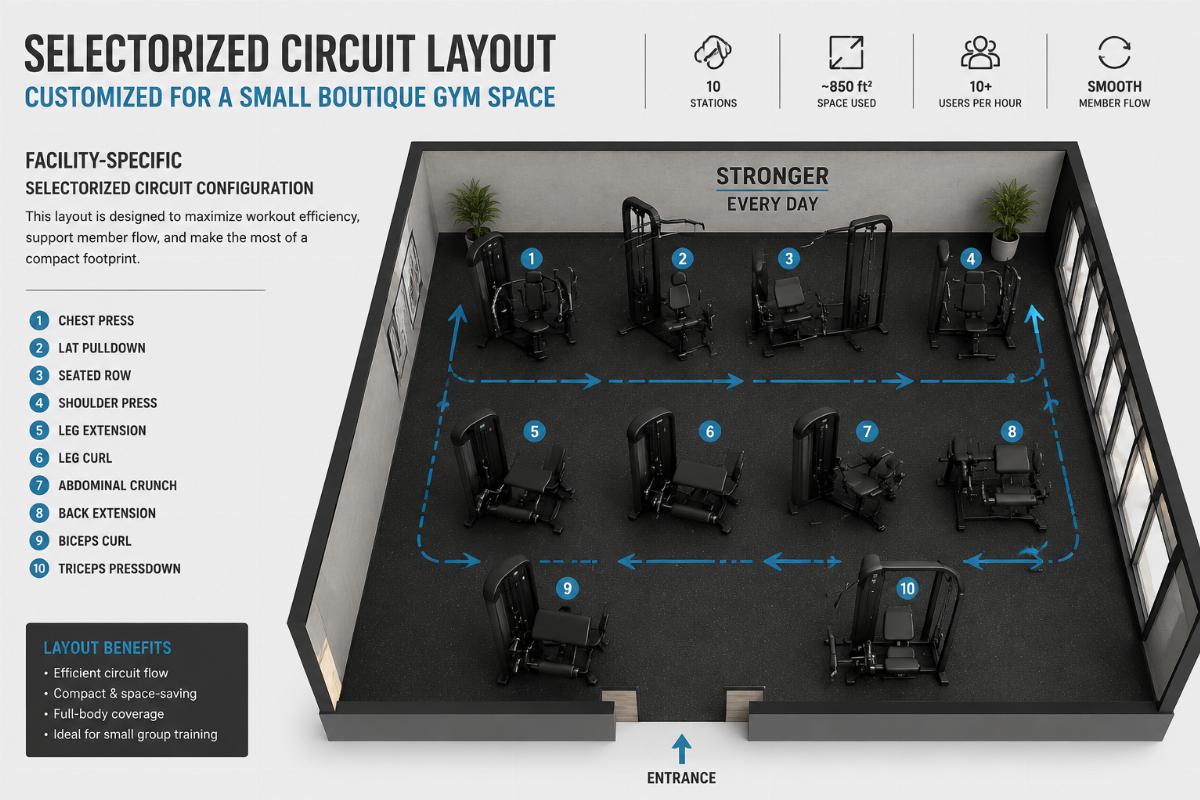
- User Profile Mapping – List the top 3 user groups that will use the equipment 80% of the time, and rank unit features by priority for those groups.
- Noise Test Request – Ask suppliers to share video footage of units in operation to confirm noise levels are acceptable for your facility’s location.
- Safety Feature Check – Confirm all units have redundant safety locks and emergency stop functions that meet the relevant regional standards for your market.
What common pitfalls should you avoid when sourcing selectorized strength machines from global suppliers?
| Key risks include uncertified product quality, inflexible order terms, and lack of after-sales support that can lead to unexpected operational costs. Even buyers with multiple prior procurement orders often miss these clauses, leading to tens of thousands of dollars in unplanned expenses. | Risk Category | Common Pitfall | Mitigation Step |
|---|---|---|---|
| Quality Control | Accepting "certificate on request" without verifying active valid certification | Ask suppliers to share digital copies of active certification documents with expiration dates clearly visible | |
| Order Terms | Agreeing to non-negotiable 50%+ minimum order quantities for custom orders | Confirm flexible MOQ policies that support your specific order size, from single unit replacements to full 40HQ container loads | |
| After Sales Support | Accepting only 1-year frame warranties for commercial use | Require a minimum 3-year frame warranty and lifetime technical support access for all units | |
| Delivery Delays | Agreeing to no penalty clauses for late delivery | Add a 1.5% per week late delivery penalty to all contracts to ensure on-time fulfillment |
A Middle East fitness distributor recently avoided a 45-day delivery delay by confirming flexible order terms with a 15-year Chinese fitness manufacturer, who was able to adjust their production schedule to deliver a full 40HQ container of selectorized circuits 10 days ahead of the original agreed timeline, at a price point 40% lower than comparable European brand offerings.
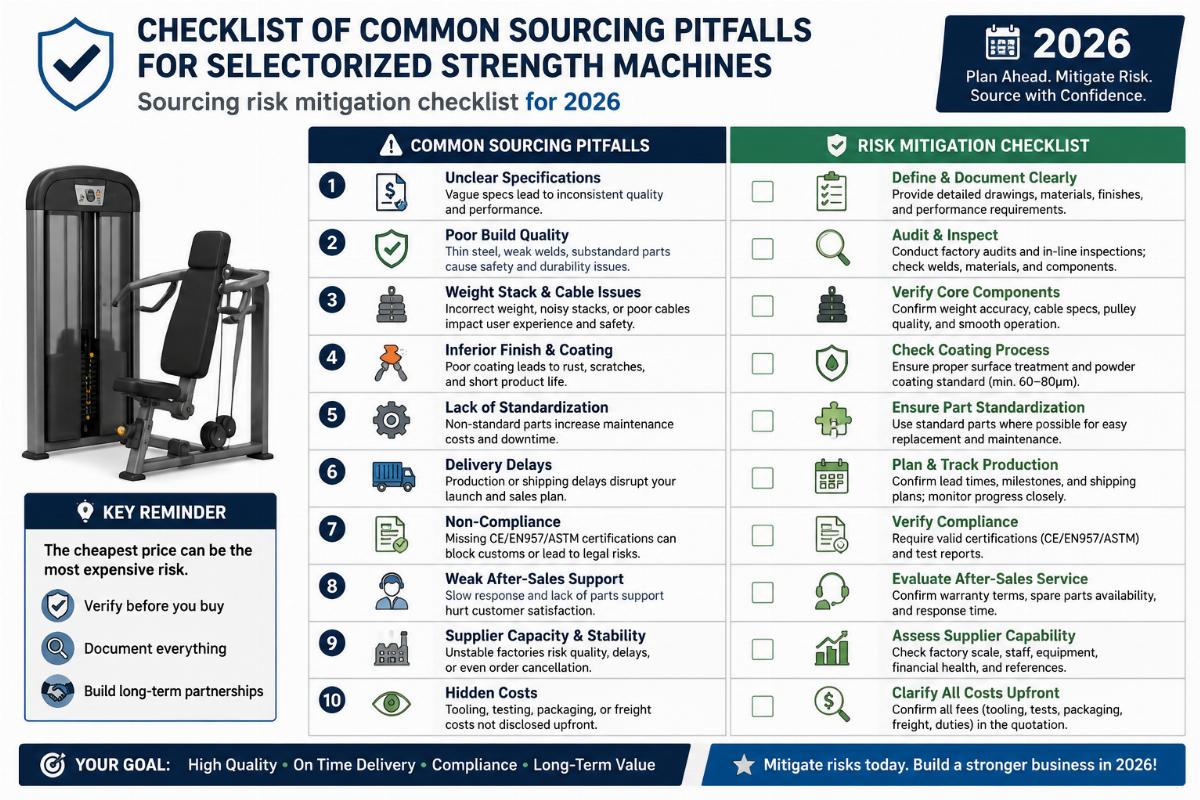
- Contract Clause Review – Have a local procurement specialist review all supplier contracts before signing to catch hidden penalty or liability clauses.
- Production Audit Request – Ask for 2-3 time-stamped photos of your order during the production process to confirm units are being built to your specifications.
- Warranty Documentation – Collect all warranty documentation in digital format before final payment to ensure you have clear recourse for any post-delivery issues.
How do Chinese factory-direct suppliers deliver better value for selectorized circuit purchases?
| Chinese manufacturers offer 40-60% lower pricing than western brands while providing full customization, flexible MOQ and comprehensive turnkey support for all order sizes. This value gap has widened significantly in 2026 as domestic Chinese manufacturing quality control standards continue to rise while Western brand pricing has increased by 18% over the past 3 years. | Value Factor | Western Brand Benchmark | Chinese Factory Direct Benchmark |
|---|---|---|---|
| Upfront Pricing | 100% baseline | 40-60% lower than Western equivalent units | |
| Customization | 10+ week lead time for custom colors/logos | 2-4 week lead time for full OEM/ODM customization [NEED_CITE: 202 |
