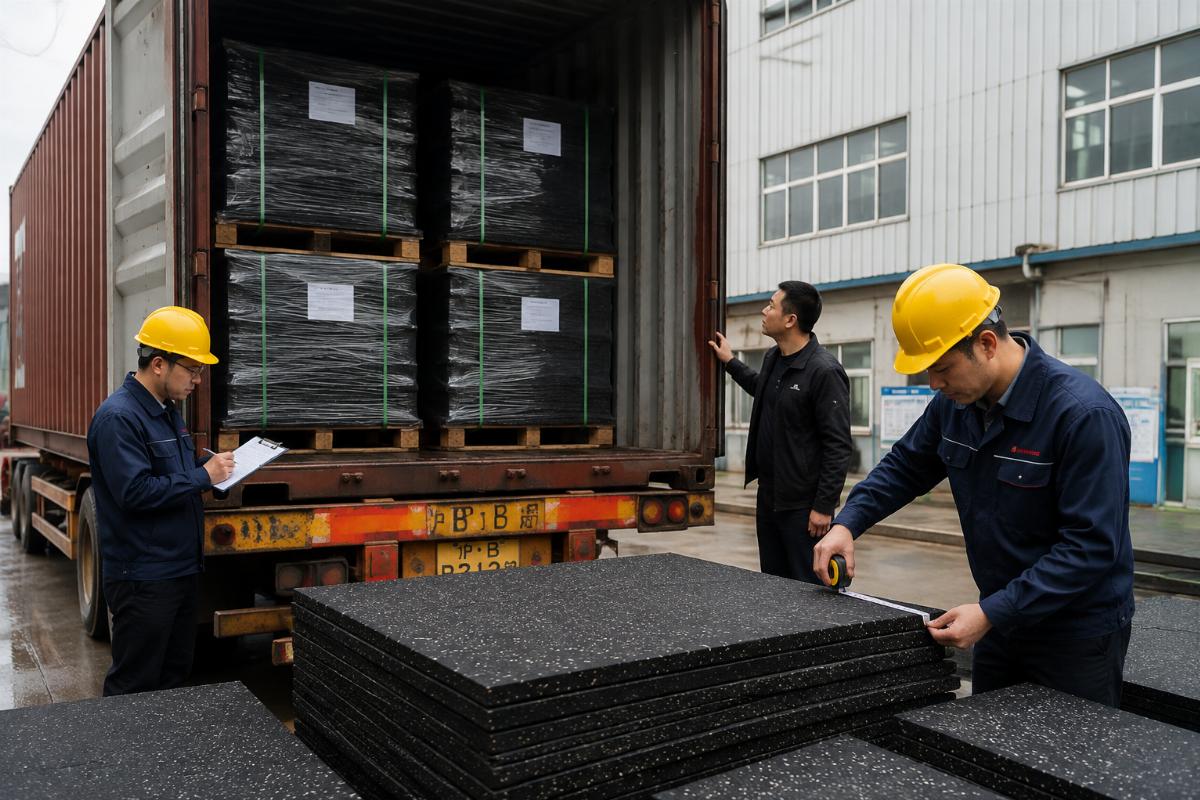
Plate-Loaded Rig Import in Poland: Bonded Warehouse Wholesale Supplier
Most importers assume a bonded warehouse simply delays duty payment. In reality, it also unlocks phased wholesale release without upfront VAT — but only if HS classification and CE documentation are airtight before the container reaches Gdansk.
Importing plate-loaded strength equipment into Poland via bonded warehouse requires precise HS classification under 9506.91, full EN ISO 20957 compliance documentation, and a VAT deferral strategy aligned with Polish customs procedures to avoid port delays and storage cost overruns.
I still remember the first time I watched a full container of plate-loaded racks sit idle at Gdansk port. The buyer — a Central European gym chain operator — needed the equipment on the floor before a grand opening weekend. The货 had been misclassified under a lighter HS code to save a few percentage points on tariff. When Polish customs pulled the shipment for physical inspection, the weight threshold discrepancy triggered a full re-classification. The container stayed in the yard for over ten days. Daily warehousing fees stacked up, the opening date slipped, and the buyer’s tone on the phone shifted from impatient to outright frustrated. That container was supposed to be a straightforward bonded warehouse wholesale delivery. Instead, it became a costly lesson in how Poland’s customs authority handles fitness equipment imports. [NEED_CITE: Polish Customs Service classification guidelines for gym machinery under Combined Nomenclature]
The pattern I see repeatedly across Central European procurement is this: buyers focus heavily on unit price and lead time, then treat customs paperwork as an afterthought. But when you are moving heavy plate-loaded rigs through a bonded warehouse in Poland, the paperwork is the product. Get it wrong, and your landed cost balloons. Get it right, and the bonded warehouse becomes a powerful tool for cash flow management and phased inventory release.
What HS Code Applies to Plate-Loaded Rigs Entering Poland?
Plate-loaded strength machines entering Poland must be classified under HS 9506.91 as articles and equipment for general physical exercise, not under lighter subheadings reserved for accessory items.
The distinction matters because HS 9506.91 covers machines designed for structured physical training with biomechanical movement paths — which is exactly what a plate-loaded rig is. Some importers attempt to classify these units under 9506.99, which covers "other" sports and gym equipment. The logic seems sound on the surface: if the machine uses interchangeable weight plates, maybe it belongs in the "other" bucket. Polish customs does not see it that way. [NEED_CITE: EU TARIC database classification logic for plate-loaded versus selectorized strength equipment]
Here is what triggers a re-inspection at Gdansk or any other Polish port of entry:
- The declared unit weight significantly exceeds the typical range for the declared subheading
- The product description mentions "plate-loaded," "weight horn," or "Olympic barbell receiver"
- The commercial invoice lists the item alongside power racks or Smith machines — which are firmly in the 9506.91 category
When customs flags a mismatch, the shipment does not simply get re-coded. It gets pulled for physical verification. That means the container stays in the port terminal. Every day it sits there, storage fees accrue. For a full container of plate-loaded rigs, those fees are not trivial. [NEED_CITE: Gdansk port terminal storage fee structure for oversized fitness equipment shipments]
A Southeast Asian distributor I worked with learned this the hard way. They had been shipping plate-loaded units to Vietnam for years using a classification that worked locally. When they opened a bonded warehouse channel into Poland, they reused the same HS code. The Polish broker flagged it immediately. The delay cost them weeks of storage charges and damaged their relationship with the gym chain buyer who was counting on a specific installation timeline.
The fix is straightforward: work with your bonded warehouse wholesale supplier to confirm the HS code before the goods leave the factory. At Bick, we pre-verify HS 9506.91 classification for every plate-loaded rig, Smith machine, and power rack we ship into the EU. The documentation travels with the container — commercial invoice, packing list, and a technical specification sheet that explicitly states the equipment’s intended use category. Customs brokers in Poland know what to look for. Give them a clean, consistent paper trail, and the container moves through.
How Does a Bonded Warehouse Defer VAT and Duty for Wholesale Importers?
A bonded warehouse in Poland allows importers to suspend both customs duty and VAT until the goods are released for domestic sale — enabling phased wholesale distribution without full tax upfront.
This is the mechanism that catches many first-time EU importers off guard. They assume "bonded warehouse" means "duty-free." It does not. It means duty- and VAT-suspended. The tax obligation does not disappear; it simply waits until the goods leave the bonded facility and enter the Polish domestic market. [NEED_CITE: Article 114 of the Polish VAT Act regarding VAT suspension in bonded warehouse regimes]
Here is how the phased release works in practice:
- A full container of plate-loaded rigs arrives at Gdansk port
- Customs clears the shipment into a bonded warehouse under suspension — no duty or VAT paid at this stage
- The importer stores the goods in the bonded facility
- As individual gym buyers place orders, the importer requests partial release from the warehouse
- Duty and VAT are calculated and paid only on the released portion
- The released goods are delivered to the end buyer with full domestic tax compliance
For a wholesale distributor supplying multiple gym chains across Poland, the Czech Republic, and Slovakia, this structure is transformative. Instead of paying VAT on an entire container’s worth of plate-loaded rigs before selling a single unit, the distributor pays tax only on what moves. Cash flow stays intact. Inventory risk drops. [NEED_CITE: VAT deferral mechanics for fitness equipment importers under EU customs warehousing procedures]
The catch is that the bonded warehouse operator must be licensed and the importer must maintain accurate records of every release transaction. Polish customs audits these facilities regularly. If the paperwork does not reconcile — if the physical inventory does not match the declared releases — penalties follow.
A Polish gym chain buyer I dealt with needed to import a large batch of plate-loaded rigs before completing their VAT registration. Standard import would have required full VAT payment at the border, which they could not reclaim until registration was finalized. The bonded warehouse route let them receive the goods, store them, and release them in tranches only after VAT registration was active. The tax savings on that single shipment covered a meaningful portion of their warehouse fees for the entire quarter.
Which CE and EN ISO 20957 Documents Must Accompany the Shipment?
Every plate-loaded rig entering Poland must carry a valid CE mark backed by EN ISO 20957 test reports — and Polish customs actively cross-checks those reports against physical load ratings.
The CE mark is not optional for fitness equipment sold in the European Union. But having a CE sticker on the frame is not enough. Polish customs inspectors at Gdansk and other entry points routinely request the underlying technical documentation. Specifically, they look for compliance with EN ISO 20957-1 (general safety requirements) and EN ISO 20957-6 (stationary strength training equipment, including plate-loaded machines). [NEED_CITE: EN ISO 20957-1/6 compliance checklist for plate-loaded strength equipment entering the EU market]
Here is what must travel with the shipment:
- CE Declaration of Conformity signed by the manufacturer
- Test reports from an accredited laboratory confirming structural integrity under rated loads
- User manuals in Polish or English (Polish preferred for domestic distribution)
- Labeling on each unit showing the manufacturer’s name, model number, and maximum load capacity
A common failure point I have seen: the CE label is present, but the test report references a different load rating than what is printed on the machine’s nameplate. For example, the report certifies the frame for a certain maximum user weight plus barbell load, but the physical label states a higher capacity. Customs catches this mismatch during spot-checks. When they do, the entire SKU batch gets flagged. [NEED_CITE: European fitness industry association guidelines on CE documentation for strength training equipment]
A Central European distributor once received a full container of plate-loaded rigs where the accessories — weight horns and barbell receivers — had CE marks, but the main frame’s EN ISO 20957 test report was missing the specific load-rating appendix. Polish customs flagged multiple SKUs during a routine inspection. The container was held until the manufacturer could produce supplementary documentation. That delay added weeks to the delivery timeline and cost the distributor significant storage fees.
At Bick, every plate-loaded rig, cable crossover, and Smith machine we export to the EU ships with a complete CE documentation package. The EN ISO 20957 test reports are matched to the exact model and load configuration. The nameplate ratings are verified against the test data before the container is sealed. This is not extra work — it is the baseline for doing business in the European market.
What Are the Hidden Storage Costs if Clearance Fails at Gdansk Port?
If customs clearance fails or stalls at Gdansk, daily terminal storage fees and demurrage charges accumulate rapidly — often exceeding the original freight cost within the first week.
This is the part of the import process that rarely appears in the initial cost calculation. Buyers negotiate unit prices, compare freight quotes, and estimate duty rates. But the cost of a clearance failure at the port is rarely modeled — until it happens.
Here is what a stalled container looks like financially:
- Terminal storage fees accrue daily from the moment the free period expires (typically a few days after discharge)
- If the container is moved to a customs examination area, additional handling charges apply
- Demurrage charges from the shipping line begin once the allowed free days for container pickup are exceeded
- If the goods are eventually moved to a bonded warehouse after the delay, there are extra transport and handling costs
For a full container of heavy plate-loaded rigs, the weight and volume mean that terminal storage fees are on the higher end. These machines are not small, and they are not light. The daily rate for oversized cargo storage at Gdansk is structured to reflect the space and equipment required to handle them. [NEED_CITE: Gdansk port authority fee schedule for oversized and heavy cargo storage]
The compounding effect is what makes clearance failures so damaging. A delay of a few days might seem manageable. But when daily storage fees are added to demurrage charges and the buyer is simultaneously paying warehouse rent at their destination for space that is sitting empty, the total cost escalates quickly.
A buyer importing plate-loaded rigs into Poland for a multi-gym rollout experienced exactly this scenario. The HS code mismatch caused an eleven-day hold. By the time the goods were released and moved to the bonded warehouse, the accumulated port charges represented a significant percentage of the total landed cost. The buyer had budgeted for duty and freight. They had not budgeted for port storage. The margin on that entire shipment was wiped out by fees that were entirely avoidable with proper pre-shipment classification.
The lesson: build clearance cost contingencies into your landed cost model, and invest in getting the documentation right before the ship leaves. The cost of pre-verification is a fraction of the cost of a port hold.
How to Consolidate a Full Container for Bonded Warehouse Wholesale?
A well-planned container consolidation strategy mixes plate-loaded rigs with free weights and functional training gear to optimize cubic meter utilization and balance duty brackets across the shipment.
When importing through a bonded warehouse wholesale model, the goal is not simply to fill a container — it is to fill it in a way that maximizes inventory flexibility and minimizes classification risk. A container loaded exclusively with plate-loaded rigs is straightforward from a customs perspective, but it may leave unused cubic capacity above the machines. Plate-loaded rigs are heavy, but they are not always dense in terms of volume utilization.
The consolidation strategy works like this:
- Plate-loaded rigs occupy the floor space and provide the structural base layer
- Free weights — dumbbells, barbells, weight plates, kettlebells — fill the gaps and lower compartments
- Functional training gear — plyo boxes, battle ropes, medicine balls — fills the upper volume
- Accessories — benches, racks, storage solutions — are distributed to balance weight and protect the equipment
This approach serves two purposes. First, it maximizes the usable volume of the container, reducing the per-unit freight cost. Second, it creates a mixed-SKU shipment that can be released from the bonded warehouse in varied combinations to different buyers. A gym chain might need plate-loaded rigs and free weights in one release, while a boutique studio might need functional gear and benches in another. [NEED_CITE: Container consolidation best practices for fitness equipment importers using EU bonded warehousing]
The customs classification challenge with mixed containers is that each product category must be correctly declared. Plate-loaded rigs under 9506.91, free weights potentially under a different subheading, functional gear under yet another. The commercial invoice and packing list must clearly separate each category with accurate HS codes. If the documentation is sloppy, customs may hold the entire container for verification — not just the problematic SKU.
A European distributor I worked with consolidated a full container of plate-loaded rigs, power racks, and free weights for bonded warehouse delivery into Poland. The shipment was pre-classified by our team, with each SKU assigned its correct HS code and accompanied by the appropriate CE documentation. At Gdansk, the container cleared without inspection. The distributor then released the plate-loaded rigs to a gym chain in Warsaw, the free weights to a CrossFit box in Krakow, and the functional gear to a hotel fitness center in Wroclaw — all from the same bonded warehouse, all on different timelines, all with VAT and duty paid only on the released portions.
At Bick, we routinely build mixed-container shipments for bonded warehouse wholesale buyers. The plate-loaded rigs, Smith machines, cable crossovers, and power racks are pre-verified for HS classification and CE compliance. The free weights and functional gear are documented to the same standard. The container is loaded to maximize volume utilization, and the paperwork is organized so that customs clearance is a formality, not a gamble.
Conclusion
Bonded warehouse wholesale import of plate-loaded rigs into Poland is a cash-flow and logistics advantage — but only when HS classification, CE compliance, and container consolidation are handled before the goods reach the port.
The difference between a smooth bonded warehouse delivery and a costly port hold comes down to preparation. Pre-verify the HS code. Confirm the EN ISO 20957 documentation. Consolidate the container strategically. The bonded warehouse is a powerful tool for Central European fitness equipment distributors. Use it with the right paperwork, and it works exactly as intended.