
Hammer Strength
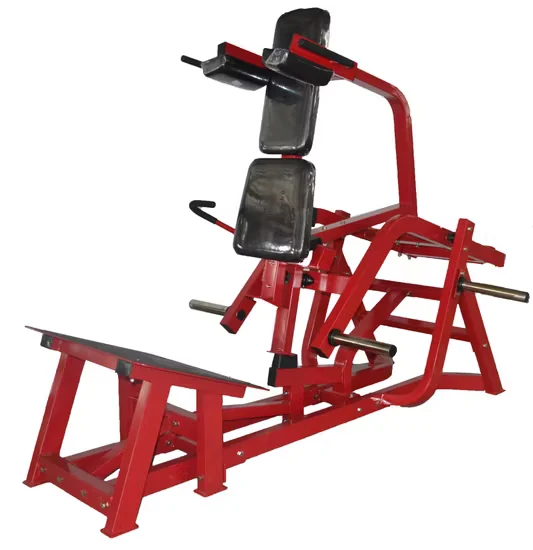
Plate Loaded V-Squat Machine 5040 Factory Direct
View Details
Certified
CE / SGS
Warranty
2 Years
OEM/ODM
Available
Key Features
Mixed-Container Loading Optimization — A single commercial decline bench order consolidates with strength racks, Pilates reformers, and cardio units into one FCL, eliminating partial-shipment surcharges and multi-vendor coordination delays.
| Parameter | Value |
|---|---|
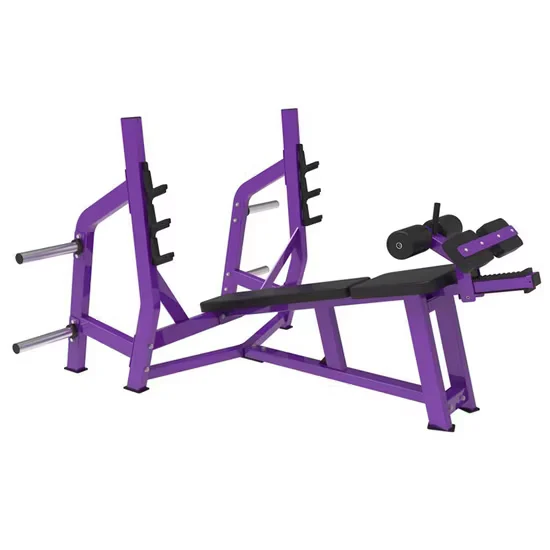
| Product Type | Decline Bench |
| Model NO. | H5052 |
| Exercise Part | Leg |
| Frame Material | Steel |
| Net Weight | 65 kg |
| Product Dimensions | 1500 × 1150 × 1280 mm |
| Power Source | Manual |
| Folded | Unfolded |
| Main Frame Color | Available in black, white, or custom colors per customer requirements |
| Cushion Color | Available in black, red, blue, or custom colors per customer requirements |
| OEM/ODM | Acceptable |
| Customization | Available |
| Transport Package | Plywood Box |
| Age Group | Adult |
| Gender | Unisex |
| Production Capacity | 500 PCS/Month |
| Standards | ISO 9001, CE |
| Facility Type | Typical Use |
|---|---|
| Commercial Gym & Health Club | High-traffic strength floor leg training zone, integrated into plate-loaded and free-weight circuit layouts |
| University & Municipal Sports Complex | Institutional-duty leg conditioning station meeting EN 957 commercial-grade requirements for daily multi-shift use |
| Hotel Fitness Center | 24-hour access leg training area requiring durable upholstery and corrosion-resistant frame finish |
| Boutique Studio & Personal Training Facility | Compact-footprint decline leg station paired with adjustable benches and cable machines |
| EPC Turnkey Gym Fitout | Standardized strength equipment package shipped alongside full-category orders for new facility openings |
A commercial decline bench sitting in a half-empty container adds freight surcharges that dwarf the unit price difference between sourcing from a factory versus a trading company.
Procurement teams ordering only strength equipment often face the same problem: a single category cannot fill a 40-foot container, and partial-shipment LCL rates push per-unit landed cost upward by margins that erase any apparent savings from cheaper suppliers. When that same team sources Pilates reformers from one vendor, cardio from another, and decline benches from a third, lead times diverge, documentation packages conflict, and customs clearance delays compound at destination ports. [NEED_CITE: freight cost optimization through mixed-category FCL consolidation]
A commercial decline bench occupies a specific slot in any institutional strength floor plan — it is the dedicated leg-angle station that complements flat benches, incline benches, and plate-loaded leg machines. For procurement managers standardizing equipment across multiple gym chain locations, this bench ships alongside smith machines, power racks, free-weight stations, and selectorized stack units from the same production line. The plywood box packaging and 65 kg net weight allow efficient stacking with Pilates reformers and cardio units in mixed-container loads, meaning a single FCL can carry a complete facility fitout without splitting shipments across three suppliers.
Every commercial decline bench shipped from this facility includes a CE declaration of conformity and ISO 9001 certification as standard documentation, with EN 957 test reports available upon request for target markets requiring independent verification. The plywood box packaging is designed for ocean freight humidity resistance and container stacking load distribution, reducing the risk of frame deformation during transit. Pre-shipment inspection reports and container loading photographs are provided before dispatch, giving procurement teams verifiable proof of load integrity and documentation completeness for customs clearance in EU, North American, MENA, and Southeast Asian ports. [NEED_CITE: EN 957 test report requirements for EU market fitness equipment import]
The steel frame of this decline bench is fabricated using robotic welding across 42 in-house welding stations, ensuring consistent penetration depth and joint strength that manual welding cannot guarantee under institutional duty cycles. Frame tubes are laser-cut and CNC-bent before assembly, with automated powder coating applied after a multi-stage pre-treatment process that prevents coating peel and corrosion during ocean freight or high-humidity gym environments. The upholstery is produced in-house, allowing cushion density and vinyl thickness to be matched to commercial-grade wear expectations — not light-commercial substitutions that crack within months of daily use. Six-stage QC includes in-line inspection at laser cutting, welding, powder coating, upholstery, final assembly, and pre-shipment audit stages, with documented checkpoints at each phase. [NEED_CITE: robotic welding consistency versus manual welding in commercial fitness equipment manufacturing]
Light-commercial decline benches sold as commercial-grade equipment fail prematurely in high-traffic gym environments, where frame welds crack under repetitive load and upholstery tears within months — triggering replacement costs that exceed the original unit price. Missing or invalid CE documentation causes customs detention at destination ports, generating demurrage charges and project delays that no supplier discount can offset. When trading companies pose as factories, spare parts continuity breaks down within a single equipment lifecycle, forcing entire units into early retirement because adjustment pins, pad mounts, or frame components are no longer traceable or reproducible. Multi-vendor sourcing across Pilates, strength, and cardio categories creates lead-time misalignment that delays full facility openings, with each supplier's shipping schedule operating independently. [NEED_CITE: spare parts continuity and traceability in commercial fitness equipment lifecycle management]
A commercial decline bench ordered from this facility ships within the same container as plate-loaded machines, free-weight racks, Pilates reformers, and treadmills — eliminating the coordination overhead of managing separate supplier relationships, payment terms, and quality standards across categories. The 150,000㎡ manufacturing base houses laser cutting, CNC bending, robotic welding, automated powder coating, in-house upholstery, and final assembly under one roof, meaning frame color, cushion color, logo placement, branded packaging, and structural redesign requests are handled internally without outsourced finishing risks. OEM/ODM capability extends beyond logo printing to include structural modification, allowing procurement teams to request geometry adjustments for specific facility layouts or user demographics. Factory audit and showroom visits are available by appointment, with six-stage QC documentation and pre-shipment inspection reports verifiable on-site. The export documentation package — including CE declaration, EN 957 test report, ISO certificates, SGS reports, and container loading plans — is prepared in-house for EU, North American, MENA, Southeast Asian, and Latin American customs requirements.
Submit a model list with quantities and destination port to receive a quotation including FOB/CIF/DDP options, lead time, and MOQ requirements. Request CE and EN 957 documentation to confirm target market compliance before placing orders. Specify OEM requirements including custom frame color, cushion color, logo placement, branded packaging, or structural redesign to evaluate sampling timelines. Factory audit and video production line tours are available by appointment for procurement teams verifying manufacturing capability and QC processes.
Q: What is the MOQ policy for commercial decline benches when combined with other strength or cardio equipment?
A: MOQ requirements are flexible when decline benches are ordered alongside other strength, Pilates, or cardio equipment in mixed-container loads. Single-category orders follow standard MOQ structures, but mixed-model FCL consolidation allows smaller quantities per SKU while maintaining full-container freight efficiency. Specific MOQ details are confirmed during quotation based on the complete order composition and destination port requirements.
Q: How does mixed-container loading reduce freight costs for decline bench orders?
A: A commercial decline bench alone cannot fill a 40-foot container, resulting in underutilized space and higher per-unit freight costs through LCL or partial-shipment surcharges. When combined with plate-loaded machines, power racks, Pilates reformers, and cardio units from the same factory, the full container is utilized efficiently, distributing freight costs across all units and reducing landed cost per piece. The plywood box packaging and dimensional specifications allow optimized stacking with complementary equipment categories.
Q: What OEM and ODM customization options are available for decline benches?
A: Full OEM/ODM capability includes custom frame color through in-house powder coating, custom cushion color and vinyl selection through in-house upholstery, logo placement and branded packaging design, and structural redesign for geometry adjustments. Customization requests are handled internally without outsourced finishing, ensuring color consistency and coating durability. Structural modifications are evaluated during the sampling phase to confirm feasibility and timeline before production commitment.
Q: What CE and EN 957 documentation is provided for EU market customs clearance?
A: Every commercial decline bench ships with a CE declaration of conformity and ISO 9001 certification as standard documentation. EN 957 test reports are available upon request for markets requiring independent commercial-grade verification. The complete export documentation package also includes ISO 14001 certificates, SGS test reports where applicable, pre-shipment inspection reports, and container loading plans — all prepared in-house for EU customs requirements to prevent destination port detention and demurrage charges.
Q: How can procurement teams verify factory identity and manufacturing capability before placing orders?
A: Factory audit and showroom visits are available by appointment at the manufacturing base, allowing procurement teams to verify production capacity, 280+ production workers, robotic welding stations, and six-stage QC processes firsthand. Video production line tours are available for teams unable to visit on-site. Pre-shipment inspection reports and container loading photographs are provided before dispatch, offering documented proof of manufacturing control and load integrity for traceability throughout the equipment lifecycle.
Tell us your project details -- we'll deliver a tailored factory quotation, lead time and customization options within 24 hours.
Bella / William
+86 198 5412 8032
+86 132 2531 1800
Fields marked * are required.
Hammer Strength

Hammer Strength
Hammer Strength

Hammer Strength