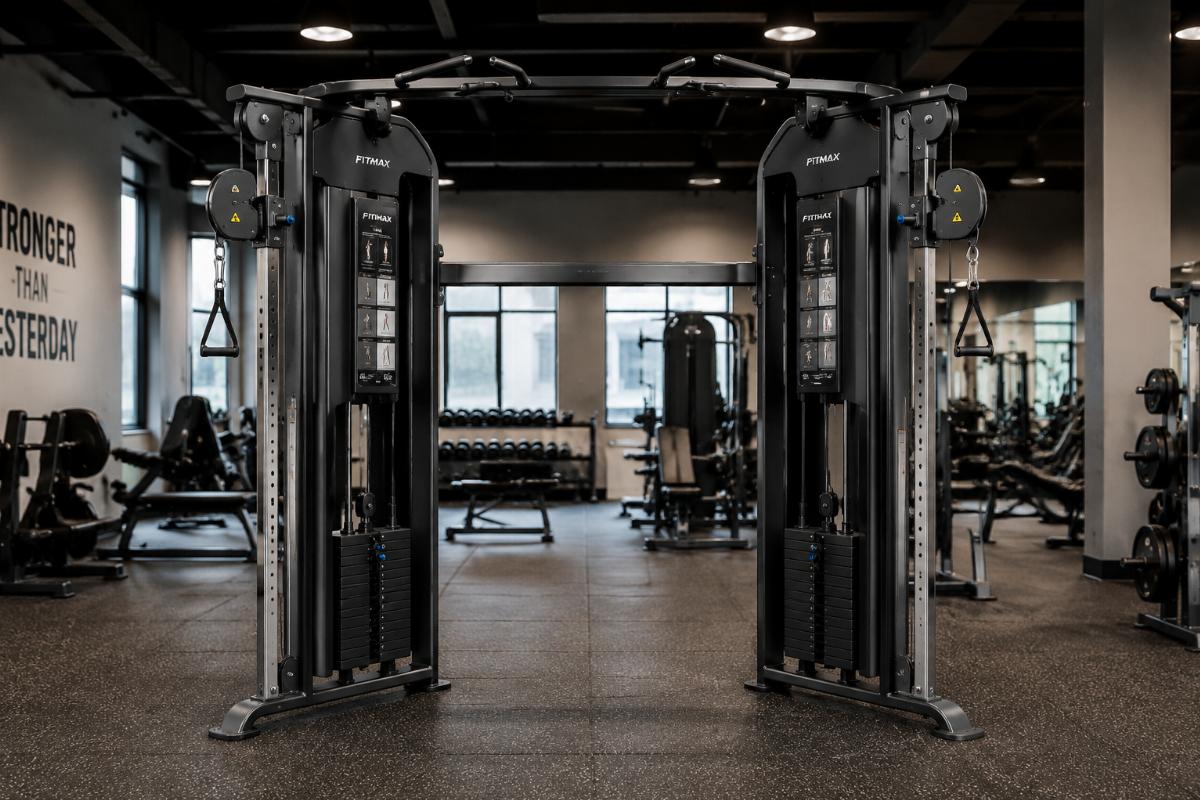
Buy Functional Trainer from China Manufacturer for 24H Gyms in Morocco
Powder coat color does not prevent rust; thin steel gauge and poor pre-treatment do.
For 24-hour gyms in Morocco, durability trumps aesthetics. To minimize downtime and maintenance costs, prioritize industrial-grade steel wall thickness of at least 3mm, full-penetration welding, and sealed bearing pulley systems over low upfront prices or decorative finishes. Verify cable tensile strength ratings against dynamic load factors and ensure all components meet CE certification requirements for import compliance.
I still remember the smell of ozone and hot metal from my early days on the welding line in Qingdao. We were churning out frames for Smith machines, and the foreman would kick any unit where the weld bead looked uneven. It wasn’t about beauty; it was about structural integrity under repetitive stress. Later, when I moved into foreign trade, I saw how those hidden details determined whether a gym stayed open or shut down for repairs. A buyer in Casablanca once showed me a functional trainer that had cracked at the joint after just six months of heavy use. The showroom sample had looked perfect, but the production batch used thinner tubing to cut costs. That disconnect between what you see and what you get is where most buyers lose money.
Selecting the right functional trainer for 24-hour gym operations requires looking past the glossy brochures. The equipment must withstand continuous usage cycles without failure. This guide breaks down the critical specifications that separate industrial-grade machinery from disposable fitness furniture.
Why Do Standard Functional Trainers Fail in 24-Hour Moroccan Gyms?
Continuous operation exposes weak welds and thin steel that remain invisible during brief showroom demonstrations.
Most standard functional trainers are designed for light commercial or home use, assuming a few hours of daily activity. In a 24-hour facility, the machine never cools down. Metal fatigue sets in faster, and lubricants degrade more quickly. The primary cause of failure is not the weight stack itself, but the frame’s inability to handle dynamic loads over extended periods.
In humid coastal areas like Casablanca, corrosion accelerates if the steel preparation is inadequate. Many manufacturers skip proper phosphating before powder coating to save time. The result is rust blooming from the inside out, weakening the structure long before it becomes visible on the surface. [NEED_CITE: correlation between pre-treatment quality and corrosion resistance in humid environments]
A franchise operator in a high-traffic district reported that their initial batch of equipment required weekly adjustments. The pulleys would squeak, and the cables would fray prematurely. Upon inspection, we found that the steel tube wall thickness was only 2mm. Under constant tension, the frame flexed microscopically with every rep. This movement stressed the weld points until they failed. Switching to a heavier gauge eliminated these issues entirely.
When sourcing a functional trainer for 24-hour gym setups, understand that the frame is the backbone. If it flexes, everything else fails. The aesthetic finish is merely paint; the steel gauge is the promise of longevity.
What Steel Specifications Actually Matter for Durability?
Prioritize 3mm+ wall thickness and full-penetration welding over aesthetic finishes.
The difference between a machine that lasts five years and one that lasts fifteen often comes down to millimeters of steel. Standard commercial equipment might use 2mm tubing, which is sufficient for low-traffic hotels. However, for a busy gym, this is insufficient. The industry standard for heavy-duty functional trainers should involve main structural tubes with a wall thickness of at least 3mm.
| Specification | Light Commercial | Heavy-Duty Industrial | Impact on 24H Gym |
|---|---|---|---|
| Main Frame Tube Thickness | 2.0 mm | ≥ 3.0 mm | Reduces frame flex and weld stress |
| Welding Type | Spot/Partial | Full-Penetration | Prevents joint separation under dynamic load |
| Steel Grade | Q235B | Q345 or Equivalent | Higher yield strength for safety |
| Pre-Treatment | Basic Cleaning | Phosphating + Degreasing | Enhances corrosion resistance in humid climates |
[NEED_CITE: mechanical properties comparison of Q235B vs Q345 steel grades]
I recall a distributor who consolidated an order for a large hotel chain in Marrakech. They initially requested the lighter frame to save on freight costs. We advised against it, explaining that the vibration from nearby traffic and internal usage would compromise the joints. They agreed to upgrade the steel gauge. The result was a noticeable drop in service calls. The frame remained rigid, and the alignment of the pulley system stayed true for years.
Verifying steel grade is crucial. Q235B is common, but Q345 offers higher yield strength, making it better suited for the dynamic forces generated by functional training movements like cable crossovers and lat pulldowns. Request sample cuts or third-party test reports to confirm the material composition. Do not rely solely on the manufacturer’s word.
When evaluating a functional trainer for 24-hour gym procurement, ask specifically about the welding process. Full-penetration welding ensures that the joint is as strong as the tube itself. Partial welds may look acceptable from the outside but can crack under the torsional stress of uneven cable pulls.
How to Verify Pulley and Cable Systems for Low Maintenance?
Sealed bearings and aircraft-grade cables reduce service calls by half in dusty environments.
The pulley system is the heart of the functional trainer. If it sticks or jerks, the user experience suffers, and the risk of injury increases. In North Africa, dust and sand are pervasive. Standard open bearings will ingest particulate matter, leading to grinding noise and eventual seizure.
Look for pulleys with sealed bearings that have a high IP rating for dust resistance. These seals keep contaminants out and lubrication in. Additionally, the cable itself must be robust. Aircraft-grade stainless steel cables with a high strand count offer better flexibility and fatigue resistance than cheaper alternatives.
| Component | Standard Spec | Premium Spec for 24H Use | Maintenance Implication |
|---|---|---|---|
| Bearing Type | Open/Unsealed | Sealed (High IP Rating) | Resists dust ingress; extends lubrication cycle |
| Cable Material | Galvanized Steel | Aircraft-Grade Stainless | Higher tensile strength; resistant to fraying |
| Pulley Wheel | Nylon/Plastic | Aluminum/Steel Core | Better heat dissipation; reduces deformation |
| Pin Size | Non-Standard | Standardized Precision | Prevents jamming; ensures smooth weight selection |
[NEED_CITE: impact of bearing sealing on maintenance intervals in dusty environments]
A common mistake is focusing on the weight stack size while ignoring the pin tolerance. Non-standard pins can cause jamming, especially when users drop the weights. In a 24-hour setting, this leads to frequent staff intervention. Ensure the pin system is precision-machined to slide smoothly without binding.
I once visited a gym where the pulleys were making a loud grinding noise during night shifts. The owner was worried about disturbing guests in the attached hotel rooms. The issue was not the bearings themselves but the lack of proper sealing. Dust had accumulated inside, mixing with the grease to form an abrasive paste. Replacing them with sealed units extended the maintenance cycle from three months to over a year.
When sourcing a functional trainer for 24-hour gym facilities, check the cable tensile strength ratings. They should exceed the maximum dynamic load expected during intense workouts. Ask for certification that confirms the cable’s breaking strength is significantly higher than the working load limit.
What Are the Critical Import and Logistics Checks for Morocco?
Pre-shipment inspection of pin tolerances and container loading plans prevent customs and assembly delays.
Importing fitness equipment into Morocco involves navigating specific regulatory requirements. CE certification is mandatory for many types of gym equipment to ensure safety standards are met. Without proper documentation, shipments can be held at customs, leading to storage fees and delayed openings.
Beyond paperwork, physical logistics matter. Poorly packed equipment can arrive damaged, with bent frames or scratched finishes. Container load optimization is essential to maximize space and minimize freight costs. A well-planned load can save a significant percentage on shipping, but it requires precise measurement and stacking strategies.
| Checkpoint | Risk if Ignored | Mitigation Strategy |
|---|---|---|
| CE Certification | Customs detention; legal liability | Verify certificate validity with issuing body |
| Pin Tolerance | Assembly issues; user frustration | Pre-shipment sample testing of pin fit |
| Packaging | Damage during transit | Reinforced carton with foam protection; wooden crates for frames |
| Loading Plan | Wasted space; shifted cargo | Professional stowage plan; secure bracing |
[NEED_CITE: Moroccan import regulations for fitness equipment and CE marking requirements]
A distributor once faced a nightmare scenario where an entire container of functional trainers arrived with bent uprights. The loading plan had not accounted for the weight distribution, causing the lower units to crush under the pressure of those stacked above. By implementing a strict loading protocol with vertical supports, subsequent shipments arrived intact.
Lead time consistency is another factor. Port delays can happen, but a reliable manufacturer will communicate proactively and adjust production schedules to meet deadlines. Consistency within a narrow window allows gym owners to plan their installation teams effectively.
When buying a functional trainer for 24-hour gym projects, ensure the supplier provides detailed packing lists and assembly manuals in the local language or English. This simplifies the setup process for local technicians and reduces the chance of incorrect assembly, which can void warranties.
Conclusion
Durability is an investment, not an expense.
For 24-hour gyms in Morocco, the cost of downtime far exceeds the savings from cheaper equipment. Focus on steel thickness, welded integrity, and sealed mechanical systems. These elements ensure that your functional trainer for 24-hour gym operations run smoothly, safely, and profitably for years to come.