Commercial Elliptical Import Duty Sweden: Bick OEM Wholesale Supplier
CE marking does not guarantee duty-free or low-duty entry.
The correct HS code classification for commercial ellipticals in Sweden is typically 9506.91, which attracts a zero percent import duty rate, whereas misclassification under 9504 can trigger significant tariffs and VAT complications on the full landed value.
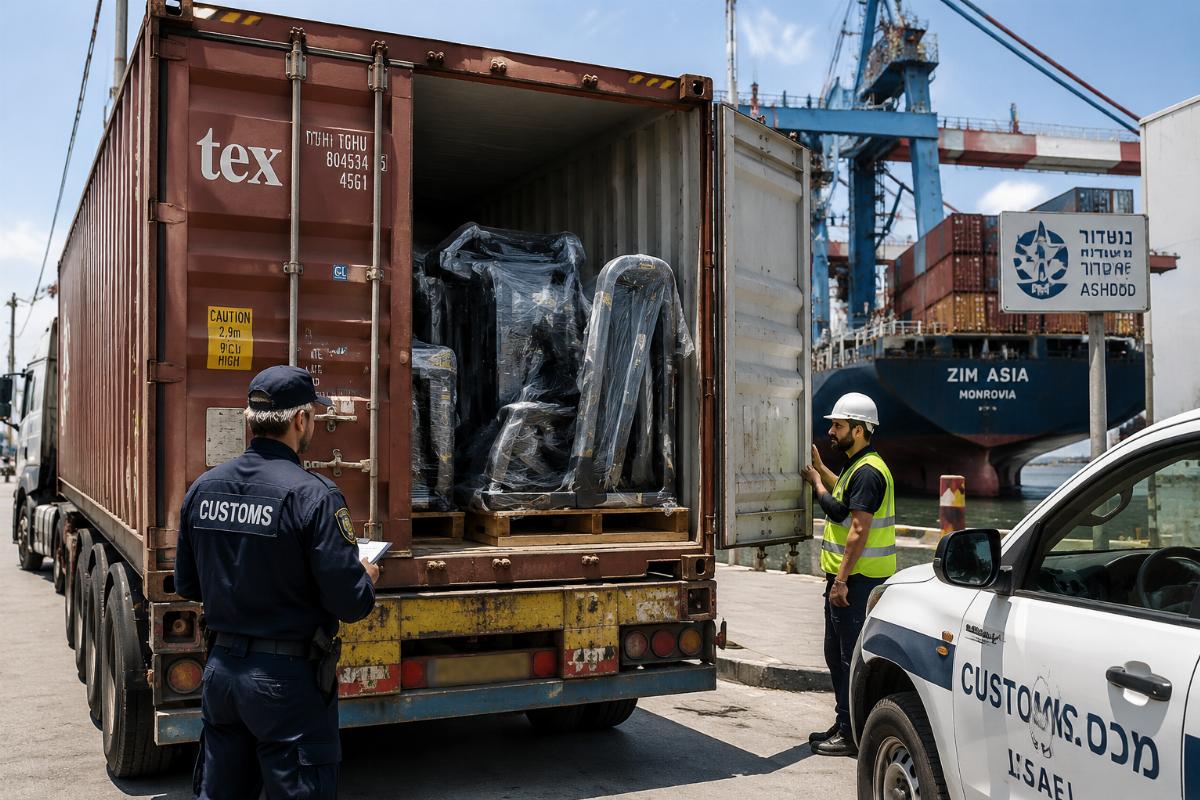
I still remember the silence in the customs broker’s office in Gothenburg. It was not the quiet of efficiency, but the heavy pause before bad news. A shipment of high-end cardio equipment I had coordinated from Shandong was held at the port. The issue was not damage, nor was it a lack of CE certificates. The problem was a single line item on the packing list that grouped the electronic console with the mechanical frame under a generic "fitness machine" description. Swedish Customs, known for their rigorous adherence to the EU Combined Nomenclature, flagged the shipment for review. They questioned whether the integrated electronics shifted the classification from sports equipment to amusement devices. The resulting delay did not just cost demurrage fees; it disrupted a hotel chain’s opening schedule. That experience reinforced a critical reality: in the European market, technical compliance is secondary to fiscal classification. [NEED_CITE: EU Combined Nomenclature explanatory notes for Chapter 95]
Understanding this distinction is the first step toward mastering Sweden import duty commercial elliptical regulations. For buyers, the difference between a smooth clearance and a logistical nightmare often lies in how the product is described, not just how it is built.
Why Does HS Code Classification Matter for Ellipticals in Sweden?
The Harmonized System (HS) code is the universal language of international trade, but its interpretation can vary by jurisdiction. In Sweden, as part of the European Union, the classification determines not only the import duty but also the base upon which Value Added Tax (VAT) is calculated. A misstep here compounds costs exponentially.
Many importers assume that all fitness equipment falls under a single category. This is a dangerous oversimplification. The EU tariff schedule distinguishes sharply between equipment used for physical exercise and equipment used for amusement. For commercial ellipticals, the primary intent is physical training, which aligns with heading 9506. However, if the machine is perceived as having significant entertainment features, such as advanced gaming interfaces unrelated to performance metrics, customs officials might scrutinize it under heading 9504. [NEED_CITE: Swedish Customs Authority guidelines on fitness equipment classification]
The financial implication is stark. Under HS 9506, most sports equipment enters the EU with a zero percent duty rate. Under HS 9504, which covers arcade games and amusement devices, duties can apply, and the scrutiny on valuation increases. Furthermore, Swedish VAT is levied at a standard rate on the total landed cost, including duties. If the duty base is inflated due to incorrect classification, the VAT burden rises accordingly.
I recall a distributor in Stockholm who faced a two-week delay because their shipment included mixed packaging. The flywheels and frames were packed separately from the consoles to save space, but the documentation did not clearly link them as parts of a single unit. Customs viewed the consoles as separate electronic imports. This triggered a request for additional certification and a re-evaluation of the duty rate. The demurrage costs alone exceeded a significant portion of the profit margin for that batch. This scenario highlights why precise documentation is non-negotiable when dealing with Sweden import duty commercial elliptical requirements.
HS 9506 vs 9504: How to Classify Your Commercial Elliptical Correctly?
The boundary between heading 9506 (Articles and equipment for general physical exercise) and 9504 (Video game consoles and machines) is defined by function. For a commercial elliptical, the core function is biomechanical movement for fitness. The presence of an electronic display does not automatically shift it to 9504, provided the electronics serve to monitor performance rather than provide standalone entertainment.
To ensure correct classification, the product must be presented as a complete unit intended for physical exercise. The European Court of Justice has previously ruled that the principal character of the good determines its classification. For ellipticals, the mechanical resistance and moving arms define the principal character. [NEED_CITE: EU Court of Justice rulings on composite goods classification]
A common pitfall occurs when suppliers list components separately without referencing the final assembly. If the console is shipped in a different container or listed as a spare part, it may be classified under 8543 (Electrical machines and apparatus) or 9504, attracting different duty rates. To avoid this, the commercial invoice and packing list must explicitly state that all components are parts of a single commercial elliptical machine under HS 9506.91.
Consider the case of a boutique studio in Malmö. Their supplier provided a detailed component breakdown, listing the frame, flywheel, and console as parts of one unit. They included technical specifications showing that the console’s primary function was heart rate monitoring and workout tracking. This transparency allowed customs to clear the goods within days. In contrast, a competitor who used vague terms like "gym accessories" faced weeks of inspection. The difference was not in the product quality, but in the clarity of the Sweden import duty commercial elliptical documentation.
| Feature | HS 9506 (Sports Equipment) | HS 9504 (Amusement Devices) |
|---|---|---|
| Primary Function | Physical exercise and training | Entertainment and gaming |
| Typical Duty Rate | Zero percent | Variable, often higher |
| Key Documentation | Technical specs showing biomechanical use | Software licenses, entertainment features |
| Risk Level | Low, if clearly defined | High, subject to scrutiny |
This table illustrates the divergent paths. For commercial buyers, staying firmly in the 9506 category is essential for cost predictability.
What Are the Current Duty Rates and VAT Implications?
Once the HS code is secured, the next step is calculating the total landed cost. In Sweden, the import duty for goods under HS 9506.91 is generally zero percent. This is a significant advantage for importers sourcing from outside the EU, such as China. However, zero duty does not mean zero tax.
Swedish VAT is applied to the sum of the customs value, shipping costs, insurance, and any applicable duties. Since the duty is zero, the VAT base is essentially the CIF (Cost, Insurance, and Freight) value. The current standard VAT rate in Sweden is substantial, making accurate valuation critical. Undervaluing goods to reduce VAT is a serious offense that can lead to penalties and blacklisting. [NEED_CITE: Swedish Tax Agency regulations on import VAT]
A distributor in Gothenburg once attempted to reclassify bulk shipments from 9504 to 9506 after an audit revealed they had been paying unnecessary duties. The correction resulted in a noticeable reduction in total landed cost, allowing them to reinvest in marketing. This case underscores the importance of regular reviews of classification practices. The tax differential between correct and incorrect classification can impact profitability significantly.
When sourcing Sweden import duty commercial elliptical products, buyers must ensure that the supplier provides a proforma invoice that clearly breaks down the costs. This includes the ex-works price, freight, and insurance. Any hidden costs or bundled services should be itemized to avoid disputes during customs valuation.
How to Prepare Documentation for Smooth Swedish Customs Clearance?
Documentation is the bridge between the factory floor and the gym floor. Swedish Customs relies heavily on the accuracy of the paperwork. Incomplete or ambiguous documents are the primary cause of delays.
The essential documents include the commercial invoice, packing list, bill of lading, and certificate of origin. For fitness equipment, adding a technical data sheet that describes the machine’s function as physical exercise equipment can preempt questions from customs officers. This sheet should highlight features like resistance levels, stride length, and heart rate monitoring, reinforcing the HS 9506 classification.
I have seen shipments held because the packing list did not match the physical count. Even a minor discrepancy, such as a missing bolt bag listed as a separate item, can trigger a full inspection. To prevent this, ensure that every item in the container is listed on the packing list with its corresponding HS code if it differs from the main unit. For example, if spare parts are included, they should be listed under their own HS codes, while the main elliptical remains under 9506.
Another critical aspect is the certificate of origin. While not always mandatory for duty calculation under zero-duty regimes, it proves the goods’ origin and can be required for statistical purposes or anti-dumping checks. Ensuring that the manufacturer’s details are accurate and verifiable is part of the due diligence process for Sweden import duty commercial elliptical imports.
A practical tip is to use digital copies of all documents sent to the customs broker before the vessel arrives. This allows for pre-clearance checks and immediate resolution of any queries. In one instance, a buyer avoided a week-long delay by providing high-resolution photos of the machine’s nameplate and internal components to prove its classification as sports equipment. This proactive approach saved time and money.
Conclusion
Accurate HS classification is the foundation of profitable importing.
Navigating Sweden import duty commercial elliptical regulations requires attention to detail, from the initial product description to the final customs declaration. By understanding the distinction between HS 9506 and 9504, preparing comprehensive documentation, and calculating VAT correctly, buyers can ensure smooth clearance and protect their margins. The key is to treat customs compliance not as an administrative hurdle, but as a strategic component of the supply chain.