

Commercial Cable Crossover Machine Manufacturer | Bulk OEM for Sale
Most buyers think a heavier weight stack means a better machine — the real failure point is always the pulley bearing and cable fatigue, not the frame.
Multi-property athlete facilities standardize on a single cable crossover configuration by reverse-engineering cable diameter, pulley ratio, and weight stack increment from actual daily usage frequency and member volume — not by chasing the lowest unit price.
I still remember a night call from Guadalajara. A gym owner had just opened a high-traffic iron facility and ordered a full rollout of machines. Within half a year, the pulley assemblies on his cable crossover units started screaming, and the steel cables were fraying at the routing points. He sent me a video at midnight — the noise was unmistakable. That entire batch had been built to his "lowest price" spec request, which meant thinner cables, fewer pulley wheels, and a weight stack that didn’t match the rep volume his members were pushing. [NEED_CITE: cable crossover failure root cause distribution in high-usage commercial facilities]
Since then, every time I sit down with a buyer running multiple locations, the first thing I ask is not what paint color they want — it’s how many hours per day each machine will run and how many members will cycle through it. Then we work backward to lock the cable crossover specs.
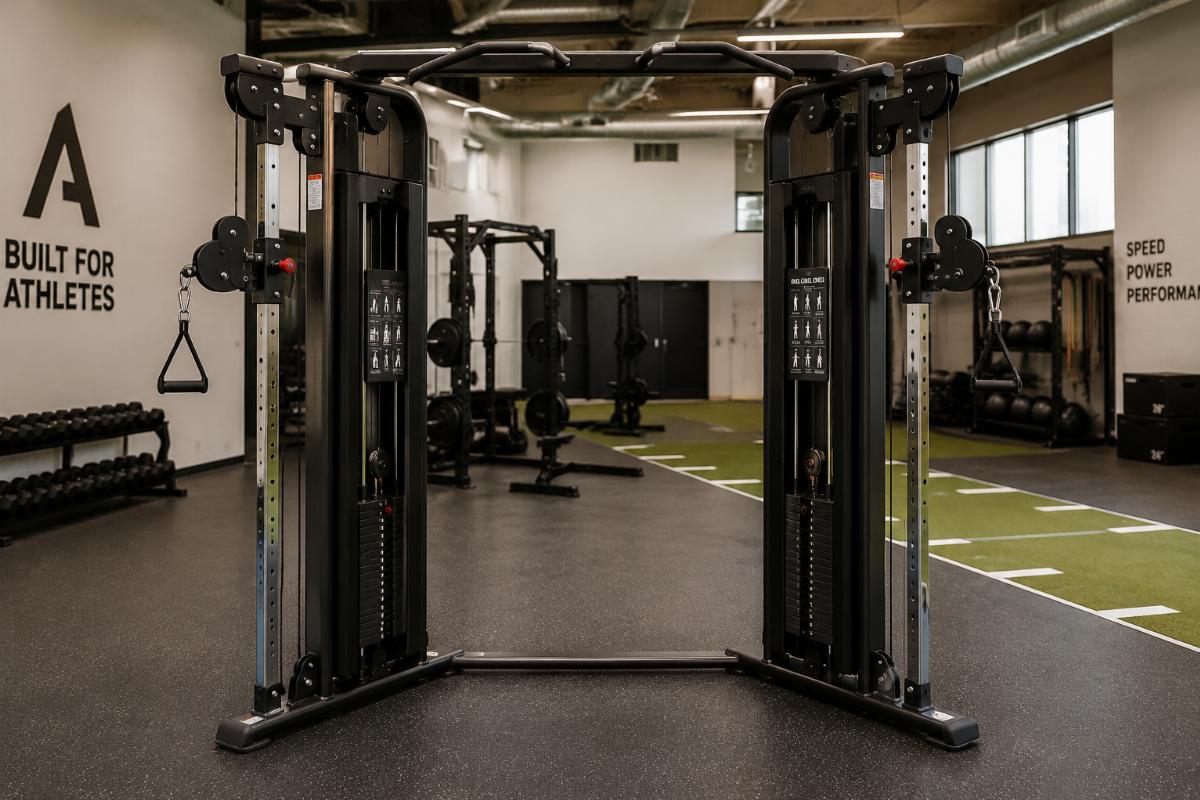
Here is what I have learned from years of shipping cable crossover machines across Latin America, the Middle East, and Southeast Asia — and why the buyers who do this right end up with machines that outlast the ones that look more impressive on the showroom floor.
Why Do Multi-Property Athlete Facilities Standardize on One Cable Crossover?
Standardization across sites cuts maintenance complexity and collapses spare parts inventory into a single SKU family.
When a training center operates five or more locations, the temptation is to mix and match — a premium model for the flagship, a budget version for the secondary sites. In practice, this creates a spare parts nightmare. Different pulley assemblies, different cable routing paths, different weight stack increment logic. When something breaks at a remote site, the maintenance technician shows up with the wrong bearing or the wrong cable length.
[NEED_CITE: multi-site gym equipment standardization impact on maintenance downtime and spare parts logistics]
I worked with a multi-site athlete training center in the Middle East that initially ordered three different cable crossover configurations across its locations. Within the first year, their maintenance team was carrying separate pulley kits, separate cables, and separate weight stack pins for each variant. Downtime stretched noticeably. When they consolidated to a single cable crossover specification across all sites, their spare parts inventory dropped to a fraction of what it had been, and replacement cycles became predictable.
The logic is simple: a unified fleet means one set of pulley bearings, one cable diameter, one weight stack plate increment. A technician who learns to service one machine can service all of them. Warranty claims become easier to track. And when you negotiate with a manufacturer for a full rollout, container-load consolidation becomes straightforward — every unit ships in the same configuration, loaded into the same container positions.

What Specs Actually Matter — Weight Stack, Cable, or Pulley?
Pulley ratio and cable routing determine the lifespan of a cable crossover — not just the plate weight on the stack.
Most buyers walk into a negotiation and lead with the weight stack number. They want to know if it is a heavy stack, a light stack, what the increment is. But the weight stack is the least likely component to fail. The frame holds. The plates sit there. What actually wears out is the cable running through the pulleys, and the bearings inside those pulleys.
[NEED_CITE: cable crossover pulley bearing and cable fatigue as primary failure modes per fitness equipment durability benchmarks]
Here is the mechanical reality: every time a member performs a rep, the cable bends over the pulley wheel. That bending creates fatigue in the steel strands. The more pulleys the cable routes through, the more bending cycles it endures per rep. A cable crossover with a complex multi-directional routing system puts significantly more stress on the cable than a simple top-down pull.
| Spec Element | Under-Specified | Properly Matched | Over-Engineered |
|---|---|---|---|
| Cable Diameter | Vulnerable to fraying | Robust for daily volume | Noticeably heavier pull feel |
| Pulley Wheel Count | Substantially extended cable fatigue | Standard service interval | Controlled wear distribution |
| Bearing Type | Vulnerable to noise and seizure | Standard service interval | Substantially extended service life |
| Weight Stack Increment | Uncontrolled load progression | Controlled for athlete use | Noticeably limited micro-loading |
The cable diameter must be matched to the daily rep volume. A facility where each cable crossover station runs continuously through peak hours needs a thicker cable with higher tensile strength than a boutique studio where the machine sits idle between appointments. [NEED_CITE: cable diameter and tensile strength calculation method relative to daily rep volume in commercial gyms]
The pulley wheel count and bearing type directly determine how often you need to service the machine. Sealed bearings in a high-quality pulley assembly will run substantially longer before showing noise or play. Cheap bearings in undersized pulley wheels will start grinding within months under heavy use.
And the weight stack increment? For athlete training facilities, the increment logic matters more than the total weight. Athletes need fine-grained progression — smaller jumps between plates. General commercial use can tolerate larger increments. Getting this wrong means members either stall on progression or skip loads that are too aggressive.

How to Reverse-Engineer Specs from Usage Frequency and Member Volume
A structured method to match cable crossover configuration to real training load — starting from daily operating hours and member throughput.
This is the process I now walk every multi-property buyer through before we finalize a single spec sheet. It is not complicated, but it requires the buyer to share operational data rather than just a budget number.
Step One: Establish daily usage hours per station. How many hours per day will each cable crossover be under active load? A facility open from early morning to late night with back-to-back programming will log substantially more cable bending cycles than a facility with off-peak downtime. [NEED_CITE: commercial gym equipment usage hour benchmarks by facility type]
Step Two: Estimate daily rep volume per cable. Based on member throughput and average session length, how many total reps will each cable perform per day? This number directly drives the cable diameter and tensile strength requirement. Higher rep volume demands thicker cable with higher strand count.
Step Three: Map the pulley routing complexity. How many directional changes does the cable make from the weight stack to the handle? Each additional pulley adds bending fatigue. If the routing is complex, the cable diameter must increase or the pulley bearing quality must upgrade to compensate.
Step Four: Define the weight stack increment based on user profile. Athlete training populations need finer increments for progressive overload. General commercial populations can work with standard increments. This decision locks the plate weight and pin mechanism.
Step Five: Lock the specification and validate against total cost of ownership. The unit price is only one component. A cable crossover that fails within months carries replacement cable costs, pulley bearing replacements, labor downtime, and member dissatisfaction. The total cost of ownership model must include projected maintenance over a multi-year horizon plus the cost of downtime. [NEED_CITE: total cost of ownership model for commercial cable crossover including unit price, maintenance, and downtime]
I once worked with a South American gym chain that skipped this process entirely. They chose based on unit price alone. The cables were too thin for their rep volume. The pulleys had the minimum bearing spec. Within months, the failure pattern was exactly what the method above would have predicted.

What Happens When You Buy on Price Alone?
Real failure patterns emerge fast — cable fraying, pulley noise, and warranty disputes — when specs are stripped to hit a target price.
This is the part of the business I find most frustrating, because the failures are entirely predictable and entirely avoidable.
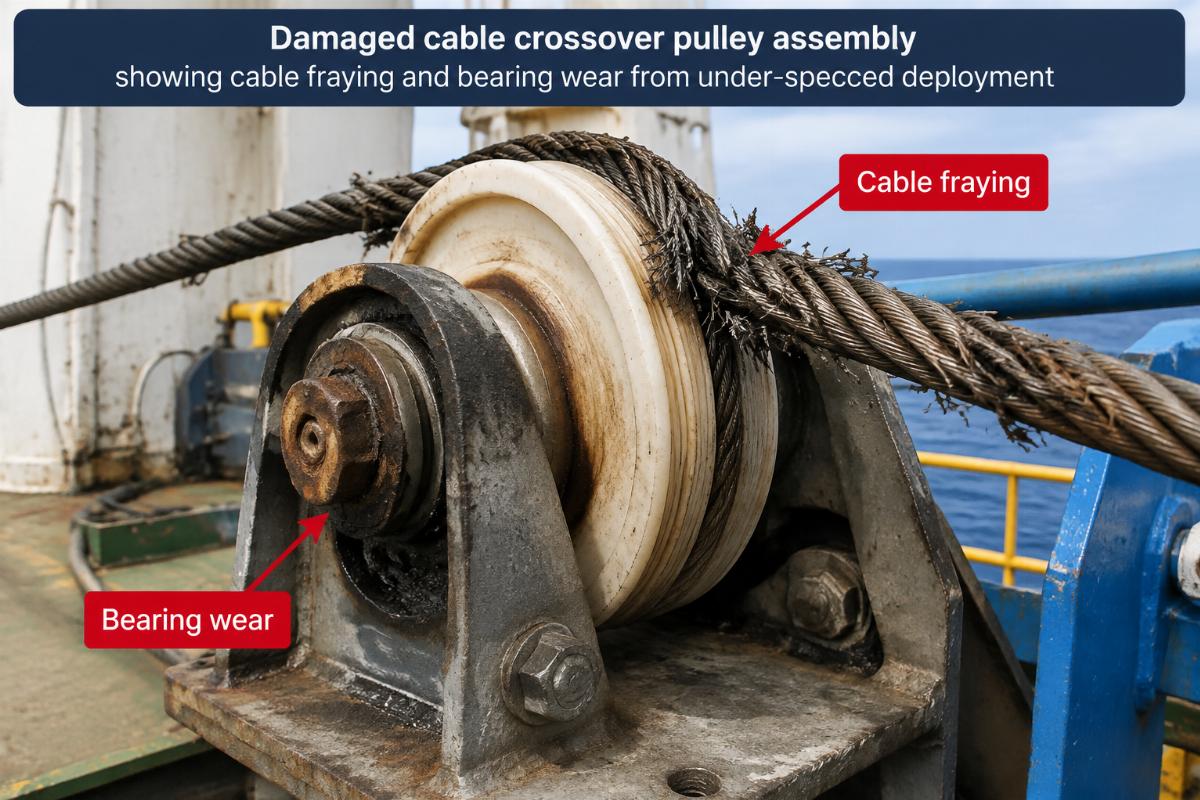
A high-traffic iron gym in Latin America ordered a large rollout of cable crossover machines. The buyer’s procurement team was under pressure to hit a budget target. The manufacturer offered a lower price by reducing the cable diameter, using fewer pulley wheels, and specifying basic bearings instead of sealed units. The weight stack was kept heavy — because that is what looks impressive on the spec sheet.
Within a short period, the pulley assemblies developed noticeable noise. The cables started showing fraying at the routing points where bending stress was highest. The gym’s maintenance team was replacing cables and bearings at a rate that completely erased any upfront savings. [NEED_CITE: cable crossover failure patterns in under-specced commercial gym deployments]
The warranty conversation became adversarial. The manufacturer argued the machines were being used beyond "normal commercial conditions." The buyer argued the machines should have held up. The reality was that neither side had locked the spec to the actual usage profile before production.
This pattern repeats across regions. Buyers in the Middle East, Southeast Asia, and Latin America all face the same pressure: hit the budget, get the machines on the floor, open the doors. But a cable crossover that is under-specced for its environment will fail — and the cost of that failure, in replacement parts, labor, and member churn, will dwarf the initial savings.
The procurement shift that works is moving from "lowest price" to "usage-based spec lock." When the spec is locked to actual operating conditions, warranty claims drop noticeably. The machines perform as expected. And the buyer can forecast maintenance costs with confidence.
How to Build a Turnkey Cable Crossover Package for Multi-Site Rollout
From spec lock to container consolidation and after-sales support — a complete deployment package for multi-property facilities.
Once the spec is locked using the reverse-engineering method above, the next step is building a procurement package that supports a multi-site rollout without creating logistical or maintenance headaches.
The first element is OEM branding consistency. Every unit across every site should carry the same branding, the same finish, the same visual identity. This is not just aesthetics — it reinforces the standardization principle. When a member walks into any location, the equipment feels identical.
The second element is container-load consolidation. When every unit in a rollout shares the same specification, loading becomes efficient. The manufacturer can pack containers with uniform configurations, minimizing wasted space and reducing shipping cost per unit. For a buyer deploying across multiple sites, this means predictable logistics and clearer landed cost calculations.
The third element is MOQ flexibility. A multi-property rollout may not deploy all sites simultaneously. The manufacturer needs to accommodate phased orders — an initial batch for the first locations, followed by subsequent batches as new sites come online. The spec remains locked; the delivery schedule flexes.
The fourth element is spare parts supply with technical support. A standardized fleet means the spare parts inventory is simple. But the buyer still needs a reliable source for replacement cables, pulley bearings, weight stack pins, and other wear components. Technical support from the manufacturer — guidance on replacement intervals, installation procedures, and troubleshooting — extends the service life of every unit. [NEED_CITE: turnkey gym equipment package components including OEM branding, container consolidation, and after-sales spare parts support]
This is the model we follow at Bick for multi-property deployments. We work with the buyer to lock the cable crossover spec based on their usage data, then build a package that covers branding, consolidated shipping, phased delivery, and a spare parts pipeline backed by technical documentation. The goal is not just to sell machines — it is to ensure that every unit at every site performs reliably for years.

Conclusion
A cable crossover that is specced to its actual usage environment will always outperform one that is specced to a budget target. Multi-property athlete facilities that standardize on a single, properly engineered configuration reduce maintenance complexity, simplify spare parts logistics, and lower total cost of ownership — regardless of how the upfront unit price compares. The discipline is in the spec lock, not in the negotiation.
