Commercial Shoulder Press Machine for Sale | OEM Factory Direct Supplier
Most buyers think choosing a shoulder press machine comes down to tonnage and frame aesthetics. In reality, the single biggest driver of after-sale cost is weight stack compatibility and bearing specification—not the sticker price.
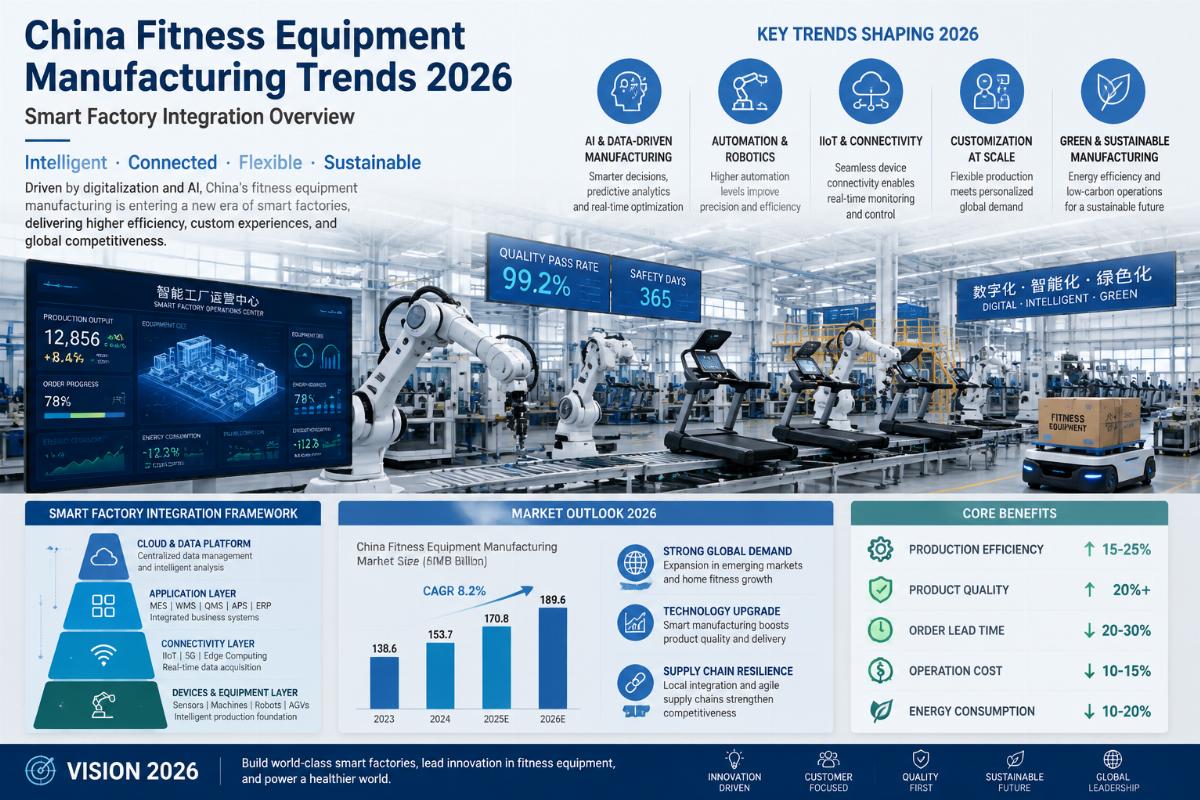
The 2026 Global Shoulder Press Machine Market is expanding steadily, fueled by commercial gym build-outs across Latin America, the Middle East, and Southeast Asia. Yet the growth红利 is quietly being eaten by compatibility traps: imperial-versus-metric mismatches, non-standard weight plate bores, and seat travel ranges that fail to accommodate regional anthropometric norms. Buyers who focus only on unit price end up paying multiples of that savings in on-site rework, air-freighted replacement parts, and lost end-user trust.
I still remember the first time I flew to São Paulo for a full-container strength equipment order. The client had purchased an entire gym package, and by the time the container cleared customs, we discovered the selectorized weight stacks used a plate bore diameter that did not match the Olympic sleeve standard common in Brazil. The machines sat in a warehouse for two months while I re-drew sleeve drawings and had replacement parts air-shipped. The freight alone wiped out a mid-five-figure sum in margin. Since then, my first step on any Latin America order is confirming local weight plate standards and barbell sleeve diameters—even noting that Chilean operators still default to imperial sizing in many cases.
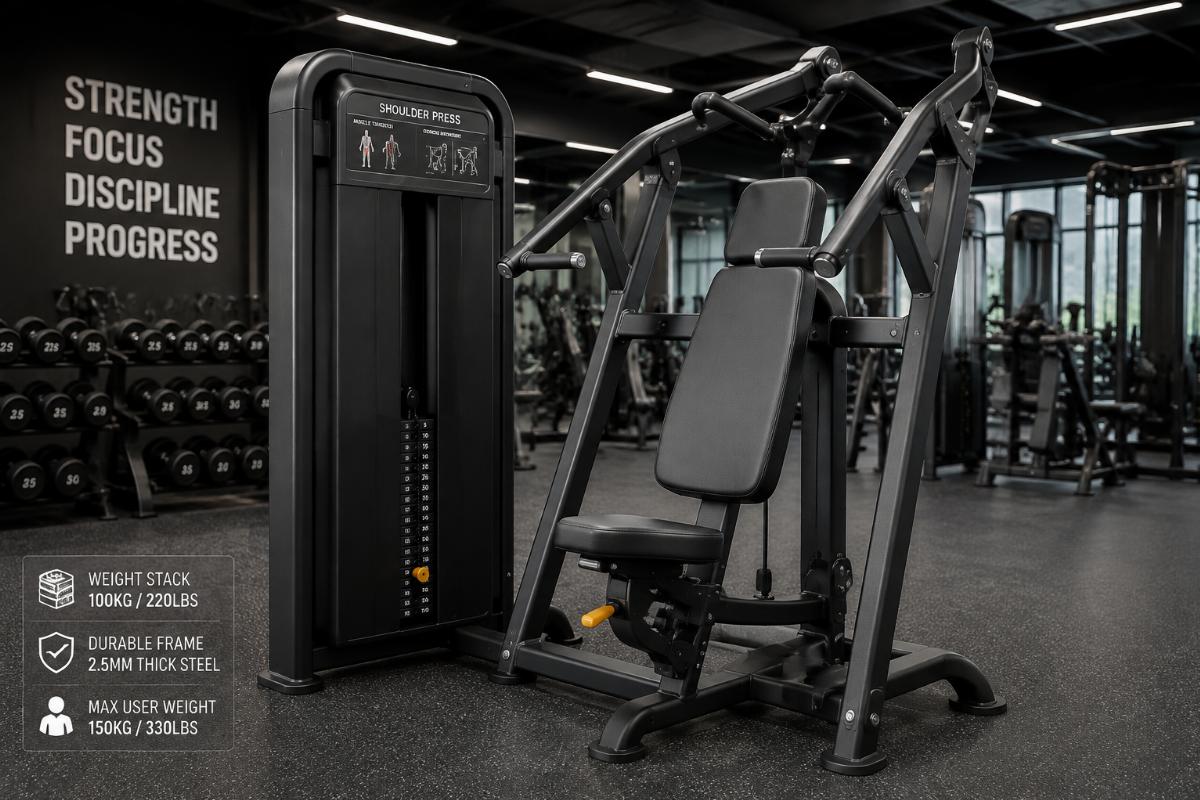
What follows is a practitioner’s breakdown of what actually matters when sourcing from the Global Shoulder Press Machine Market in 2026—structured around compatibility verification, specification evaluation, and supply-chain validation.
Why Do Regional Compatibility Standards Matter More Than Unit Price?
Weight stack bore diameter, guide rod spacing, and the imperial-versus-metric divide are the largest hidden cost variables in cross-border strength equipment procurement.
The Global Shoulder Press Machine Market in 2026 is characterized by regional standard fragmentation. North American facilities predominantly use Olympic-standard 50 mm sleeve diameters and imperial-weight stacks (increments of 10–15 lbs). European and Middle Eastern markets lean toward ISO 25 kg plate compatibility. Many Southeast Asian and African buyers mix legacy equipment from different origins, creating hybrid compatibility requirements that no single datasheet can capture. [NEED_CITE: regional weight plate standard distribution across major fitness equipment import markets]
A Middle East gym chain once placed a bulk order for plate-loaded shoulder press units. The machines arrived, assembled cleanly, and looked correct on paper. Within weeks, end-user complaints piled up: the seat adjustment travel was insufficient for the average male height in the Gulf region, forcing users into an awkward pressing arc that caused shoulder discomfort. The return-and-replace ratio for seat rails and adjustment pins reached a level that erased the container’s profit margin entirely. [NEED_CITE: anthropometric seat travel requirements by region for upper-body strength machines]
The lesson is straightforward. Before any purchase order is issued, the buyer must confirm:
- Weight plate bore compatibility — does the selectorized stack or plate-loaded sleeve match the end-user’s existing plates?
- Guide rod diameter and spacing — will aftermarket weight plates slide on without binding?
- Seat adjustment range — does the travel cover the 5th to 95th percentile user height for the target market?
- Fastener thread standard — metric bolts in an imperial-market gym create maintenance nightmares.
These are not optional checks. They are the difference between a machine that generates membership revenue and one that generates service tickets.

How to Evaluate Shoulder Press Machine Specifications Before Placing a Bulk Order?
A structured pre-order specification checklist—covering bearing grade, seat travel, pivot geometry, and cable routing—prevents the majority of field failures.
When evaluating units from the Global Shoulder Press Machine Market, most buyers start with frame gauge and upholstery color. The parameters that actually determine long-term reliability sit deeper in the spec sheet. [NEED_CITE: critical specification parameters for commercial selectorized upper-body press machines per industry maintenance data]
| Parameter | Basic Tier | Commercial Grade | Verification Method |
|---|---|---|---|
| Bearing load rating | Self-reported | Certified grade per ISO standard | Request test certificate |
| Seat adjustment travel | Fixed or limited range | Full-range multi-position | Measure physical travel |
| Pivot arm bushing material | Standard nylon | Self-lubricating composite | Confirm material spec |
| Cable routing system | Open loop | Enclosed with wear guides | Visual inspection |
| Weight stack shroud | Snap-fit plastic | Steel enclosure with ventilation | Material and fastener check |
A boutique studio operator in Southeast Asia once chose a light-commercial shoulder press over a full-commercial unit based on unit cost. After roughly a year and a half of daily use at high member turnover, the pivot arm bushings showed noticeable wear, the seat adjustment mechanism developed play, and the cable guides frayed. Switching to a commercial-grade unit with certified bearing assemblies and reinforced pivot geometry extended service intervals substantially and reduced maintenance spend to a fraction of the earlier level. [NEED_CITE: comparative maintenance frequency between commercial and light-commercial shoulder press units under high-use conditions]
The checklist above should be applied to every SKU in a multi-station order. A plate-loaded shoulder press and a selectorized shoulder press from the same manufacturer may share a frame design but differ critically in bearing specification and cable system architecture.

What Are the Hidden Costs of Skipping Pre-Shipment Compatibility Checks?
On-site rework, emergency air freight for replacement parts, and end-user trust erosion routinely exceed the original per-unit savings from unverified sourcing.
The Global Shoulder Press Machine Market offers attractive factory-direct pricing, particularly for buyers consolidating full-container orders. But the cost structure shifts dramatically when compatibility is not verified before the container is sealed.
Consider a Latin American distributor who received a full container of plate-loaded strength machines, including shoulder press units. The weight plates supplied used a bore diameter that was nominally close to the local standard but exceeded tolerance by a margin that caused binding on the guide rods. The distributor faced three options: machine the plates locally (expensive and inconsistent), air-freight replacement guide rods from the origin factory (cost several times the original plate savings), or replace the entire weight stack assembly. The chosen path—air-freighting modified guide rods—took weeks to execute and damaged the distributor’s reputation with the gym operators who were waiting for equipment to go live. [NEED_CITE: cost structure of post-delivery compatibility remediation in international fitness equipment trade]
The hidden cost categories include:
- On-site modification labor — local technicians modifying frames, re-drilling mounting holes, or re-sleeving guide rods.
- Air-freight premiums — emergency shipment of replacement parts at rates multiples higher than sea-freight unit cost.
- Downtime revenue loss — gym stations out of service during remediation, directly affecting member retention.
- Brand trust erosion — distributors lose credibility with gym owners when delivered equipment requires field fixes.
These costs are entirely preventable with a pre-shipment compatibility verification protocol that covers drawing confirmation, sample measurement, and final random inspection before container loading.

How to Build a Reliable Sourcing Strategy for Strength Equipment?
A dependable sourcing strategy for the Global Shoulder Press Machine Market requires a manufacturing partner with OEM flexibility, container consolidation capability, and pre-shipment technical validation support.
The most effective sourcing approach treats the manufacturer as a technical partner rather than a catalog supplier. This means the factory must be willing to:
- Confirm regional compatibility standards before production — verifying weight stack bore, guide rod spacing, seat travel range, and fastener thread standard against the buyer’s target market requirements.
- Support OEM and ODM branding — applying custom logos, color schemes, and upholstery specifications without imposing prohibitive minimum order quantities.
- Consolidate mixed-SKU container loads — combining shoulder press units with cable crossovers, Smith machines, free-weight racks, and functional training accessories into a single container, reducing per-unit freight cost.
- Provide pre-shipment technical documentation — including assembly drawings, bearing specification sheets, and weight stack tolerance reports that the buyer can verify independently.
A manufacturer based in Shandong Province with extensive experience serving gym operators, hotel fitness centers, and distribution networks across multiple regions has structured its entire commercial shoulder press line around these principles. The production facilities maintain CE certification, offer commercial-grade heavy-duty frame construction, and provide the flexibility to accommodate single-unit testing orders through to full-gym turnkey packages. Container consolidation across cardio, strength, and free-weight product lines allows buyers to optimize freight cost while ensuring every unit passes compatibility verification before loading. [NEED_CITE: OEM manufacturing capability and container consolidation practices for commercial strength equipment exporters]
The sourcing strategy that wins in the 2026 Global Shoulder Press Machine Market is not the one that finds the lowest unit price. It is the one that eliminates post-delivery surprises through technical validation at the factory level.

Conclusion
The Global Shoulder Press Machine Market in 2026 rewards buyers who verify compatibility before they verify price. Regional standard fragmentation, anthropometric variation, and bearing specification differences are the true drivers of total cost of ownership—not the quoted unit price. A structured pre-order checklist, rigorous pre-shipment validation, and a manufacturing partner with OEM flexibility and container consolidation capability transform sourcing from a cost center into a competitive advantage.