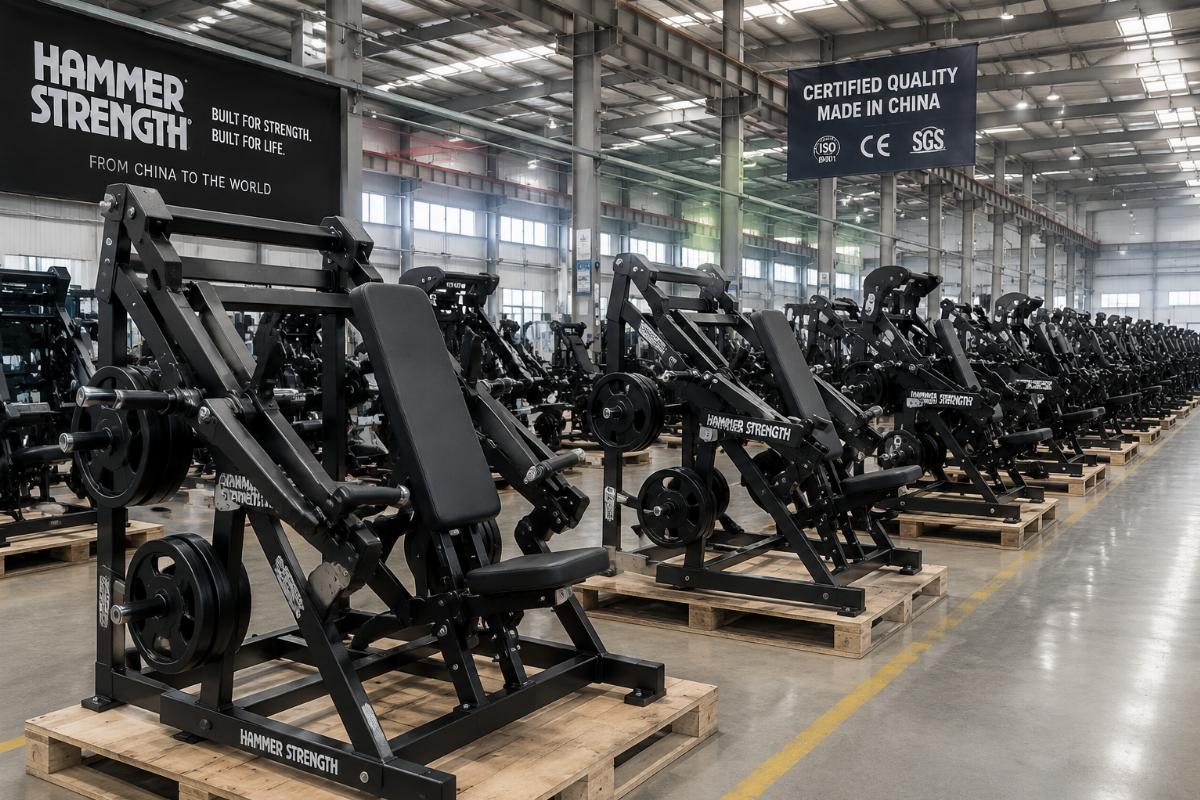
FW-500 Free Weight Manufacturer for Chile Buyers
Bare iron is cheaper at the factory, but it costs you far more at the Chilean port.
When sourcing free weights for Chile, buyers must prioritize anti-corrosion material selection, moisture-proof ocean freight packaging, and Spanish-language customs compliance over simple unit-price comparison. The coastal climate, high-salinity sea air, and strict import regulations make these three factors the true determinants of landed cost and customer satisfaction.
I still remember a shipment that landed in San Antonio port years ago. A commercial gym in Santiago had ordered a mixed container of dumbbells and weight plates. The unit price looked great on paper. By the time the container doors opened, moisture had pooled inside, and several pallets of bare iron plates showed surface rust. The claim process dragged on for months. Since then, I have paid obsessive attention to every detail from the coating line to the container door seal. If you are evaluating a free weight supplier for your Chilean operation, here is what actually matters.
Let us walk through the material, packaging, customs, and cost dimensions that separate a smooth delivery from a costly dispute.
What Material Options Balance Cost and Durability for Chile’s Coastal Climate?
Rubber or PU coated free weights carry a higher upfront cost, but they dramatically reduce rust-related complaints in Chile’s high-salinity coastal environment.
Chile’s major gym markets—Santiago, Valparaíso, Viña del Mar, Antofagasta—are all within a short distance of the Pacific coast. The air carries persistent salt moisture, especially in port cities. Bare cast iron, even with a light oil film, begins to show oxidation within weeks under these conditions. [NEED_CITE: corrosion rate of cast iron in marine atmospheric environments per ISO 9223]
Here is how the three common material tiers compare for a Chilean gym context:
| Material Tier | Initial Unit Cost | Salt-Spray Endurance | Maintenance Required | Complaint Risk in Coastal Chile |
|---|---|---|---|---|
| Bare Cast Iron | Lowest | Vulnerable | Frequent oiling | High |
| Rubber Coated | Moderate | Resistant | Minimal | Low |
| PU (Polyurethane) Coated | Highest | Robust | Virtually none | Very Low |
A gym owner in Antofagasta—one of the most corrosive coastal cities in northern Chile—once placed an order for bare iron plates because the per-kilogram price was attractive. Within half a year, the coating on the few rubber plates in the same room was fine, but the bare plates had visible pitting and flaking. Members complained about rust stains on the floor and on their hands. The replacement order, including freight and customs, ended up costing several times the original price difference.
The practical takeaway: if your gym or distribution warehouse sits within a few kilometers of the coast, rubber coated or PU coated free weights are not a luxury upgrade. They are a baseline requirement. [NEED_CITE: fitness equipment material durability standards for humid environments]
How Should Packaging Be Optimized to Prevent Moisture Damage During Ocean Freight?
A plastic pallet, tight stretch wrap, adequate desiccant, and a humidity indicator card inside the container form the minimum defense against ocean freight moisture damage.
The sea route from Shandong to Chile’s main ports typically takes several weeks. During that time, the container crosses the equator and experiences significant temperature swings. Condensation inside the box—often called "container rain"—is the real enemy, not just the salt air outside.
I learned this the hard way. On that early shipment to Santiago I mentioned, we used wooden pallets. Not only did the wood itself release moisture into the container atmosphere, but Chile’s agricultural import authority, SAG (Servicio Agrícola y Ganadero), requires phytosanitary treatment for all wood packaging materials. [NEED_CITE: SAG phytosanitary import requirements for wood packaging materials] That order cleared customs, but it added unnecessary cost and inspection friction.
Here is the packaging protocol we now follow for every free weight shipment bound for Chile:
- Plastic pallets only. No fumigation needed, no SAG delays, lighter than wood so you gain payload capacity.
- Stretch wrap around each pallet, bottom to top. This creates a micro-barrier that limits direct moisture contact with the iron surfaces.
- Desiccant bags calculated per container volume. The industry standard is to use desiccant units sized to the container’s air space, not just the cargo weight. [NEED_CITE: desiccant quantity calculation per container volume for ocean freight]
- Humidity indicator cards placed at multiple points inside the container. These give the receiver a visible record of whether the internal humidity stayed within a safe range during transit. If the cards show blue-to-pink change, you have documentary evidence for any insurance claim.
One distributor in Valparaíso told me that after switching to this packaging approach with their free weight supplier, their moisture-related claim rate dropped to near zero across multiple shipments. The cost of the plastic pallets and desiccants is marginal compared to the cost of a rejected container or a re-shipment.
What Are the Key Customs Clearance Requirements for Fitness Equipment in Chile?
Spanish-language labeling, a valid Certificate of Origin, and a compliant commercial invoice are the three documents that prevent port delays and demurrage charges.
Chilean customs is efficient when paperwork is correct, but unforgiving when it is not. Fitness equipment, including free weights, falls under specific tariff headings, and the importer of record must present documentation that matches the physical shipment exactly.
The most common pitfalls I have seen Chilean buyers encounter:
Labeling. Every piece of equipment or packaging must carry labels in Spanish, including the country of origin, material composition, and the importer’s RUT (tax identification number). If the labels are in English only, or if they are missing entirely, the cargo gets held for relabeling at a bonded warehouse. That process adds days, sometimes weeks, and the storage fees accumulate quickly.
Certificate of Origin. Chile has free trade agreements with several countries, but for Chinese-origin fitness equipment, a standard CCPIT-issued Certificate of Origin is required. [NEED_CITE: Chile customs documentation requirements for Chinese-origin fitness equipment] Some buyers assume a proforma invoice is enough. It is not.
Commercial invoice accuracy. The declared value, HS code, and product description must be consistent across the invoice, packing list, and bill of lading. Even small discrepancies—like describing "rubber coated dumbbells" as just "iron weights"—can trigger a customs review and delay release.
We have worked with Chilean importers to prepare these documents in advance, reviewing the draft paperwork before the vessel departs. That simple step has prevented port congestion surcharges and demurrage fees that would have erased any per-unit savings negotiated at the factory.
How to Calculate the True Landed Cost of Free Weights from China to Chile?
The real cost of free weights includes ocean freight, import duties, port handling charges, inland transport, and potential moisture damage losses—not just the factory unit price.
Many buyers focus exclusively on the FOB or EXW price per kilogram. That number is only the starting point. For Chile, the landed cost calculation must include several additional layers.
Ocean freight. Free weights are dense and heavy. A standard container reaches its weight limit long before it is full by volume. That means you are paying freight on weight, not volume. Consolidating multiple product types—dumbbells, plates, kettlebells, benches—into a single full container improves the cost-per-kilogram significantly compared to LCL shipments. [NEED_CITE: ocean freight cost structure for heavy cargo to South American west coast ports]
Import duties. Chile’s ad valorem tariff on fitness equipment is relatively low compared to some other Latin American markets, but it is not zero. The exact rate depends on the HS code, and misclassification can result in overpayment or penalties. [NEED_CITE: Chile tariff schedule for gym and fitness equipment HS codes]
Port and inland logistics. San Antonio and Valparaíso are the main entry points for central Chile. Inland transport to Santiago is straightforward, but if your destination is further north—Antofagasta, La Serena—or south—Concepción, Temuco—the trucking cost adds up.
Moisture damage risk. As discussed earlier, if your packaging fails and cargo arrives with rust, the financial impact includes replacement production, re-shipping, customs re-entry, and reputational damage with your gym clients. This risk is difficult to quantify in advance, but it is real and it disproportionately affects buyers who chose the cheapest bare iron option.
When you add all these layers together, the gap between a low-cost bare iron order and a properly packaged rubber coated order narrows considerably. In some cases, the rubber coated option ends up cheaper on a true landed basis, once you factor in the avoided losses.
Conclusion
Material choice, packaging discipline, and customs preparation determine whether a Chile free weight import is profitable or painful.
Sourcing free weights for Chile requires looking beyond the factory price tag. Rubber or PU coatings protect against the coastal salt air that destroys bare iron. Plastic pallets, stretch wrap, desiccants, and humidity cards keep cargo dry across the Pacific. Spanish labels, a proper Certificate of Origin, and accurate invoices clear customs without demurrage. When you calculate the true landed cost—including freight, duties, and the hidden cost of moisture damage—the right specifications at the start save far more than any initial unit-price discount.