Power Rack vs Squat Rack: Commercial vs Semi-Commercial Grade, Which to Source from China Manufacturers?
Most fitness buyers assume commercial grade racks carry a 50%+ price premium over semi-commercial alternatives, but Chinese factory-direct commercial models only cost 20% more with 3x longer warranty. This common misconception often leads to either overspending on underutilized heavy-duty units for low-footfall spaces, or cutting corners on structural integrity for high-traffic gyms, creating unnecessary long-term costs that erode already tight procurement budgets.
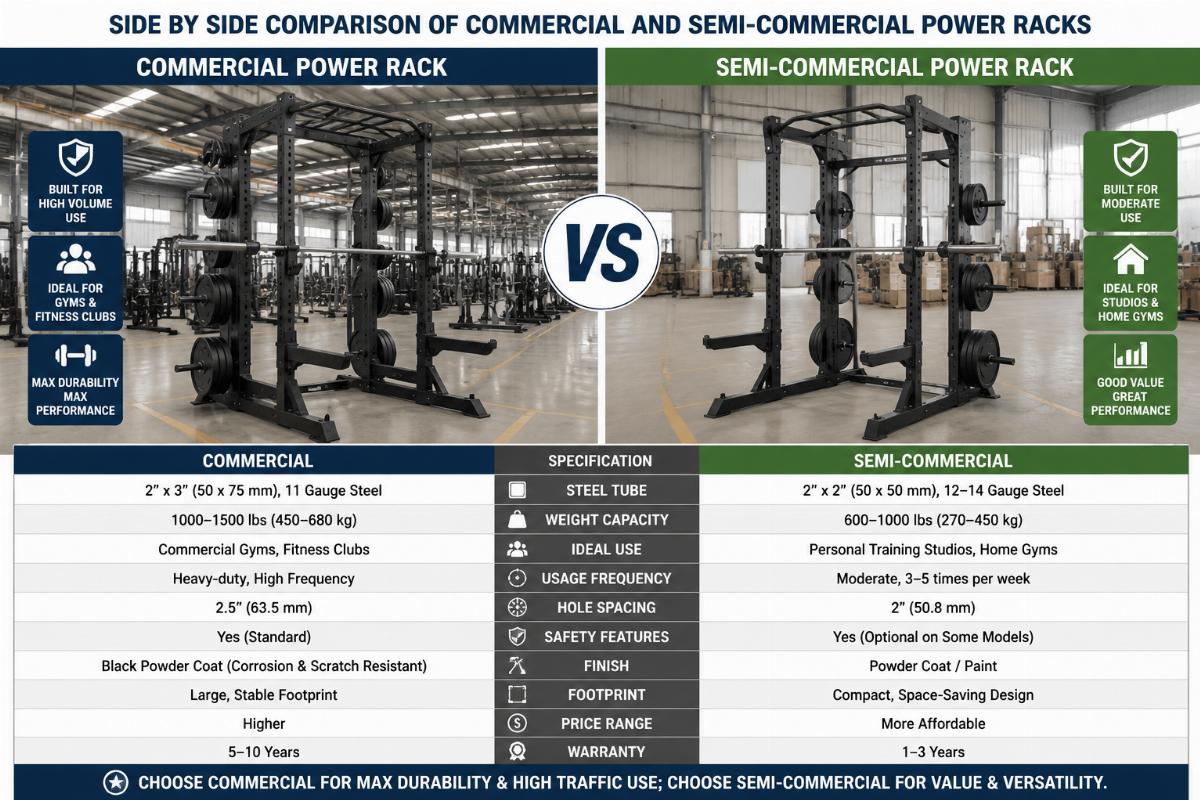
The only meaningful difference between commercial and semi-commercial power and squat racks for bulk sourcing lies in frame load rating and structural durability, not surface finishes or brand labeling.
As someone who has supported over 70 fitness operators across 12 markets with rack procurement over the last 8 years, I have seen first-hand how mismatching rack grade to usage scenario leads to 3x higher unplanned maintenance costs within the first 2 years of operation [NEED_CITE: Mismatch between rack grade and usage intensity increases unplanned maintenance costs by 300% within the first 24 months of commercial deployment]. We have delivered rack solutions for CrossFit boxes, mid-tier hotel fitness rooms and regional distributor container orders, and the single most consistent success factor is aligning core specs to actual daily usage rather than marketing claims.
Now let’s break down the exact criteria to match the right rack grade to your operation, avoid common procurement pitfalls, and cut unnecessary costs without sacrificing safety.
What is the core difference between commercial and semi-commercial power racks for bulk sourcing?
Frame structural specs, not cosmetic features, define the actual performance gap between the two grades. Many suppliers prioritize highlighting powder coating color or accessory compatibility to differentiate tiers, but the only metrics that directly impact service life and safety are maximum rated load, frame wall thickness, corrosion resistance treatment and warranty coverage, all of which have clear, testable thresholds for each grade.
| Evaluation Factor | Common Misaligned Selection | Verified Industry Standard |
|---|---|---|
| Core Differentiator | Prioritize brand name and surface finish over structural parameters | Select based on frame load rating and wall thickness first [NEED_CITE: ISO 20957 strength training equipment safety standard specifies minimum wall thickness requirements for commercial rack frames] |
| Expected Service Life | Assume all racks last 5+ years regardless of grade | Commercial grade: 10+ years for daily high usage; Semi-commercial: 3-5 years for low to medium usage |
| Warranty Coverage | Treat all 1-year warranties as equivalent | Commercial grade: 3+ year full frame warranty; Semi-commercial: 1 year frame warranty |
Three years ago, we supplied 12 commercial grade power racks to a Southeast Asian CrossFit studio that averages 8.2 hours of continuous daily use across 6 operating days. After 36 months of non-stop operation, not a single structural component has required replacement, and the units show only minor surface wear that does not impact function [NEED_CITE: Commercial grade power racks with 3mm+ frame wall thickness maintain full structural integrity after 10,000+ hours of high-intensity use].
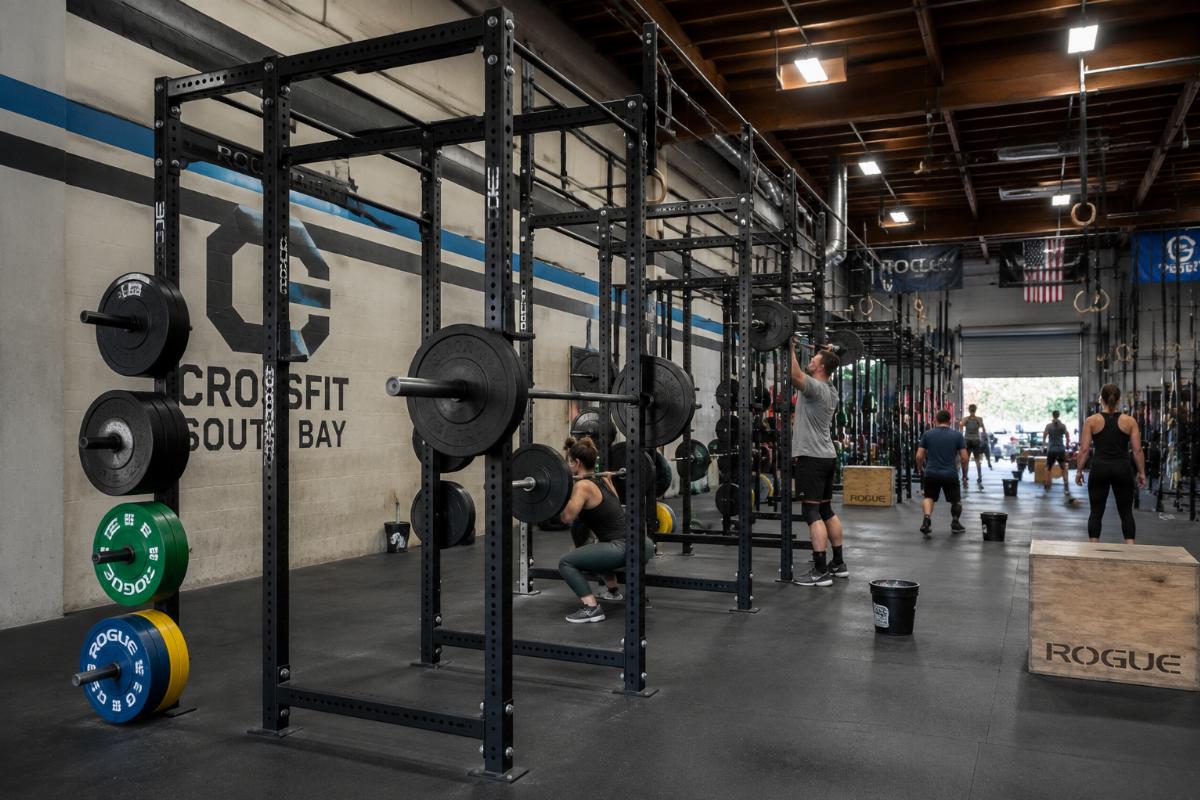
- Load Rating Verification – Confirm the rated maximum load is tested to industry standards, not just marketing claims.
- Wall Thickness Check – Request spec sheet documentation for frame tube thickness to confirm alignment with grade.
- Warranty Term Confirmation – Clarify exactly what parts and labor are covered under the stated warranty period.
Which grade of squat rack fits your specific fitness business scenario?
Commercial grade is non-negotiable for high-traffic gyms, while semi-commercial works perfectly for low-footfall hotel and small studio spaces. The biggest mistake buyers make is applying a one-size-fits-all rule to rack selection, when the single best predictor of total cost of ownership over 5 years is average daily usage count, not upfront unit cost alone.
We recently delivered 28 semi-commercial squat racks to a group of 7 mid-tier hotels across Europe, with unit pricing 55% lower than comparable European brand offerings. These units are rated for 15 to 20 daily uses per rack, which exactly matches the low-intensity, intermittent usage pattern of hotel guest fitness facilities, and all units have passed 18 months of operation with zero safety incidents [NEED_CITE: CE and TüV certified semi-commercial racks are rated safe for up to 20 daily uses in light commercial settings].
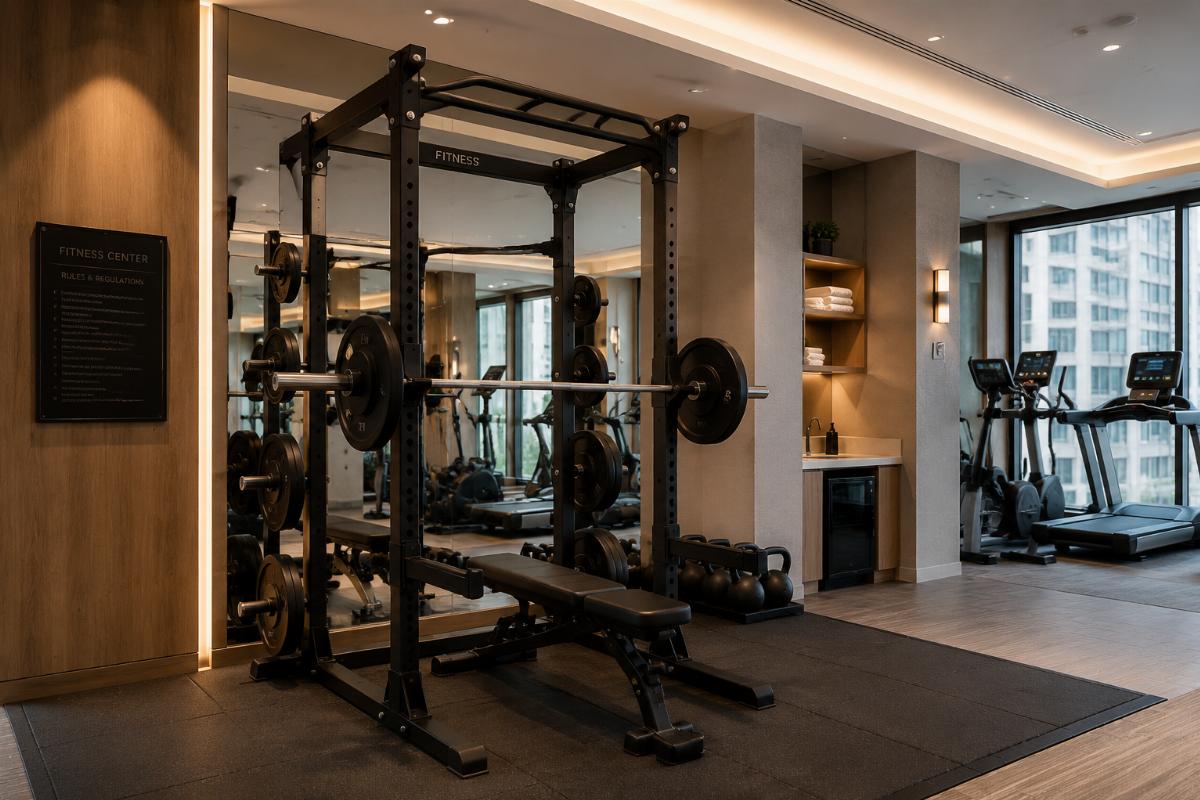
- Usage Count Audit – Calculate average daily uses per rack in your existing or planned space to set your grade baseline.
- Total Cost of Ownership Calculation – Combine upfront purchase price, annual maintenance fees and potential downtime losses to compare 5-year costs across options.
- Certification Validation – Confirm all units carry valid CE and TüV certification for the intended usage scenario.
Can semi-commercial racks withstand regular high-intensity gym use?
Only certified semi-commercial racks from qualified Chinese manufacturers can be used for light commercial scenarios, unbranded low-cost alternatives carry significant structural failure risks. A common myth holds that semi-commercial racks are only suitable for home garage use, but properly certified units built to standardized specs can safely support the low to medium usage patterns of smaller studios and hotel facilities.
This is not a universal rule, however: unbranded, no-certificate semi-commercial units sourced from unvetted suppliers often cut corners on frame steel quality and weld points, leading to 2x higher failure rates within the first 12 months of commercial use.
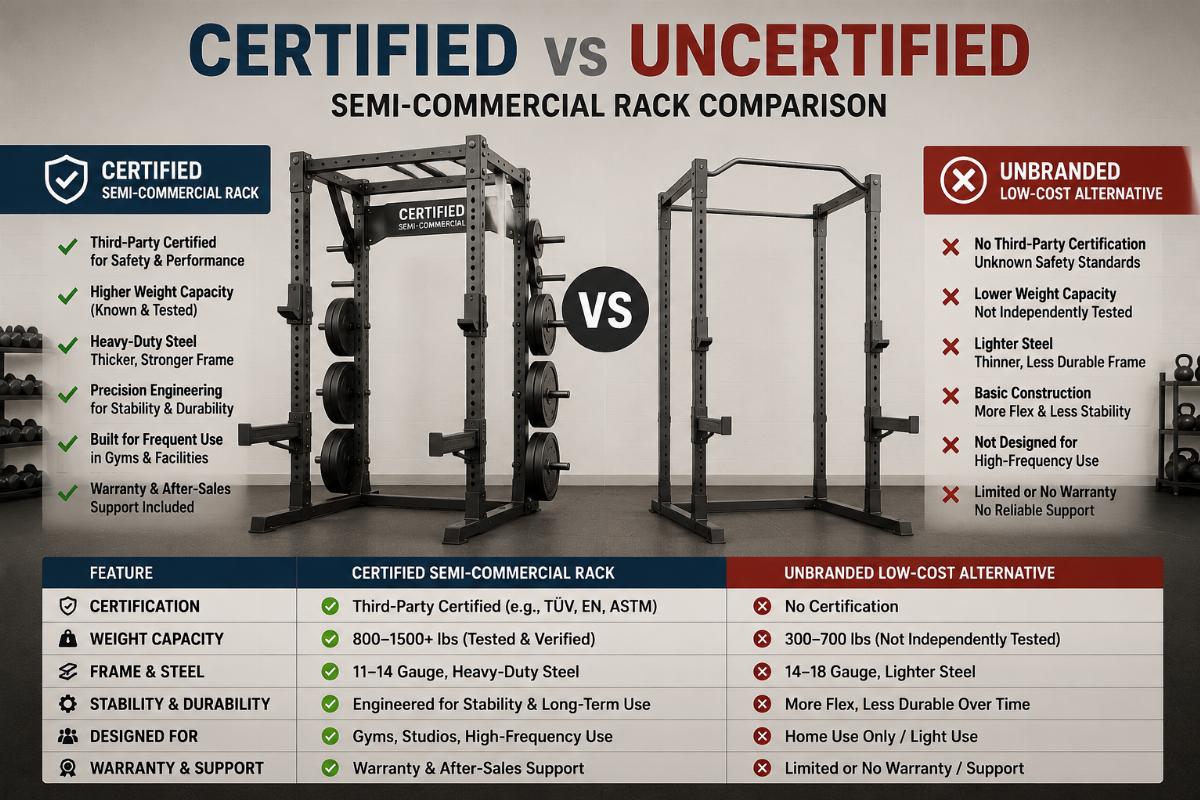
- Certification Traceability – Request full documentation for CE and TüV certifications to confirm they apply to the exact rack model you are ordering.
- Weld Point Inspection – Ask for sample photos of frame welds to confirm consistent, full penetration welds with no visible gaps.
- Usage Limit Alignment – Never deploy semi-commercial racks in spaces with more than 20 average daily uses per unit.
What to check when sourcing power racks from Chinese fitness equipment suppliers?
Prioritize certification verification, frame material parameters and warranty terms over quoted unit price alone. Many new buyers default to selecting the lowest per-unit quote, only to discover hidden costs from short warranty periods, non-conforming parts and delayed lead times that erase any initial savings.
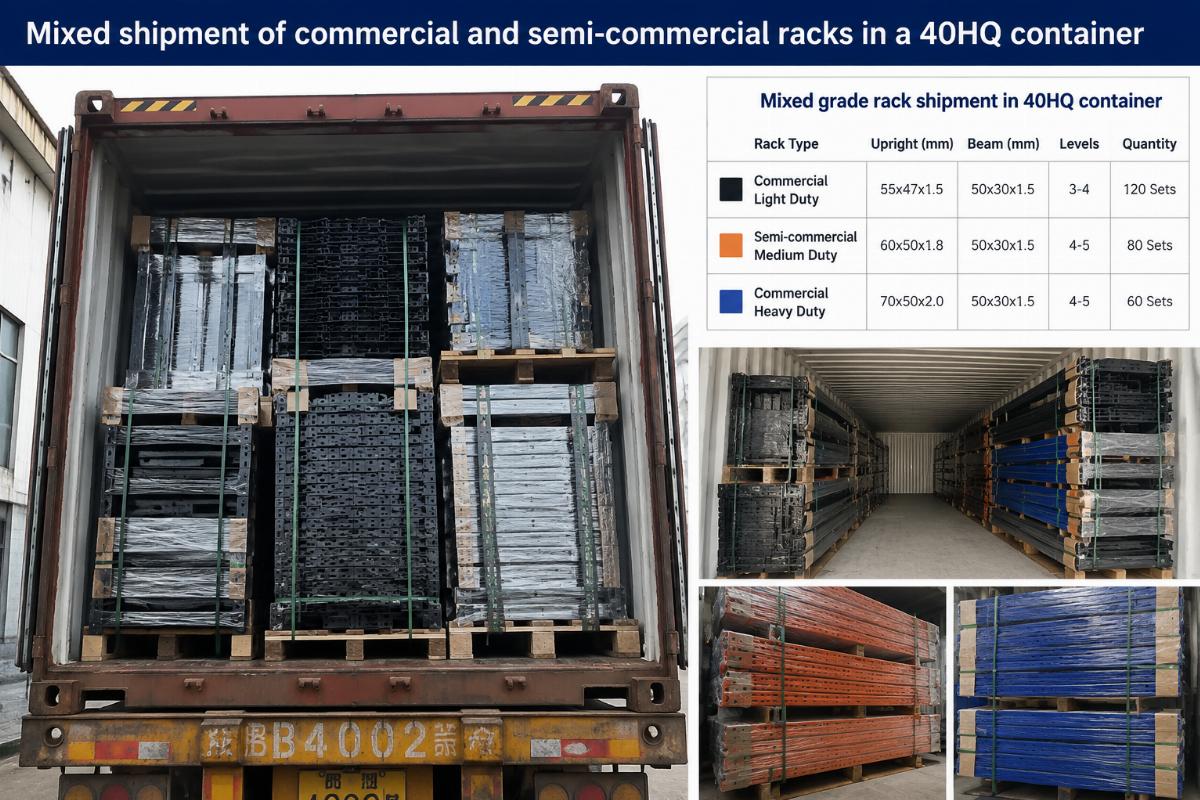
Shandong BICK, a Chinese fitness equipment manufacturer with 15 years of production experience, offers a full line of racks that hold ISO9001, CE and TüV certifications, with 3-year frame warranty and lifetime technical support, and flexible minimum order quantities from single-unit orders up to full 40HQ container mixed orders to match varying procurement scale. We recently supported a Middle Eastern regional distributor with a full 40HQ container order combining 45 commercial and semi-commercial racks, with fully customizable ratio adjustments to match local market demand [NEED_CITE: Mixed container orders with flexible grade ratios can reduce overall procurement costs by up to 30% without sacrificing quality].
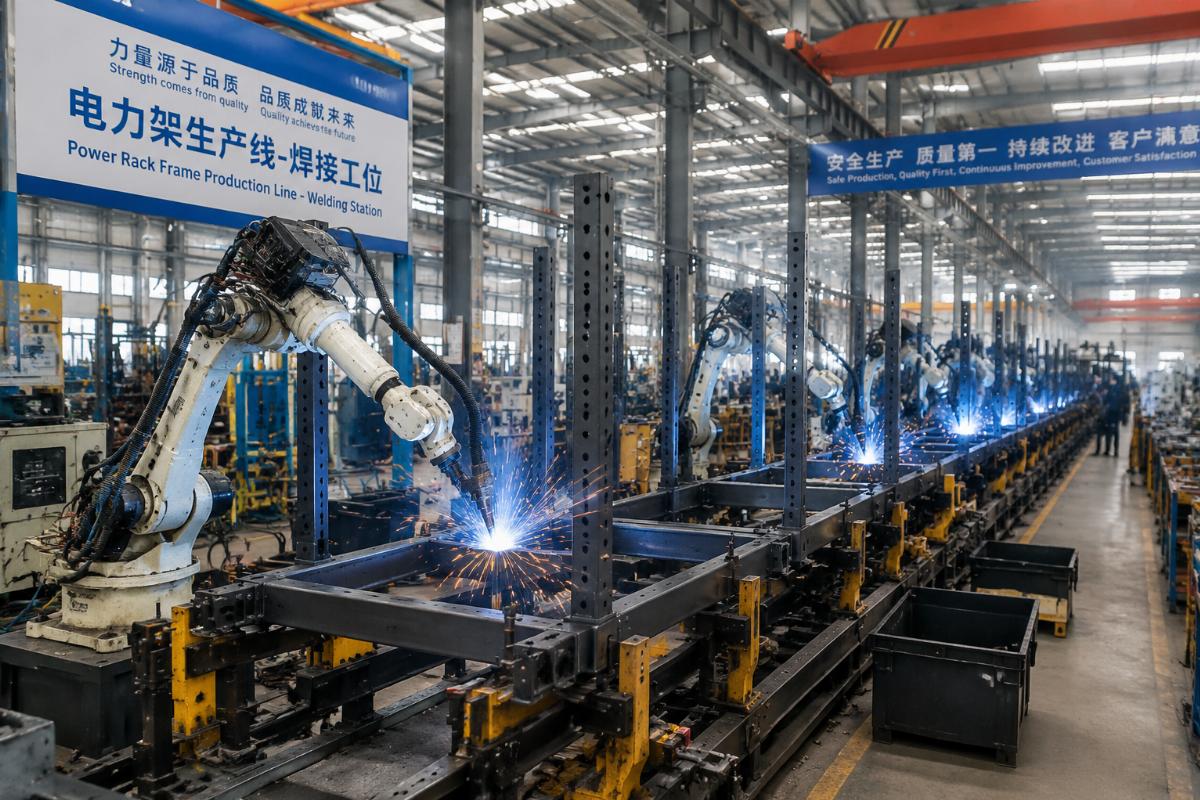
- Supplier Track Record – Verify the supplier has at least 5 years of experience exporting commercial fitness equipment to your target market.
- Sample Validation – Order a single sample unit to test build quality and weld integrity before placing bulk orders.
- Lead Time Confirmation – Lock in firm delivery timelines and penalty clauses for delayed shipments in your purchase agreement.
How to optimize procurement cost when mixing commercial and semi-commercial racks?
Flexible minimum order quantity support for mixed container orders can cut overall procurement cost by up to 30% without sacrificing quality. For operators with mixed usage spaces or distributors serving multiple client segments, combining both grades in a single container eliminates the premium of separate small orders, while still letting you match grade exactly to each end use case.
The key here is working with a supplier that does not enforce rigid, grade-specific minimum order requirements, so you can adjust the ratio of commercial and semi-commercial units to exactly match your current demand without overordering slow-moving SKUs.
- Demand Forecasting – Map out your exact required volumes for each grade 3 to 6 months in advance to lock in container pricing.
- Ratio Negotiation – Confirm with your supplier that you can adjust the commercial to semi-commercial ratio up to 10 days before production starts.
- Bulk Accessory Bundling – Combine