

Buy Commercial Functional Trainer Bulk Order | Factory Direct OEM Supplier
The cheapest quote per unit rarely delivers the lowest total cost of ownership. When you place a bulk order for functional trainers, the real expense hides in steel gauge mismatches, cable fatigue failures, and container-loading inefficiencies that surface only after the shipment clears customs.
To buy functional trainers in bulk successfully, you must verify frame steel specifications, validate load and cable testing protocols, negotiate MOQ terms that align with container consolidation logic, and enforce batch-level quality control before the goods leave the factory floor.
I still think about a container that sat at Jebel Ali for weeks. A Middle East distributor had placed a full-order functional trainer package deal with a factory that quoted significantly lower than competitors. The steel frame gauge on the production units was thinner than what was confirmed during sampling. Dubai’s port inspectors flagged the load-rating labels as non-compliant with regional safety expectations. The entire shipment had to be pulled out of the container, re-inspected, and in some cases reinforced on-site. The返工 costs and demurrage fees ended up dwarfing the original per-unit savings. That order should have been a straightforward commercial functional trainer wholesale transaction. Instead, it became a lesson in why pre-shipment verification matters more than price negotiation. [NEED_CITE: common causes of fitness equipment import rejection at GCC ports]

If you are sourcing a gym functional trainer package deal or building a long-term relationship with an OEM functional trainer manufacturer, the checkpoints below will keep your order moving smoothly from the production line to your gym floor.
What Steel Specs Should You Verify Before Bulk Ordering Functional Trainers?
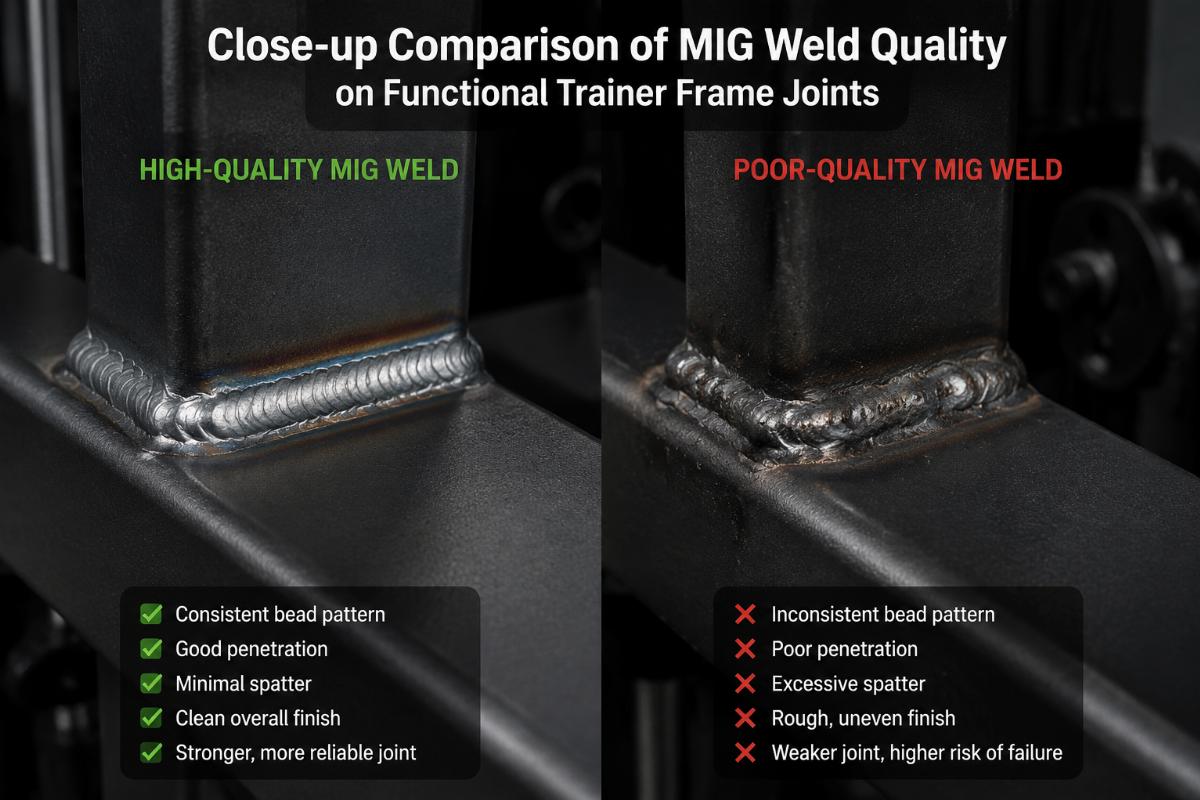
The frame is the skeleton of every functional trainer, and its steel gauge directly determines how long the equipment survives under commercial-use conditions. When buyers compare quotes from different suppliers, the visual appearance of two functional trainers can look nearly identical. The difference lives inside the wall thickness of the rectangular tubing and the quality of the weld seams.
Commercial-grade functional trainers typically use either 11-gauge or 7-gauge steel tubing for the main frame. The gauge number works inversely: a lower gauge means thicker steel. Here is how the two compare across the parameters that matter for bulk buyers:
| Parameter | 11-Gauge Frame | 7-Gauge Frame |
|---|---|---|
| Wall Thickness | Standard commercial grade | Heavy-duty commercial grade |
| Load-Bearing Capacity | Suitable for moderate-use facilities | Robust margin for high-traffic gyms |
| Weld Integrity Risk | Noticeably higher under dynamic loads | Substantially resistant to stress fatigue |
| Weight per Unit | Lighter, lower shipping density | Heavier, affects container CBM planning |
| Long-Term Deformation | Vulnerable under continuous heavy use | Resistant over extended service life |
[NEED_CITE: ISO 20957 safety standard requirements for stationary training equipment frame strength]
The choice between the two depends on your end-user environment. A boutique studio running functional trainer sessions five hours a day will have very different demands than a twenty-four-hour commercial gym where the equipment sees near-continuous use. I have seen buyers default to the lighter gauge to cut per-unit costs, only to receive warranty claims within the first year from facilities where the frame showed visible flex at the pulley mounting points.
Weld quality matters just as much as steel thickness. Look for continuous MIG welds at all structural joints rather than intermittent spot welds. A buyer from a Southeast Asian distribution company once received a batch where the weld seams at the base plate joints were ground smooth to look clean but lacked penetration depth. The frames passed a static visual check but failed under dynamic load testing. [NEED_CITE: welding inspection standards for commercial fitness equipment frames]
When you request quotations from an OEM functional trainer manufacturer, ask explicitly for the steel gauge, the tubing dimensions, and the welding process specification. A credible bulk functional trainer supplier China will provide this data without hesitation. If the response is vague, treat it as a red flag before you commit to a commercial functional trainer wholesale order.
How Do You Validate Load Capacity and Cable System Durability?
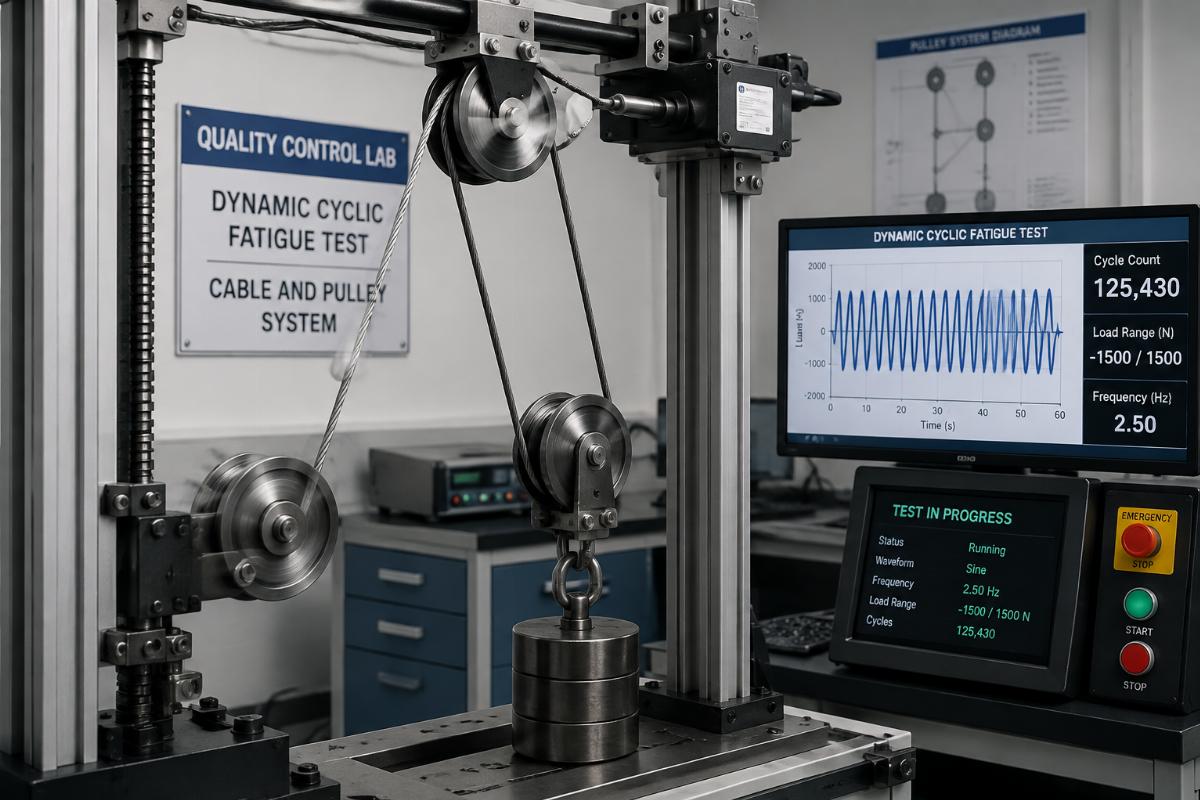
A functional trainer lives and dies by its cable and pulley system, yet this is the component most buyers fail to test rigorously before approving a bulk production run. The cable system handles every repetition, every eccentric load, and every sudden directional change that users throw at it. When it fails, it fails under tension, and the consequences range from equipment downtime to user injury.
The validation process should cover two distinct test types:
Static load testing confirms that the frame, cable attachments, and pulley mounts can hold a defined weight without permanent deformation. This is typically done at a multiple of the maximum rated load.
Dynamic cyclic testing simulates real-world usage by running the cable system through thousands of extension and retraction cycles under load. This reveals fatigue points in the cable strands, pulley bearings, and attachment hardware that static testing cannot catch.
| Test Type | What It Reveals | Typical Standard Reference |
|---|---|---|
| Static Load Test | Frame rigidity, mount integrity | ISO 20957-1 general strength requirements |
| Dynamic Cyclic Test | Cable fatigue, pulley bearing wear | Manufacturer-specific endurance protocols |
| Cable Tensile Strength | Strand break threshold | ASTM or equivalent wire rope standards |
[NEED_CITE: dynamic fatigue testing protocols for cable-based strength equipment]
A distributor in Latin America learned this the hard way. They ordered a large batch of functional trainers based on a sample that performed well during a brief showroom test. The production units used a pulley system with bearings that were downgraded from the sample specification. Within months, gym members reported grinding noises and uneven cable resistance. The replacement process involved shipping new pulley assemblies to multiple facilities across the region, and the售后 cost consumed a substantial portion of the original profit margin.
When you evaluate a bulk functional trainer supplier China, request the test methodology documentation. Ask how many cyclic repetitions the cable system is rated for, what load is applied during testing, and whether the pulley bearings are sealed or open. Sealed bearings resist dust and sweat contamination far better in a commercial gym environment. [NEED_CITE: bearing seal effectiveness in high-humidity fitness environments]
Also confirm the weight stack or plate-load compatibility. If your end clients already own equipment from other lines, the weight plates must match the pin diameter and collar type. A gym chain in the Middle East discovered too late that the selectorized weight stacks on their new functional trainers used a different pin system than their existing plate-loaded machines, forcing them to order adapter kits for every unit.
What Are the Key MOQ and Container Consolidation Strategies for Bulk Buyers?
Minimum order quantity flexibility and container-load planning are where unit price meets real-world logistics cost, and optimizing one without the other often erases your savings. Many buyers fixate on negotiating the lowest per-unit price while overlooking how the order quantity interacts with shipping container dimensions.
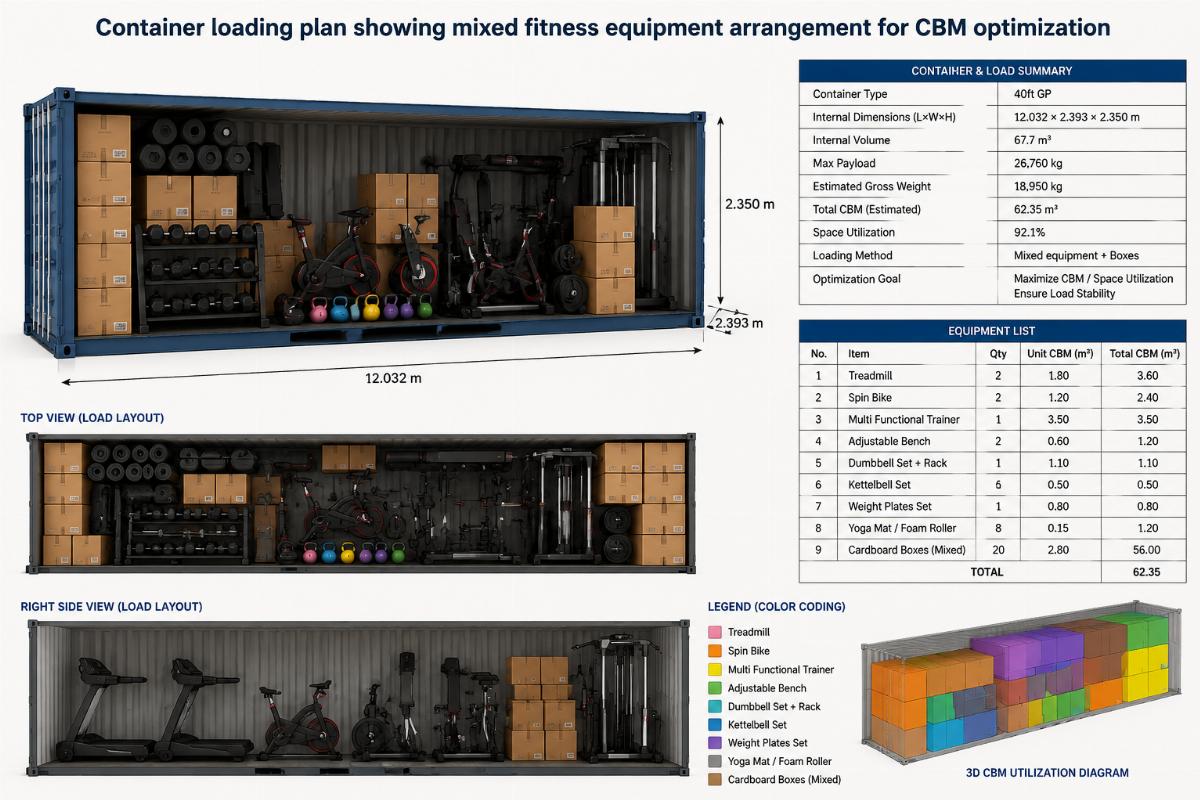
A functional trainer is a bulky piece of equipment. Depending on the model, a single unit can occupy a significant portion of CBM. If you order a quantity that leaves unused space in a twenty-foot or forty-foot container, you are paying to ship air. The per-unit landed cost rises even though the factory price looks attractive.
Here is where working with a supplier that understands container consolidation makes a tangible difference. Bick supports flexible MOQ arrangements ranging from single units for sample evaluation up to full gym package configurations. More importantly, the team provides container-load planning assistance, helping buyers mix functional trainers with complementary equipment such as free weight racks, benches, cable crossover machines, and flooring to fill the container efficiently.
| Consolidation Approach | Logistics Impact |
|---|---|
| Single-product full container | Predictable loading, potential CBM waste |
| Mixed-product container with planning | Noticeably improved CBM utilization |
| Unplanned mixed loading | Risk of damage, inefficient space use |
[NEED_CITE: container loading optimization methods for bulky fitness equipment]
Consider this scenario: a gym owner in West Africa needed functional trainers, a full set of plate-loaded machines, and free weight stations for a new facility. The initial plan was to ship the functional trainers in one container and the remaining equipment in a second. After reviewing the CBM calculations with the Bick logistics team, the entire order was reconfigured into a single forty-foot high-cube container. The functional trainers were loaded in knock-down packaging where applicable, and the remaining space was filled with dumbbell sets, benches, and rubber flooring rolls. The freight savings from eliminating one container were substantial.
For distributors running a commercial functional trainer wholesale operation, the same logic applies across multiple client orders. Consolidating orders from several gym buyers into shared containers reduces per-unit shipping costs for everyone involved. The key is having a supplier that can coordinate production scheduling and packing lists to make the consolidation work.
When negotiating MOQ terms, also clarify the lead-time implications. A smaller MOQ may ship faster, but if it means partial container loads repeatedly, the cumulative freight cost will outweigh the production flexibility. [NEED_CITE: cost-benefit analysis of full-container versus less-than-container-load fitness equipment shipping]
How Can You Ensure Batch Consistency Across Large Orders?
Sample approval means almost nothing if your production batch does not match that sample in material, finish, and assembly quality. This is the single most overlooked risk in bulk purchasing. A sample is built with care, often by senior technicians, using hand-selected components. The production run is built on a factory floor under volume pressure. The gap between the two can be significant.
To bridge that gap, implement a three-tier quality control process:
Pre-production sample confirmation. Before the full batch enters production, require a pre-production unit that is built using the exact materials, components, and assembly line that will run the full order. This unit serves as the binding reference for every subsequent quality check.
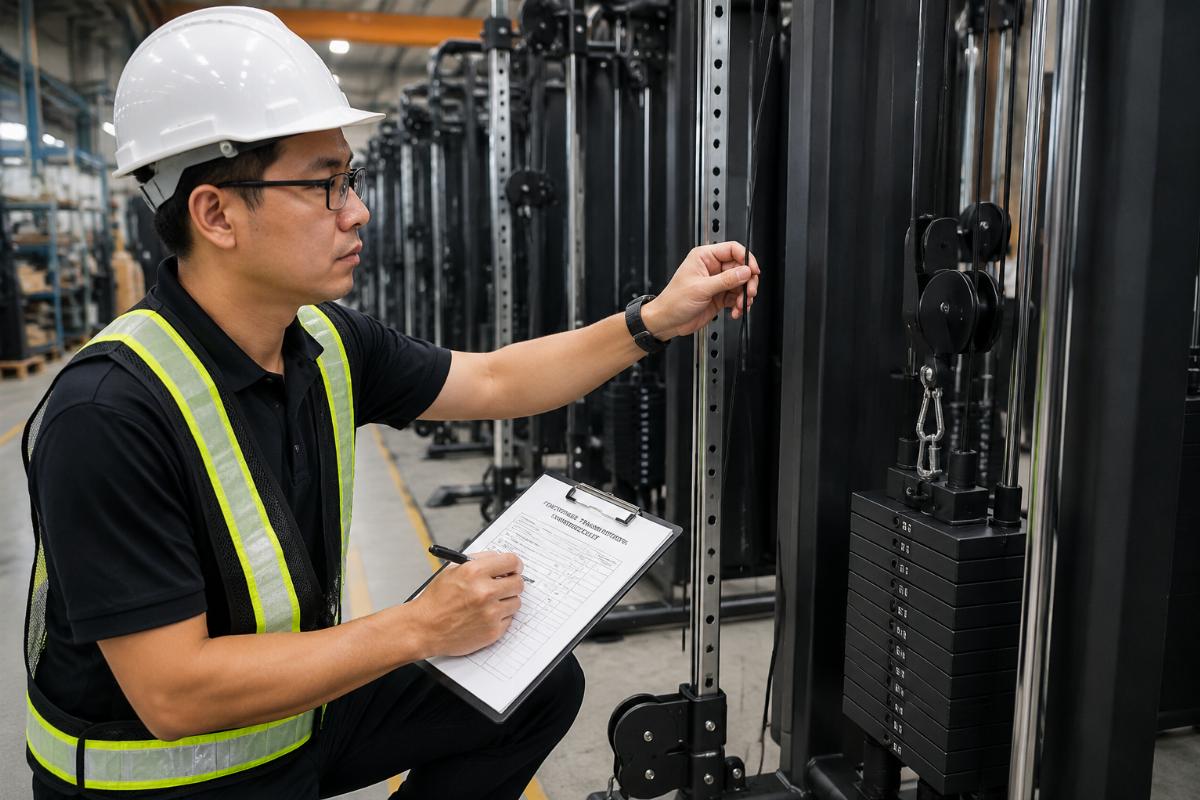
Mid-production inspection. Once a meaningful portion of the batch is assembled, conduct an on-site or third-party inspection. Check frame weld quality, cable routing, pulley alignment, paint finish adhesion, and upholstery stitching. Catching deviations at this stage allows corrective action before the entire batch is completed.
Pre-shipment inspection. The final check against the pre-production sample. Verify dimensions, weight stack accuracy, cable tension, label placement, and packaging integrity. [NEED_CITE: AQL sampling inspection standards for fitness equipment bulk orders]
| QC Stage | Timing | Primary Focus |
|---|---|---|
| Pre-Production Sample | Before batch launch | Material and component verification |
| Mid-Production Inspection | During assembly phase | Process consistency and early defect detection |
| Pre-Shipment Inspection | Before container sealing | Final compliance and packaging check |
A European distributor who regularly places gym functional trainer package deals shared their approach: they maintain a detailed specification document that covers not just dimensions and load ratings, but also the exact powder-coat color code, the cable brand and diameter, the foam density on seat pads, and the packaging layer count. This document is attached to every purchase order and referenced at each QC stage. The result has been a dramatic reduction in discrepancy-related claims.
Paint finish is a common inconsistency point. In a humid production environment, inadequate surface preparation before powder coating leads to adhesion failure. The finish may look acceptable at the factory but begins chipping within weeks of installation in a commercial gym. Request salt-spray test data from your OEM functional trainer manufacturer to confirm coating durability. [NEED_CITE: powder coating adhesion and salt-spray resistance standards for fitness equipment]
Packaging is another area where batch consistency matters. Functional trainers are heavy and have protruding components. If the packaging design changes between the sample and the production run, transit damage rates can spike. Confirm the packaging specification, including foam insert density and carton wall thickness, as part of your pre-production sample approval.
Conclusion
Successful bulk purchasing of functional trainers depends on disciplined specification verification, not price comparison alone. Validate steel gauge and weld quality, demand documented load and cable testing, align your order quantity with container consolidation logic, and enforce a multi-stage quality control process that ties every production unit back to an approved pre-production sample. These steps separate buyers who receive reliable equipment on schedule from those who discover problems only after the container doors open.
