Which US Commercial Strength Equipment Ranking Actually Matches Your Gym's Real Constraints?
Most "commercial strength equipment rankings" you find online assume all fitness facilities operate under identical conditions—but that's not how equipment procurement actually works. After years of handling equipment inquiries from US gym owners, I've seen the same pattern: buyers search for rankings expecting a universal answer, then realize their chain gym's needs conflict directly with what works for boutique studios or independent fitness centers.
No single equipment ranking serves chain gyms optimizing for parts availability, boutique studios maximizing space efficiency, and independent owners balancing upfront costs against long-term durability—the right commercial strength equipment depends on whether your facility prioritizes member throughput, maintenance predictability, or flexible financing structures that match your cash flow reality.
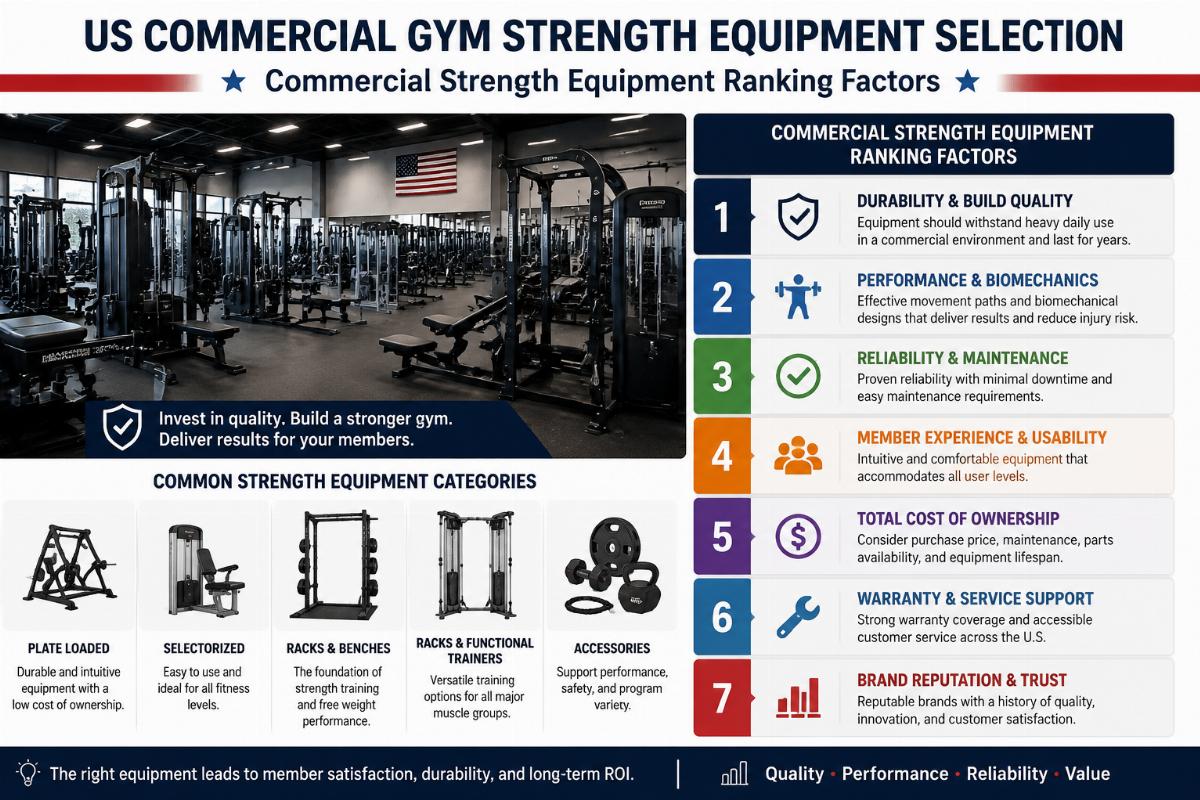
Here's the disconnect I see repeatedly: procurement managers download ranking PDFs, compare specifications, then call our team asking why their "top-ranked" equipment created bottlenecks during peak hours or required parts with 8-week lead times. The rankings didn't account for their specific facility constraints—floor space per station, member demographics, or whether their business model depends on quick equipment turnover or decades-long durability.
What Do Chain Gym Procurement Officers Actually Optimize For When Selecting Strength Equipment?
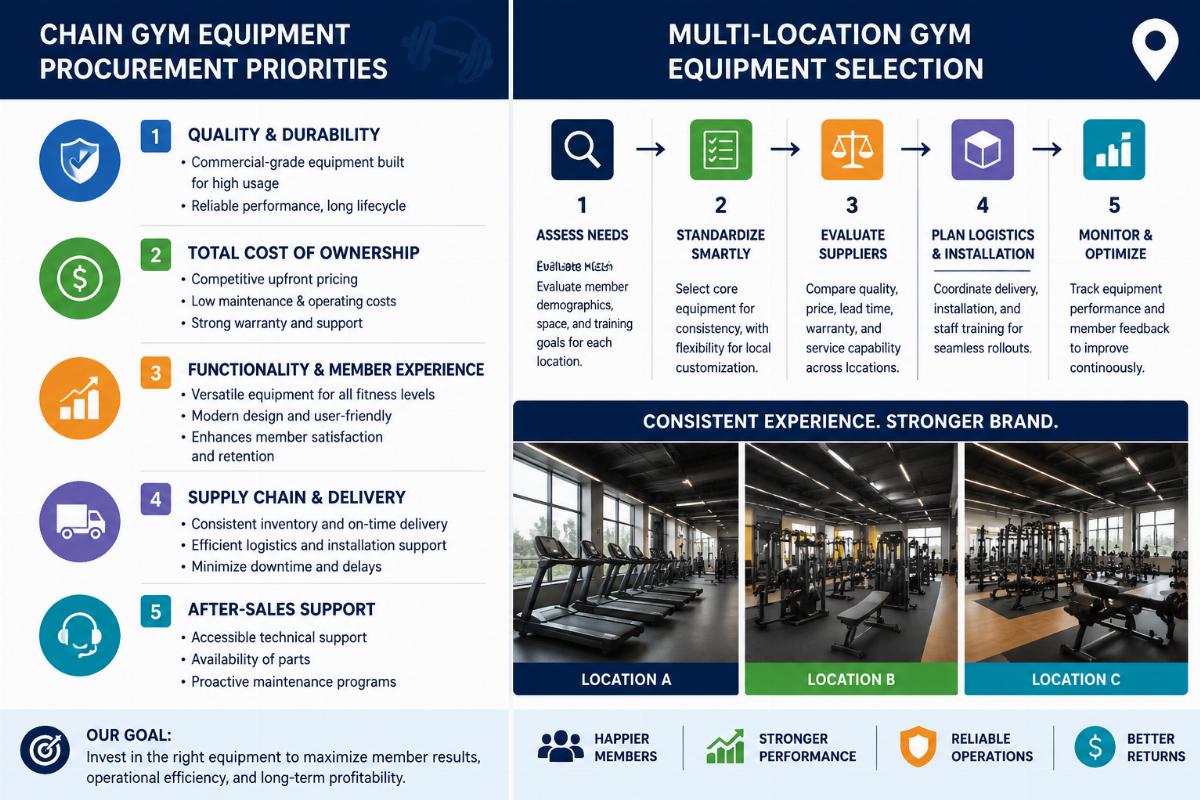
When chain gym buyers contact us about equipment, they rarely ask "what's the best brand?" Instead, they focus on operational variables: can we source identical replacement parts across 50+ locations, does the equipment footprint allow our standardized floor plan, and will the supplier maintain consistent specs if we expand to 200 locations over five years.
Chain gym equipment selection prioritizes consistency and parts availability over peak performance—procurement officers choose brands that guarantee identical replacement components, maintain backward-compatible designs across product generations, and offer service networks covering their expansion geography, even if that means accepting slightly lower weight stack capacities or fewer adjustment options compared to boutique-focused alternatives.
Why Procurement Officers Deprioritize "Performance Rankings"
Chain gyms operate under unique constraints that most equipment rankings ignore completely. Here's what matters in their procurement decisions:
| Procurement Variable | Why It Overrides Performance Rankings | Real-World Impact |
|---|---|---|
| Parts Standardization | Mixed equipment brands create inventory chaos across locations | Maintenance teams can't stock universal parts; each location needs brand-specific components |
| Service Network Geography | "Best-ranked" equipment means nothing if no technicians service your expansion markets | Equipment downtime extends from days to weeks in underserved regions |
| Design Consistency | Members expect identical equipment experiences across franchise locations | Switching brands mid-expansion confuses members and breaks training program compatibility |
| Lead Time Predictability | Expansion timelines depend on guaranteed delivery schedules | Cannot open new locations on schedule if equipment ships unpredictably |
I've worked with chain buyers who rejected objectively superior equipment because the supplier couldn't guarantee parts availability in markets where they planned to open facilities three years later. That's not irrational—it's recognizing that operational consistency matters more than a 10% improvement in smooth pulley action when you're managing 80 locations.
The equipment attributes that chains actually optimize for don't appear in typical rankings: supplier financial stability (will this company exist in 10 years?), product line longevity (will they discontinue this model before we finish our expansion?), and whether the manufacturer's production capacity can handle large simultaneous orders without quality degradation.
When chain procurement teams evaluate equipment, they're essentially buying into a supplier relationship, not just purchasing individual machines. The "ranking" question becomes: which supplier can scale with our growth while maintaining the operational predictability our business model requires?
How Do Independent Gym Owners Evaluate Commercial Strength Equipment Differently Than Chains?
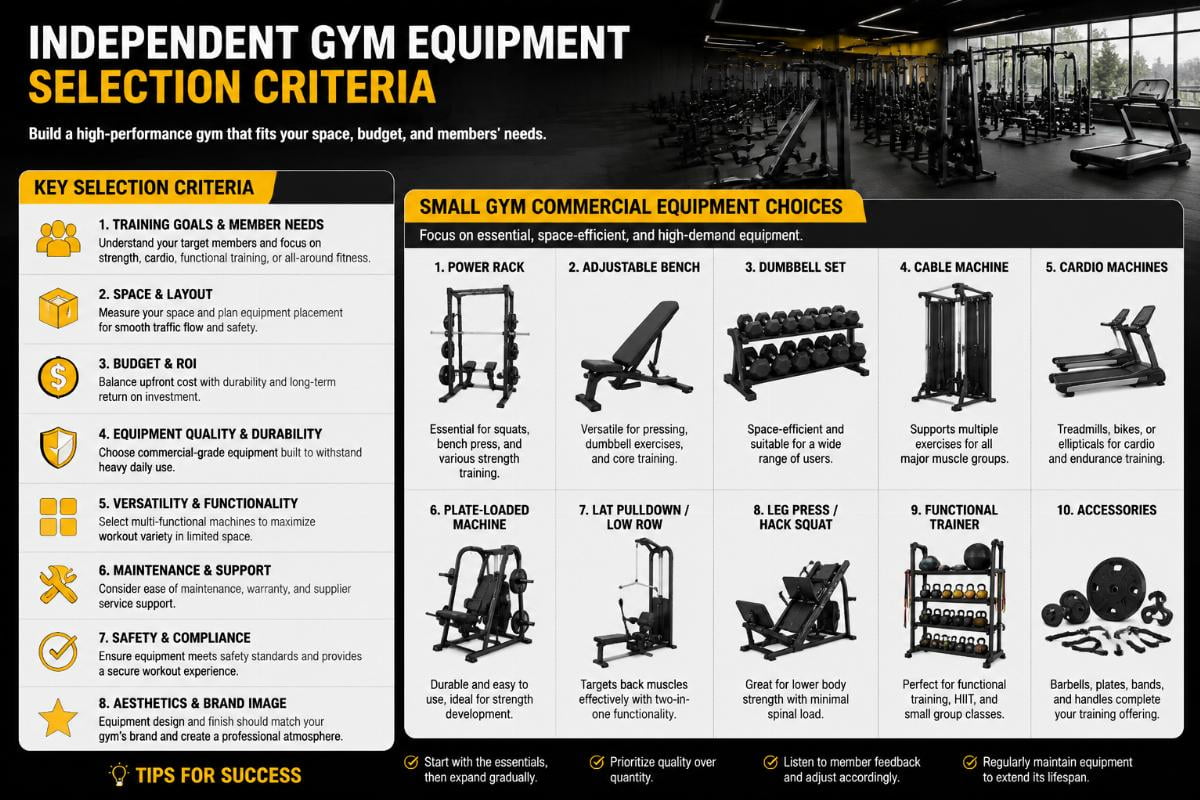
Independent gym owners call us with completely different priorities than chain procurement officers—they need equipment that generates immediate member satisfaction and positive word-of-mouth, fits within tight initial budgets, and ideally offers financing that matches their unpredictable first-year cash flow.
Independent gym equipment decisions balance upfront cost constraints against member retention ROI—owners prioritize machines that create visible differentiation from chain competitors, require minimal staff training to maintain, and offer flexible payment structures that don't strain cash reserves during the vulnerable 12-18 month establishment period when member acquisition costs peak.
The Cash Flow Reality Behind Equipment Rankings
Here's what equipment rankings miss about independent gym economics: most new gym owners can't evaluate equipment purely on durability specs because their business survival depends on preserving working capital for marketing, payroll, and the inevitable unexpected expenses during year one.
When an independent owner asks me about equipment rankings, I've learned to reframe the conversation around their actual constraints:
| Financial Reality | How It Changes Equipment Priorities | What Owners Actually Need |
|---|---|---|
| Limited Initial Capital | Cannot purchase entire equipment package upfront | Suppliers offering true 0% financing or phased delivery matching member growth |
| Unpredictable Revenue | Monthly payments must flex with seasonal membership fluctuations | Equipment financing that doesn't accelerate if cash flow dips |
| High Member Acquisition Cost | Equipment must drive word-of-mouth and social media content | Visually distinctive machines that create shareable workout moments |
| Thin Operating Margins | Cannot afford dedicated maintenance staff | Equipment designed for owner-operator maintenance with minimal technical knowledge |
I've seen independent owners choose mid-tier equipment over "top-ranked" options because the mid-tier supplier offered payment terms that aligned with their member growth projections—paying 30% more upfront for marginally better equipment makes zero sense if it forces them to cut their marketing budget during the critical launch phase.
The equipment attributes independents actually optimize for: visual appeal that photographs well for social media marketing, intuitive adjustment mechanisms that reduce staff time explaining machine operation, and whether the equipment creates a premium perception that justifies their pricing relative to budget chains nearby.
Independent owners aren't ignoring durability—they're making rational decisions based on business survival probability. Equipment that lasts 20 years doesn't matter if cash flow constraints force them to close in year two. They need equipment that helps them reach profitability fast enough to then upgrade or expand their equipment package.
Why Do Boutique Studio Operators Choose Completely Different Equipment Than Traditional Gyms?
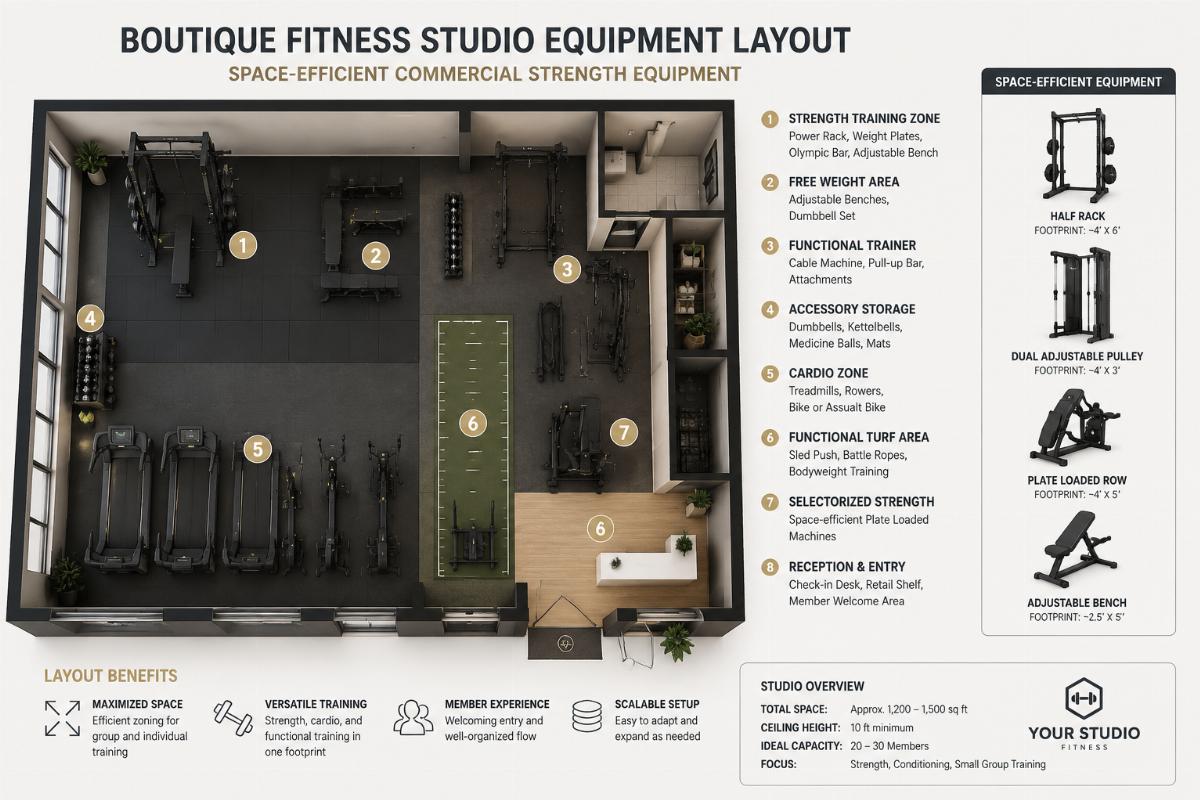
Boutique studio operators contact us with space efficiency questions that traditional gym equipment rankings completely ignore—they need machines that maximize workout variety within 1,500-2,500 square feet, support their signature class formats, and create the premium aesthetic their pricing model requires.
Boutique studio equipment selection prioritizes space-to-exercise-variation ratio over traditional durability metrics—operators choose compact machines that enable multiple movement patterns, integrate with their signature training methodology, and visually reinforce the premium positioning that justifies their $35-50 per class pricing compared to $10-30 monthly chain gym memberships.
The Space Math That Rankings Don't Address
Boutique studios operate under fundamentally different spatial economics than traditional gyms. Here's the calculation I walk through with studio operators:
Traditional gyms allocate 50-70 square feet per member during peak hours and spread equipment across 10,000+ square feet—they can afford dedicated stations for each muscle group. Boutique studios squeeze 15-25 members into 2,000 square feet during hour-long classes, which means equipment must support circuit-style workouts where members rotate through stations every 3-5 minutes.
| Space Constraint | Equipment Impact | What Studios Actually Need |
|---|---|---|
| Limited Floor Area | Cannot dedicate separate machines for each exercise | Multi-function stations replacing 3-4 traditional machines |
| Class-Based Format | All equipment must accommodate simultaneous use by 15-25 members | Duplicate stations for popular exercises; unique stations for variety |
| Rapid Transitions | Members switch stations every few minutes during classes | Quick-adjust mechanisms; minimal setup between exercises |
| Premium Aesthetic | Equipment visible in marketing photos and class videos | Design that signals premium positioning; social media-friendly appearance |
I've worked with studio operators who rejected highly-rated traditional strength equipment because it couldn't support their signature workout flow—cable machines with 15-second adjustment times don't work when classes require 30-second station rotations, regardless of how smoothly the cables pull.
The equipment attributes boutique studios optimize for: visual compactness that makes small spaces feel uncrowded in photos, adjustment mechanisms clients can operate independently without instructor assistance, and whether machines support the specific exercises their trademarked class formats require.
Studio operators also evaluate equipment through a per-class revenue lens that traditional gyms don't use. If a machine costs $5,000 and enables 20 additional classes monthly at $40 per person with 18 average attendees, that's $14,400 monthly revenue supporting the equipment investment—a calculation that justifies premium equipment prices that would never make sense for traditional gym economics.
What Equipment Attributes Do Multi-Location Operators Actually Negotiate When Scaling Up?
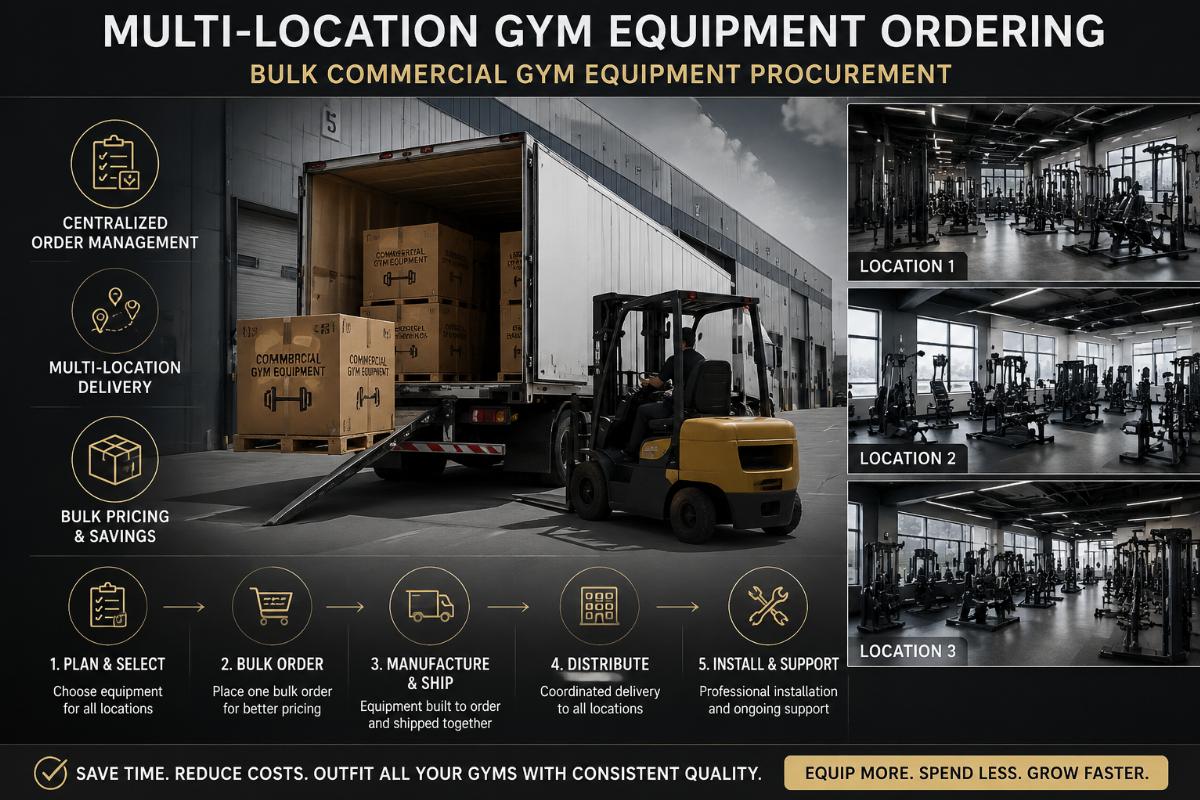
When multi-location operators contact us about equipping 5-10+ facilities simultaneously, they focus on variables that never appear in equipment rankings: whether the supplier's production capacity can deliver consistent quality across large orders, if lead times remain stable when ordering 50+ complete equipment packages, and whether bulk pricing scales linearly or includes meaningful volume discounts.
Multi-location equipment procurement prioritizes supplier scalability and price predictability over individual machine specifications—operators need manufacturers who maintain quality consistency when order volumes surge, offer transparent pricing that won't fluctuate unpredictably during multi-year expansion phases, and structure delivery schedules that align with construction timelines across multiple simultaneous facility buildouts.
The Supplier Relationship Variables That Determine Success
Here's what I've learned from multi-location operators' procurement conversations: they're not just buying equipment—they're essentially partnering with suppliers whose operational capabilities must match their expansion pace.
The questions multi-location operators actually ask reveal their real priorities:
| Operational Concern | Why Rankings Don't Address It | What Operators Need to Verify |
|---|---|---|
| Production Capacity | Can supplier maintain quality delivering 200+ machines monthly? | Factory capacity; quality control systems at high volume |
| Price Stability | Will bulk pricing remain consistent across multi-year expansions? | Contractual price guarantees; raw material hedging strategies |
| Delivery Coordination | Can supplier synchronize shipments with 10+ construction schedules? | Logistics capabilities; inventory management systems |
| Parts Ecosystem | Will replacement parts remain available as product lines evolve? | Manufacturing longevity; backward compatibility commitments |
I've seen multi-location deals collapse not because of equipment quality issues, but because the supplier couldn't guarantee delivery timelines that matched the operator's construction schedules—opening delays cost far more than paying slightly higher equipment prices for suppliers with proven logistics capabilities.
The equipment attributes multi-location operators optimize for: supplier financial stability that ensures 10-year parts availability, manufacturing processes that maintain consistency across large production runs, and whether the supplier's order management systems can handle complex delivery coordination without requiring constant manual intervention.
Multi-location operators also negotiate differently than single-facility buyers. They leverage volume commitments to secure pricing guarantees, delivery priority during industry-wide supply constraints, and customization options (color schemes, branding integration) that would never be economical for smaller orders.
How Do Maintenance Requirements Change Equipment Rankings Based on Your Facility's Technical Capabilities?
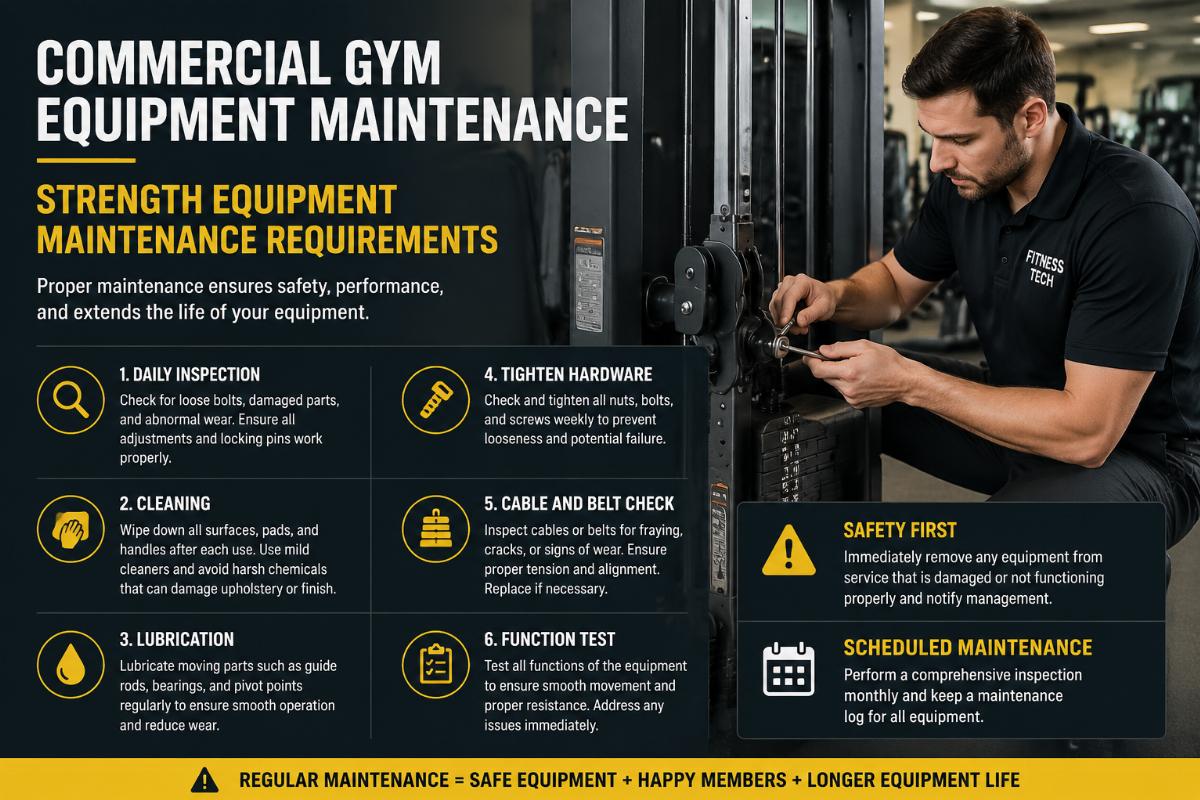
Gym owners with in-house maintenance staff evaluate equipment completely differently than owner-operators who handle repairs themselves or pay per-incident service fees—maintenance complexity and parts availability often matter more than the performance specifications that dominate equipment rankings.
Equipment maintenance requirements fundamentally alter value calculations based on your facility's technical capabilities—machines with excellent durability but complex service procedures cost owner-operators far more over time than slightly less robust equipment designed for simple maintenance, while facilities with dedicated technicians can extract better long-term value from sophisticated equipment that requires specialized knowledge to service properly.
The Hidden Costs Rankings Don't Calculate
Here's the maintenance reality I explain to buyers evaluating equipment rankings: upfront durability specifications tell you almost nothing about your actual maintenance costs, which depend entirely on how your facility handles repairs.
Owner-operators calling independent technicians pay $125-200 per service visit plus parts—complex equipment that requires specialized tools or technical knowledge can generate $2,000-3,000 in maintenance costs over five years, potentially exceeding the initial price difference between mid-tier and premium equipment options.
| Facility Type | Maintenance Capability | Equipment Priorities Shift |
|---|---|---|
| Owner-Operated | No technical staff; pays per-incident service | Simple mechanisms; common parts; video-guided maintenance |
| Small Chain (3-5 locations) | Shared technician across facilities | Standardized designs; predictable failure patterns; remote diagnostics |
| Large Chain (10+ locations) | Dedicated maintenance team | Advanced features justify complexity; bulk parts purchasing |
| Boutique Studio | Instructor-performed basic maintenance | Minimal routine service; extended warranties; local service availability |
I've worked with owner-operators who chose equipment ranked lower in "durability tests" because the simpler design meant they could handle 80% of maintenance themselves using basic tools and YouTube videos—avoiding $150 service calls every few months saves thousands over the equipment lifespan.
The equipment attributes that maintenance complexity reveals: whether replacement parts ship from US warehouses or require international ordering, if maintenance procedures require specialized tools beyond basic socket sets, and whether the manufacturer provides detailed service documentation or assumes buyers will use professional technicians.
Facilities should also evaluate service network density—"top-ranked" equipment means nothing if the nearest authorized service technician is 200 miles away and charges travel fees that double the service cost. I've seen buyers choose regionally-popular brands over nationally-ranked options specifically because local technicians already stock their parts and charge lower rates due to familiarity with the equipment.
What Trade-Offs Should Budget-Conscious Facilities Accept When Equipment Rankings Exceed Their Financial Reality?
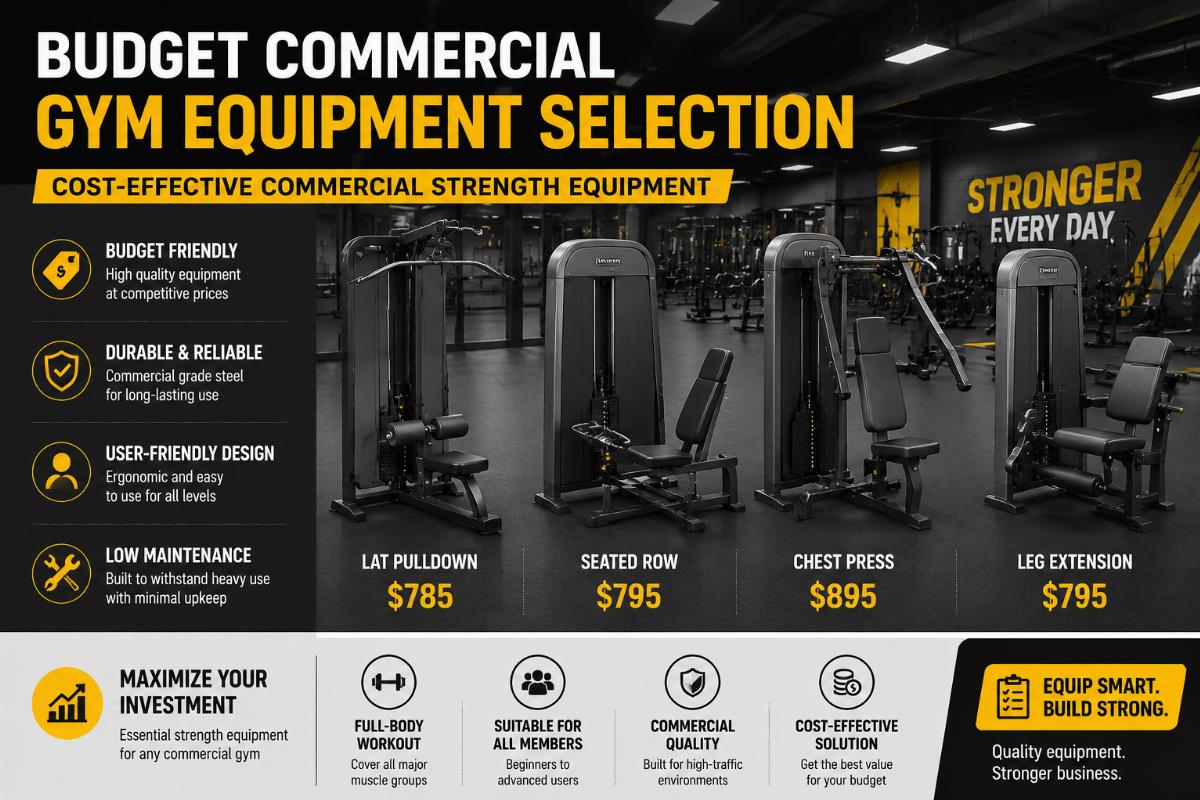
Budget-constrained gym owners often ask me which corners they can cut when equipment rankings recommend machines that cost 50-100% more than they can afford—the answer isn't "buy cheaper equipment," it's understanding which premium features actually impact member experience versus which serve specialized use cases their members don't need.
Budget equipment selection requires distinguishing between core functionality that affects every workout and premium features that matter only to specific user populations—most facilities can eliminate expensive adjustment ranges, advanced connectivity features, and aesthetic upgrades without impacting 90% of their members' actual training needs, but cannot compromise on fundamental movement smoothness and basic durability without creating member dissatisfaction.
Features You Can Eliminate Versus Requirements You Cannot Compromise
Here's the framework I use when budget-constrained buyers need to reconcile equipment rankings with financial reality:
Premium equipment includes features that serve three distinct purposes: core functionality everyone uses, specialized capabilities that matter to 5-10% of members, and aesthetic elements that create premium perception. Budget constraints force you to identify which category actually impacts your facility's success.
| Premium Feature Category | Member Impact Reality | Budget Decision Logic |
|---|---|---|
| Extended Weight Stacks | Only matters to advanced lifters (10-15% of members) | Start with standard stacks; upgrade later if needed |
| Multiple Grip Options | Provides variety but doesn't change core exercise | Single grip position serves 90% of use cases adequately |
| Digital Connectivity | Appeals to tech enthusiasts; most members ignore it | Defer until member demand justifies cost |
| Premium Upholstery | Creates perception but doesn't affect workout quality | Mid-grade materials acceptable if replaced proactively |
| Smooth Movement Mechanics | Directly impacts every rep of every workout | Cannot compromise—poor mechanics create member dissatisfaction |
| Adjustment Mechanism Quality | Affects user experience every session | Cannot compromise—frustrating adjustments drive member complaints |
I've worked with budget-conscious owners who eliminated $15,000 in connectivity features and premium upholstery from their equipment package, then reinvested those savings into higher-quality movement mechanics and adjustment systems—their members never noticed the missing premium features but immediately appreciated the smooth, reliable core functionality.
The budget equipment strategy that actually works: buy the best core functionality you can afford, eliminate premium features that serve niche use cases, then plan systematic upgrades as revenue grows. Starting with mediocre core functionality to afford premium features backfires—members tolerate missing advanced options but quickly complain about rough movement or frustrating adjustments.
Budget facilities should also reconsider equipment quantity versus quality trade-offs. I've seen successful gyms operate with 12 high-quality core machines rather than 20 budget machines spanning every possible exercise variation—the focused approach ensures every machine works perfectly while eliminating the maintenance burden and space inefficiency of redundant equipment.
Conclusion
Commercial strength equipment rankings serve as starting points, not final answers—the right equipment depends on your facility's specific constraints around space, budget, maintenance capabilities, and member demographics, which only you can evaluate against your business model and operational capacity.