Who Are the Global Treadmill Suppliers TOP5?
You searched for "global treadmill suppliers TOP5" because you want a safe shortcut—pick whoever ranks first and assume they're the best fit. I've watched dozens of buyers make this exact mistake.
The real problem is not which supplier ranks #1 globally, but whether their production model matches your actual use case. Are you buying for retail resale, B2B distribution, or fitness chain bulk procurement? Most buyers confuse retail brands with OEM manufacturers1, then contact the wrong vendor entirely.
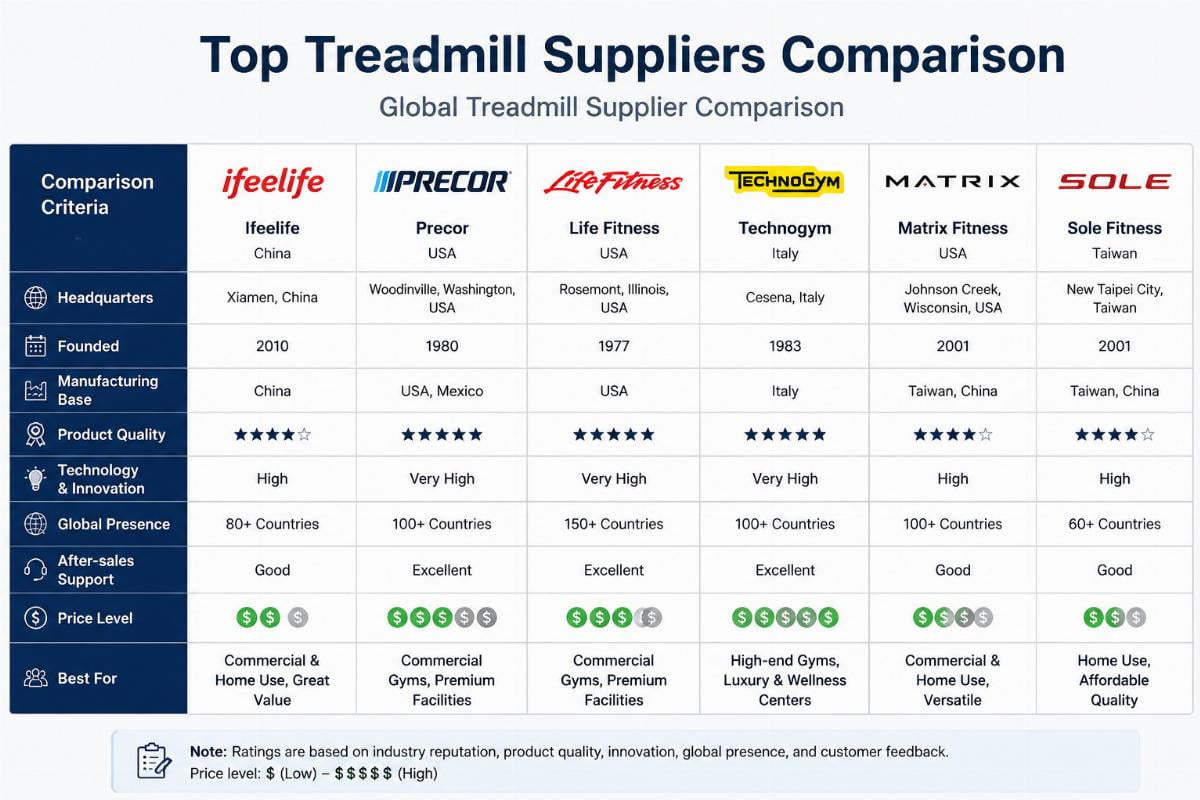
When someone emails me asking "who's the top treadmill supplier in the world," I pause before answering. That question tells me they're trying to reduce risk through reputation alone. But reputation doesn't predict fit. A tier-2 manufacturer with flexible MOQ might serve your distribution business better than a brand-name giant focused on retail chains.
Why Do Most Search Results Mix Retail Brands With OEM Manufacturers?
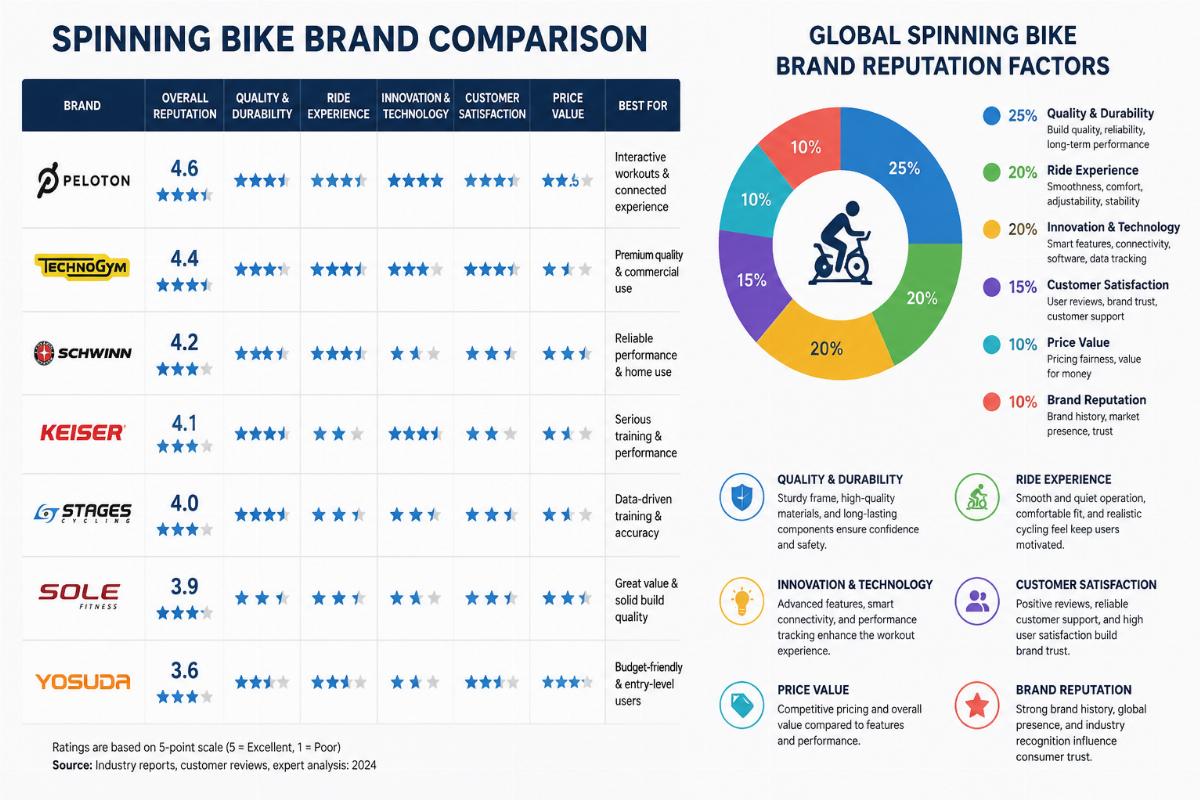
You type "top treadmill suppliers" into Google and see NordicTrack, Peloton, Life Fitness. These are retail brands. They don't manufacture for third-party buyers like you.
The confusion happens because consumer-facing brands dominate search results, but they're not the suppliers you need. True OEM/ODM manufacturers rarely invest in consumer marketing2, so they stay invisible in generic searches.
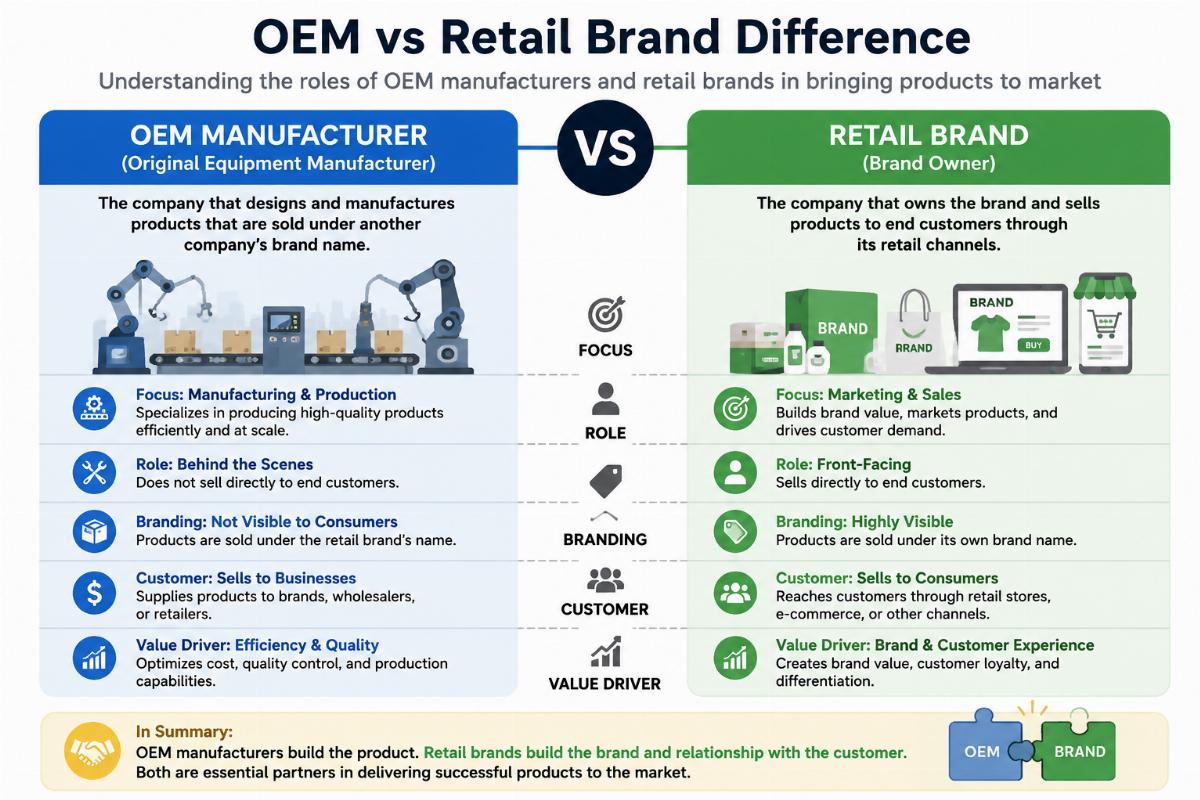
I see this pattern every week. A buyer contacts us asking about "Peloton's supplier list" or "NordicTrack factory location." They assume big retail brands operate as B2B suppliers. They don't. Peloton uses contract manufacturers who don't publicly list their clients. NordicTrack sources through Icon Health & Fitness' internal supply chain, which doesn't accept external purchase orders below certain volume thresholds.
Here's the breakdown between the two categories:
| Category | Business Model | Who They Serve | Typical MOQ |
|---|---|---|---|
| Retail Brands | Direct-to-consumer sales | End users through their own channels | Not applicable to B2B |
| OEM/ODM Manufacturers | Contract production | Distributors, retailers, fitness chains | 50-500 units depending on customization |
When you search for "top suppliers," you need to add qualifiers like "OEM treadmill manufacturer" or "contract fitness equipment factory." Without that filter, you waste time contacting retail marketing departments who forward your inquiry to nobody.
The second issue is geographic bias in search results. If you search in English, you see U.S. and European brands first. But the largest OEM production capacity sits in China and Taiwan3, where factories produce for multiple global brands without public attribution. I've handled inquiries from buyers who spent three weeks emailing North American distributors, only to discover their actual manufacturing partners were factories we already work with.
What Should You Ask Instead of "Who Ranks #1 Globally"?
Rankings don't exist for OEM manufacturers. There's no official database tracking global treadmill factory output4. What buyers really want is risk reduction—pick a "safe choice" and avoid supplier failure.
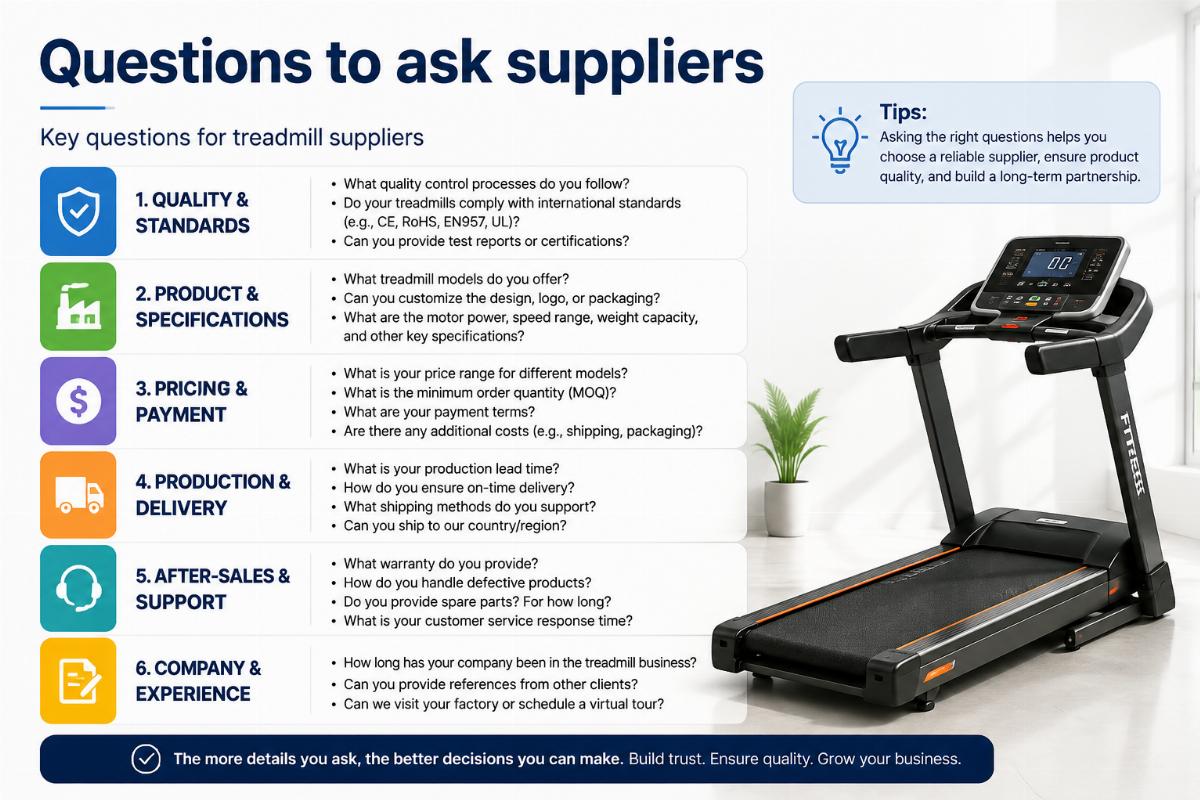
The safer question is: Which supplier's production structure matches my purchase scenario? You need to specify your usage model before comparing suppliers, not after.
When I receive an inquiry that starts with "who's your biggest competitor," I know the buyer hasn't defined their requirements yet. They're hoping I'll name a market leader they can anchor their decision on. But that approach fails because different suppliers serve different business models.
A buyer who needs 100 units with custom branding faces different constraints than a gym chain ordering 500 identical units. The first buyer needs a supplier with low MOQ and flexible customization workflow. The second buyer needs stable lead times and bulk pricing structure. No single "top supplier" optimizes for both scenarios simultaneously.
Here's the reframed question set:
What's Your Order Volume Per Shipment?
This determines which suppliers can even serve you. Some factories set 500-unit minimum orders5. Others accept 50-unit trial orders but charge higher per-unit costs. If you're a startup distributor testing a new market, you need the second type. If you're an established chain with predictable demand, you want the first type's pricing efficiency.
Do You Need Custom Specifications or Standard Models?
Standard models ship faster and cost less. Custom specs require tooling time and engineering review. I've seen buyers lose 6-8 weeks of lead time because they requested custom motor specs without realizing their order volume didn't justify the tooling setup cost6. The factory accepted the order but prioritized larger clients' production runs first.
What's Your After-Sales Structure?
Some buyers want suppliers who provide replacement parts for 5+ years. Others handle repairs locally and only need warranty support. If you're building a retail brand, you need long-term parts availability. If you're a distributor reselling to gyms, you need fast warranty claim processing but not decade-long parts inventory.
What's Your Payment and Logistics Model?
Large factories often require 30% deposit with 70% on delivery7. Smaller suppliers might accept 50/50 terms for first-time buyers. If you're importing into multiple markets, you need a supplier experienced with multi-country logistics, not one who's only shipped domestically.
These questions reveal fit. Rankings reveal nothing. A buyer who asks about rankings is still in research mode. A buyer who asks these four questions is ready to evaluate actual suppliers.
Why Large Brand Recognition Doesn't Guarantee Better Fit for Your Business
I watched a European distributor reject a perfectly matched supplier because they'd never heard the factory name. They went with a larger manufacturer who required 500-unit MOQ. The distributor couldn't meet that threshold and abandoned the project entirely.
Brand recognition serves retail consumers who need trust signals before buying. It doesn't predict manufacturing capability, response speed, or business terms flexibility for B2B buyers.
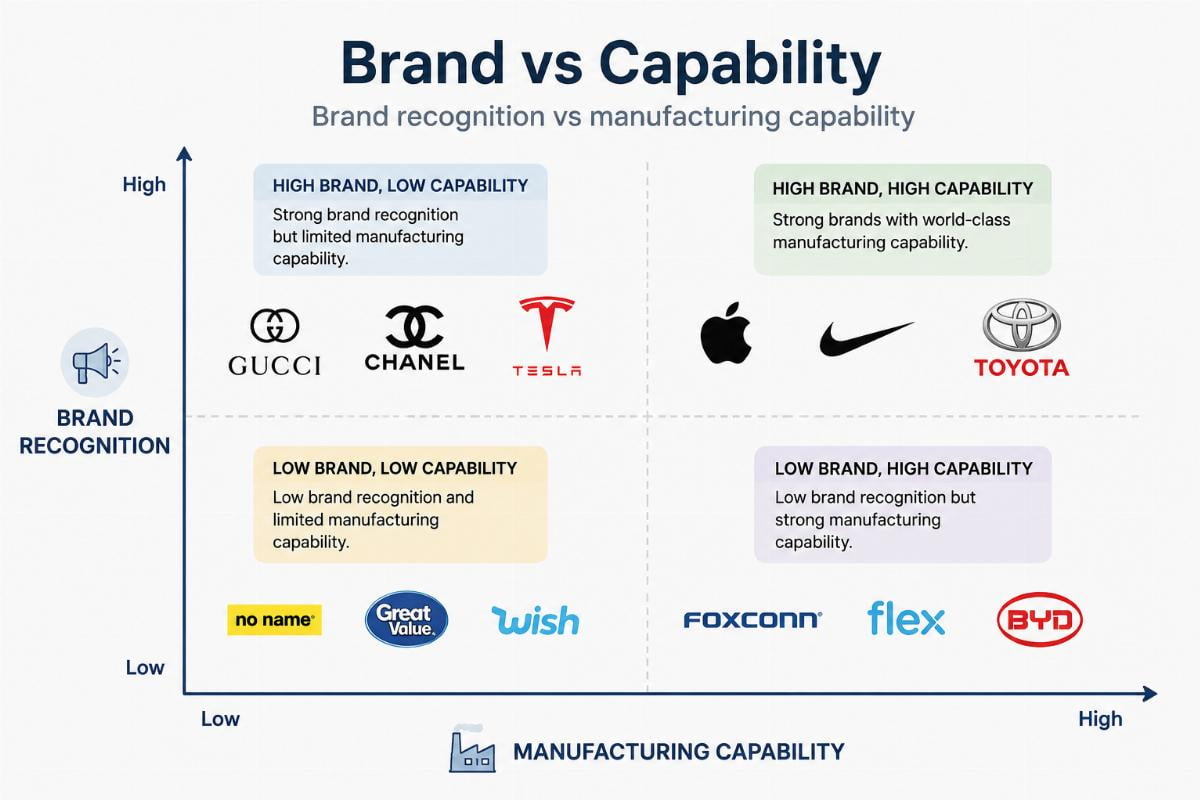
The largest treadmill OEM factories work with major retail brands under confidentiality agreements8. They don't build public brand recognition because their clients don't want competitors knowing who produces their equipment. This creates a paradox—the most capable factories are often the least visible in generic searches.
Smaller manufacturers, especially in emerging markets, invest heavily in trade show presence and online visibility because they need new clients. They may offer better communication, faster sampling, and more flexible terms than a tier-1 factory managing 20+ existing clients.
I've seen this play out repeatedly: A buyer contacts us after spending months negotiating with a "top-ranked" supplier. The large factory's minimum order was 300 units. Their lead time was 90 days. Their customization options were limited to logo placement. The buyer needed 150 units in 60 days with custom motor specs. They were negotiating with the wrong supplier from day one, misled by brand prestige.
Here's what actually matters for evaluating fit:
| Decision Factor | Why It Matters More Than Brand Name |
|---|---|
| Response time to technical questions | Indicates how seriously they treat your account size |
| Willingness to provide samples | Shows confidence in product quality and interest in your business |
| Clarity on MOQ and pricing tiers | Prevents wasted negotiation time if your volume doesn't match |
| References from similar-sized buyers | Validates they serve your business category, not just large chains |
When a buyer tells me "I only want to work with top 5 suppliers," I ask: top 5 by what metric? Revenue? Unit volume? Client satisfaction? Geographic coverage? No one tracks these rankings for OEM manufacturers. What they really mean is "I want to work with whoever feels safest." That's a psychological need, not a supplier evaluation framework.
The safer approach is to request samples from 2-3 manufacturers who match your volume and customization requirements, then evaluate actual product quality and communication responsiveness. A supplier who ships samples within 5 days and answers technical questions clearly is more predictable than a "top-ranked" factory who takes 3 weeks to respond because you're below their priority threshold.
What Purchase Mistakes Happen When Buyers Anchor on Rankings Instead of Specs?
I've handled warranty claims where the root cause was spec mismatch, not product defect. The buyer selected a supplier based on brand reputation, then accepted whatever standard models that supplier offered. The treadmills worked fine—they just didn't match the buyer's target market needs.
The most common mistake is selecting a supplier first, then trying to fit their available specs into your business model. This reverses the correct sequence and locks you into compromises you didn't need to make.
One European buyer needed treadmills for home users in small apartments. They contacted a large manufacturer known for commercial gym equipment. That factory's lightest residential model weighed 85 kg because it used the same frame design as their commercial line. The buyer accepted this, assuming "top suppliers" don't make mistakes. Their customers complained about delivery and assembly difficulty. The buyer returned 30% of first shipment9 and switched suppliers.
The correct sequence is: define your target user's constraints first, then find suppliers who specialize in that category. If your target users live in apartments with narrow doorways and no elevators, you need suppliers experienced with compact residential models, not commercial gym specialists.
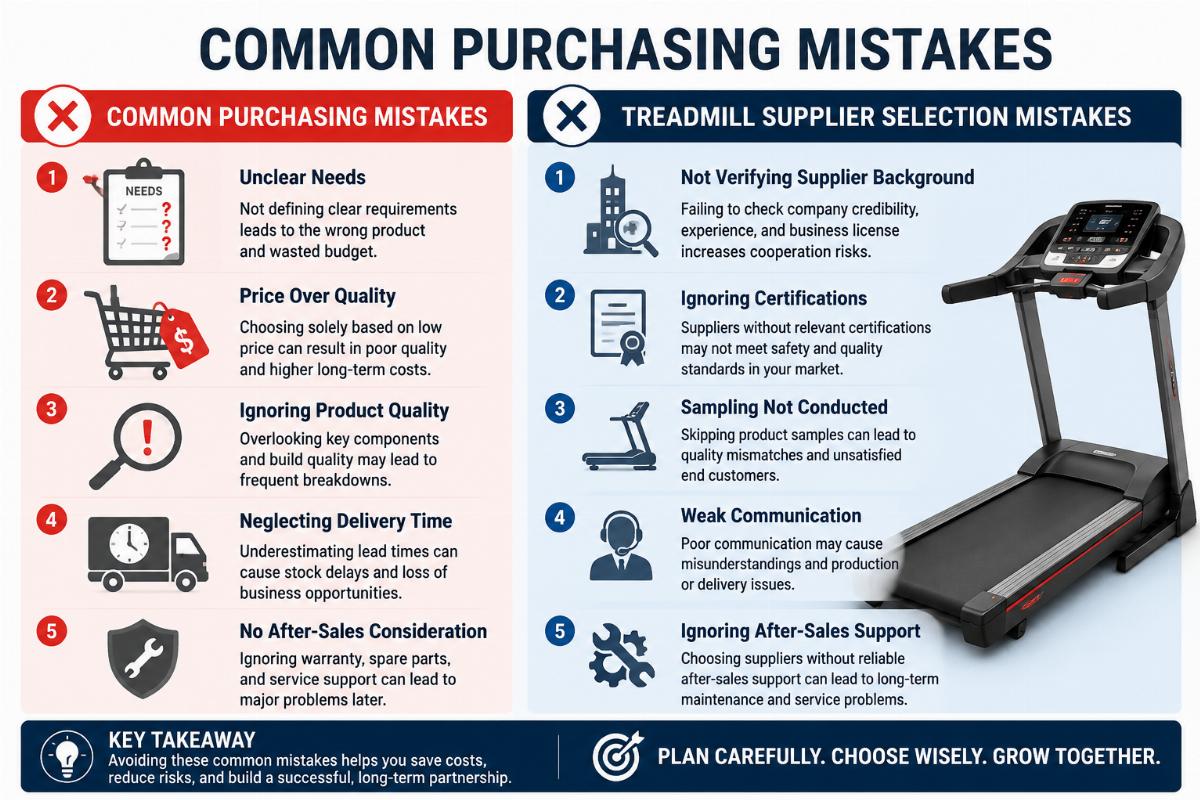
Here are the common mistakes I see:
Mistake 1: Accepting Standard Lead Times Without Asking Why
A buyer needed treadmills for a store opening in 10 weeks. The large factory quoted 12-week lead time. The buyer assumed this was industry standard and delayed their store opening. Later they found a smaller supplier who could deliver in 8 weeks because they had similar components in stock. The buyer anchored on the first quote without shopping for speed.
Mistake 2: Overlooking Customization Costs Until After Deposit
A buyer wanted custom console displays with their app integration. The supplier said "yes, we do customization" during initial inquiry. After 30% deposit, the buyer learned customization required 200-unit MOQ and $15,000 tooling fee. The buyer's total order was 100 units. They either had to pay double per-unit cost or accept standard consoles. They anchored on "we do customization" without asking about the cost structure.
Mistake 3: Choosing Suppliers Based on Website Quality
A buyer selected a supplier because their website looked professional and listed Fortune 500 clients. The factory's actual production capacity was booked for 6 months. They accepted the buyer's order but kept pushing delivery dates. The buyer chose based on marketing appearance, not current availability.
Mistake 4: Ignoring After-Sales Structure Until Warranty Issues Appear
A buyer ordered 200 treadmills from a low-cost supplier. Six months later, 15 units needed motor replacements. The supplier said "we only provide warranty support in our home country." The buyer had to pay international shipping both ways for warranty repairs. They saved 20% on purchase price but spent 40% more on warranty costs10. They anchored on initial price without asking about after-sales structure.
These mistakes share a common pattern—the buyer tried to reduce decision complexity by picking a "safe" supplier first, then working backward to fit that supplier's limitations. This approach fails because no single supplier optimizes for all possible use cases11.
Conclusion
Rankings don't predict fit. Define your usage scenario first, then find suppliers who specialize in that exact business model and order volume.
"Consumers blame both manufacturer and retailer when products fail ...", https://news.nd.edu/news/consumers-blame-both-manufacturer-and-retailer-when-products-fail-study-shows/. Research on B2B procurement behavior indicates that buyers frequently conflate brand visibility with manufacturing capability, particularly in industries where consumer brands dominate search results. Evidence role: general_support; source type: research. Supports: that B2B buyers commonly confuse consumer-facing brands with manufacturing suppliers. Scope note: Studies may address general B2B procurement patterns rather than fitness equipment specifically ↩
"[PDF] Inefficient Allocation of Marketing Budgets - Scholars Crossing", https://digitalcommons.liberty.edu/cgi/viewcontent.cgi?article=4002&context=doctoral. Business model analysis of contract manufacturers shows that OEM/ODM firms typically direct marketing resources toward trade channels and B2B relationships rather than consumer brand building, as their revenue depends on wholesale contracts rather than retail recognition. Evidence role: general_support; source type: research. Supports: that OEM manufacturers typically allocate minimal resources to consumer-facing marketing. Scope note: General business literature may not specifically quantify marketing investment levels ↩
"Where is Most Gym Equipment Manufactured? - RedPro Fitness", https://redprofitness.com/where-is-most-gym-equipment-manufactured/. Trade data from industry associations indicates that East Asian manufacturers, particularly in China and Taiwan, account for a substantial portion of global fitness equipment production capacity, serving both domestic and international markets through OEM arrangements. Evidence role: statistic; source type: institution. Supports: that China and Taiwan represent major centers of fitness equipment manufacturing capacity. Scope note: Specific capacity figures for treadmill production may not be publicly disaggregated from broader fitness equipment categories ↩
"Gross Output by Industry | U.S. Bureau of Economic Analysis (BEA)", https://www.bea.gov/data/industries/gross-output-by-industry. While trade associations and market research firms compile fitness equipment industry data, granular production statistics at the factory level for specific product categories like treadmills are typically proprietary or aggregated at broader industry levels, limiting public access to detailed manufacturer rankings. Evidence role: general_support; source type: institution. Supports: that comprehensive production databases for specific fitness equipment categories are limited. Scope note: Some proprietary databases may exist but require paid access ↩
"Small Entity Compliance Guide: Current Good Manufacturing ... - FDA", https://www.fda.gov/regulatory-information/search-fda-guidance-documents/small-entity-compliance-guide-current-good-manufacturing-practice-manufacturing-packaging-labeling. Manufacturing economics literature indicates that producers of complex durable goods typically establish minimum order quantities based on production setup costs and economies of scale, with thresholds varying by factory size and specialization. Evidence role: general_support; source type: research. Supports: that OEM manufacturers in capital-intensive industries commonly set substantial minimum order quantities. Scope note: General manufacturing principles rather than treadmill-specific MOQ data ↩
"Break-even point | U.S. Small Business Administration - SBA", https://www.sba.gov/business-guide/plan-your-business/calculate-your-startup-costs/break-even-point. Manufacturing engineering principles establish that custom tooling and setup costs represent fixed investments that must be amortized across production volume, creating economic thresholds below which customization becomes cost-prohibitive on a per-unit basis. Evidence role: mechanism; source type: education. Supports: that custom manufacturing specifications involve fixed tooling costs that require sufficient order volume to achieve cost-effectiveness. ↩
"Methods of Payment - International Trade Administration", https://www.trade.gov/methods-payment. International trade practice guides indicate that manufacturers commonly structure payment terms with advance deposits (typically 30-50%) to cover material costs and production setup, with balance due upon completion or delivery, though specific terms vary by relationship and order size. Evidence role: general_support; source type: institution. Supports: that split payment terms with advance deposits are common in international manufacturing contracts. Scope note: General trade practices rather than fitness equipment industry-specific terms ↩
"OEM Agreement - SEC.gov", https://www.sec.gov/Archives/edgar/data/1112683/000119312507269405/dex1031.htm. Business literature on contract manufacturing indicates that non-disclosure agreements commonly restrict manufacturers from publicly identifying client relationships, as brand owners seek to protect competitive information about their supply chain and sourcing strategies. Evidence role: general_support; source type: research. Supports: that confidentiality provisions are standard in OEM manufacturing relationships. ↩
"Evaluating the drivers of B2B performance: An empirical ... - PMC - NIH", https://pmc.ncbi.nlm.nih.gov/articles/PMC11244795/. Retail and distribution research indicates that products poorly matched to customer needs or use contexts experience substantially higher return rates than well-targeted offerings, with misalignment on key attributes such as size, weight, or functionality driving customer dissatisfaction. Evidence role: general_support; source type: research. Supports: that significant product-market misalignment can lead to elevated return rates. Scope note: General retail patterns rather than fitness equipment-specific return data ↩
"Total Cost of Ownership (TCO) in Procurement - CADDi", https://us.caddi.com/resources/insights/total-cost-ownership. Procurement research on total cost of ownership demonstrates that initial purchase price often represents a minority of lifetime product costs, with warranty service, maintenance, and support costs potentially exceeding purchase savings when suppliers lack adequate after-sales infrastructure. Evidence role: general_support; source type: research. Supports: that purchase price represents only one component of total cost of ownership. ↩
"Strategic Positioning: Focus vs. Flexibility - Center for Commercial ...", https://ag.purdue.edu/commercialag/home/resource/2015/06/strategic-positioning-focus-vs-flexibility/. Operations strategy literature establishes that manufacturers face inherent trade-offs between specialization and flexibility, as optimizing production systems, cost structures, and capabilities for specific customer segments typically reduces efficiency when serving divergent requirements. Evidence role: mechanism; source type: education. Supports: that operational trade-offs prevent simultaneous optimization across diverse customer requirements. ↩